

Indigenous Culture and Stories
Eels in the Sky: The Milky Way, Migration, and Indigenous Knowledge Systems
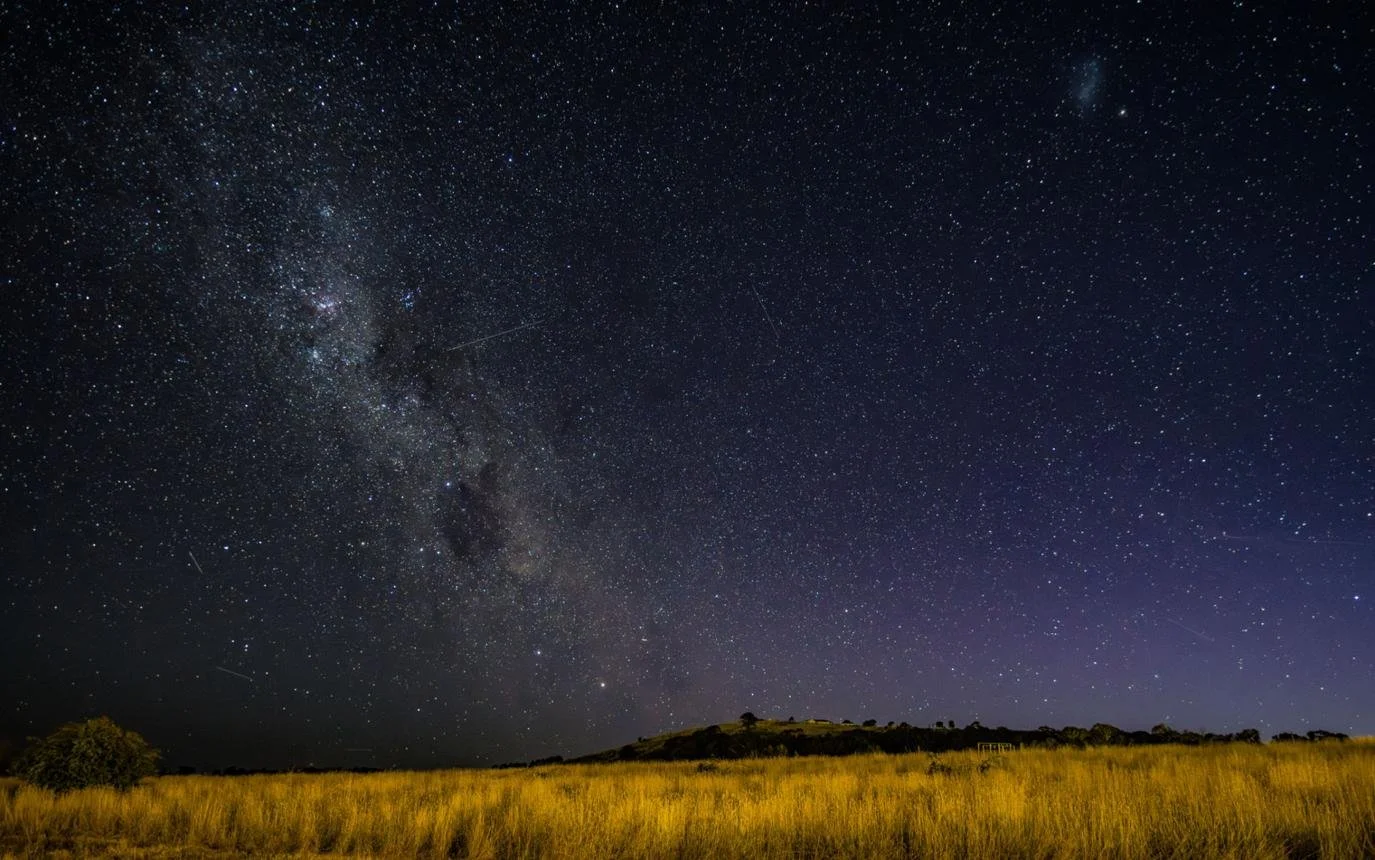
Across Australia, the night sky is not an abstract expanse of distant stars — it is Country above, a continuation of land, water, and life expressed through celestial forms. For many Aboriginal and Torres Strait Islander peoples, the sky holds knowledge systems that mirror the Earth: seasonal change, animal behaviour, and ancestral law are all encoded in the stars.
Among these interpretations is the presence of elongated, flowing beings within the Milky Way — often understood as the well-known “Emu in the Sky,” but in some traditions and interpretations, also resonant with serpentine or eel-like ancestral forms (Norris & Norris 2009; Hamacher 2012). These celestial beings reflect the movements of animals on Earth, particularly migratory species such as eels, whose journeys between freshwater and ocean have shaped both ecosystems and cultural life across southeastern Australia.
This article explores the relationship between eels, the Milky Way, and Indigenous knowledge systems, integrating astronomy, ecology, and cultural understanding to reveal how the sky has long guided life on Country.
The Milky Way as a Living System
In Western astronomy, the Milky Way is described as a spiral galaxy composed of billions of stars. However, in many Indigenous Australian knowledge systems, the Milky Way is understood as something more immediate and relational: a river in the sky, a pathway of ancestral beings, and a living map of ecological cycles (Hamacher 2012).
Unlike Western constellations, which connect bright stars into imagined shapes, Aboriginal sky knowledge often focuses on the dark spaces between the stars — the dust lanes of the Milky Way. These shapes form figures that are culturally meaningful and tied to life on Earth.
The most widely recognised of these is the Emu in the Sky, whose body stretches across the Milky Way. Yet the same dark formations can also be understood as elongated, flowing beings, reflecting animals such as serpents or eels — creatures that move through water with similar sinuous motion (Norris & Norris 2009).
The Eel as a Sky Being
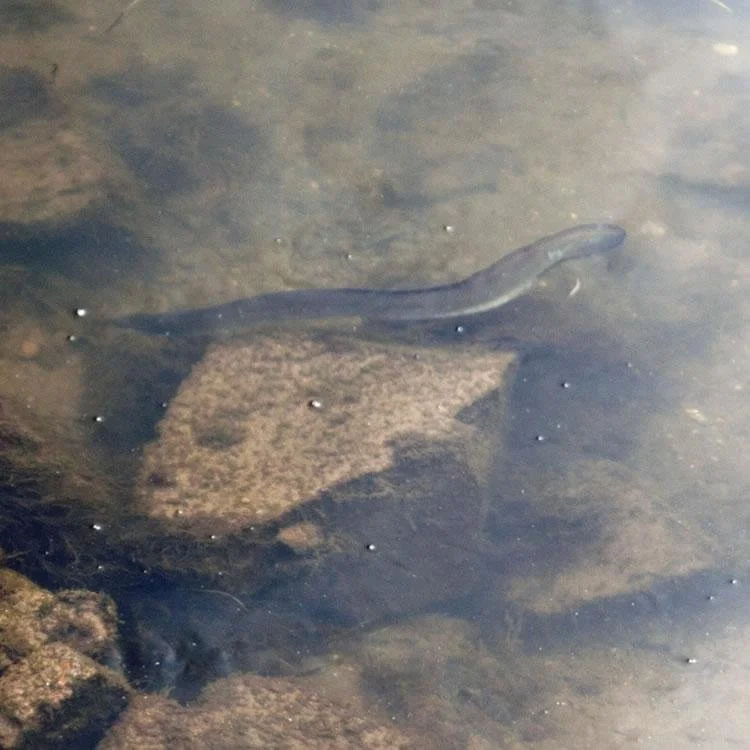
Eels (Anguilla spp.) are uniquely suited to celestial interpretation. Their long, continuous bodies, fluid movement, and migratory behaviour align closely with the flowing structure of the Milky Way.
In southeastern Australia, including Victoria, eels such as the short-finned eel (Anguilla australis) migrate between inland rivers and distant ocean spawning grounds — journeys of up to 2,000–3,000 kilometres (Aoyama 2009; Kuroki et al. 2009). These movements mirror the visual flow of the Milky Way across the sky.
While direct documentation of a specific “eel constellation” varies between language groups — and much knowledge remains culturally protected — the broader pattern is consistent:
Sky beings reflect Earth beings
Movement in the sky mirrors movement on land and water
Celestial observation informs ecological understanding
In this context, the eel can be understood as a traveller between worlds:
Freshwater rivers
Ocean depths
The night sky
This triadic existence aligns with Indigenous cosmologies in which animals are not confined to one realm but move across physical and spiritual dimensions (Clarke 2008).
Seasonal Knowledge and the Sky
One of the most important functions of sky knowledge is its role in seasonal timing.
The position and orientation of the Milky Way change throughout the year in the southern hemisphere. These shifts can signal:
Changes in temperature and weather
Animal migrations
Availability of food resources
For many communities, the appearance and position of dark constellations align with key ecological events (Norris & Norris 2009).
In Victoria and southeastern Australia, eel migration typically occurs in autumn, when increased rainfall and river flow coincide with lunar cycles and tidal changes (McDowall 1988; Jellyman 2009). The changing orientation of the Milky Way during this time can act as a celestial indicator of these transitions.
This reflects a sophisticated system of knowledge in which:
Sky patterns predict ecological events
Animal behaviour confirms seasonal change
Human activity aligns with both
Such systems are dynamic and observation-based, differing from fixed Western seasonal calendars.
Water, Tides, and Cosmic Connection
The relationship between eels and the sky cannot be understood without considering water as a unifying force.
Eels are catadromous fish — living in freshwater but breeding in the ocean. Their life cycle depends on:
River flows
Ocean currents
Tidal movements
Lunar phases
These same forces are reflected in the sky:
The Milky Way as a cosmic river
The Moon influencing tides and migration timing
Seasonal star patterns aligning with water cycles
This creates an integrated system in which sky, water, and life are interconnected.
Indigenous knowledge systems recognise this unity. Rather than separating astronomy, ecology, and hydrology into distinct disciplines, they are understood as parts of a single living system — often referred to as Country.
Cultural Meaning and Story
Beyond ecological function, the eel in the sky carries cultural and philosophical meaning.
Eels are often associated with:
Transformation — moving between life stages and environments
Resilience — surviving long migrations and environmental change
Connection — linking inland and ocean systems
When reflected in the sky, these meanings expand:
The eel becomes an ancestral traveller
Its path becomes a cosmic journey
Its story becomes a teaching system
Stories of sky beings are not merely symbolic — they are repositories of knowledge, encoding survival strategies, environmental understanding, and cultural law (Hamacher 2012).
Disruption and Continuity
Since colonisation, many of the systems that support eel life — and the knowledge associated with them — have been disrupted:
Wetland drainage and river modification
Barriers such as dams and weirs
Loss of traditional knowledge transmission
These changes have affected both eel populations and the cultural systems that depended on them (Gehrke et al. 2002; DELWP 2021).
However, there is also strong continuity:
Revival of Indigenous language and knowledge
Restoration of waterways and fish passage
Recognition of cultural landscapes such as Budj Bim (UNESCO 2019)
Reconnecting eel migration pathways is not only an ecological goal but a cultural one — restoring the relationships between sky, water, and people.
Conclusion
The story of the eel in the sky is a story of connection.
It links:
Rivers to oceans
Earth to sky
Science to culture
Past to present
Through the Milky Way, the movements of eels are reflected in the heavens, reminding us that life on Earth is part of a larger, interconnected system.
For Indigenous Australians, this understanding has existed for tens of thousands of years — a system of knowledge grounded in observation, relationship, and respect for Country.
In recognising the eel not only as a species, but as a traveller across worlds, we begin to understand a deeper truth: that the patterns of the sky and the movements of life are not separate stories, but one continuous narrative.
References
Aoyama, J 2009, ‘Life history and evolution of migration in catadromous eels (Genus Anguilla)’, Aqua-BioScience Monographs, 2(1), pp. 1–42.
Clarke, PA 2008, Aboriginal Healing Practices: Smoke, Fire and Plant Use in South-Eastern Australia, Aboriginal Studies Press, Canberra.
DELWP (Department of Environment, Land, Water and Planning) 2021, Victorian Fish Passage and Aquatic Habitat Strategy, Victorian Government, Melbourne.
Gehrke, PC et al. 2002, ‘Fish, flows and floodplains: links between freshwater ecology and water management in Australia’, Environmental Biology of Fishes, vol. 64, pp. 129–151.
Hamacher, DW 2012, ‘On the astronomical knowledge and traditions of Aboriginal Australians’, Journal of Astronomical History and Heritage, vol. 15, no. 1, pp. 39–58.
Jellyman, DJ 2009, ‘Migration patterns of freshwater eels (Anguilla spp.)’, Marine and Freshwater Research, vol. 60, no. 7, pp. 605–615.
Kuroki, M et al. 2009, ‘Migration of anguillid eels’, Journal of Fish Biology, vol. 74, pp. 183–206.
McDowall, RM 1988, Diadromy in Fishes: Migrations Between Freshwater and Marine Environments, Croom Helm, London.
Norris, RP & Norris, PM 2009, Emu Dreaming: An Introduction to Australian Aboriginal Astronomy, Emu Dreaming Press, Sydney.
UNESCO 2019, Budj Bim Cultural Landscape World Heritage Nomination Document, UNESCO World Heritage Centre, Paris.
Magic Lands Alliance
Sharing the truth of Indigenous and colonial history through film, education, land and community.
Copyright of MLA – 2025
Written, Researched and Directed by James Vegter and Uncle Reg Abrahams 16/09/2025
Magic Lands Alliance acknowledge the Traditional Owners, Custodians, and First Nations communities across Australia and internationally. We honour their enduring connection to the sky, land, waters, language, and culture. We pay our respects to Elders past, present, and emerging, and to all First Peoples communities and language groups. This article draws only on publicly available information; many cultural practices remain the intellectual property of communities.