

Exploration Research
Abstract
Last names, surnames, or family names are now central to modern identity systems across much of the world. Used in passports, census records, legal documents, and family lineage, surnames are often treated as natural and universal. Yet surnames are relatively recent historical developments that emerged differently across societies. In Europe, hereditary last names became common during the Middle Ages through systems linked to taxation, governance, land ownership, religion, and population control (Scott & Duncan 2000). In many Indigenous societies worldwide, however, identity was traditionally organised through kinship systems, Country, clan affiliation, totems, and relational names rather than fixed hereditary surnames (Rose 1996).
This MLA educational article explores the history and evolution of surnames globally and examines how colonial systems imposed first-and-last-name structures onto Indigenous communities in Australia and around the world. With a focus on Wadawurrung Country and the broader Kulin Nations of Victoria, the article investigates how Indigenous naming systems functioned prior to colonisation, how Christian missions and colonial administration transformed naming practices, and how these imposed surnames affected identity, kinship, language, and cultural continuity. Integrating history, anthropology, linguistics, sociology, psychology, and Indigenous studies, this article argues that surnames are not merely administrative tools but reflections of power, identity, governance, and cultural worldview.
Introduction: What Is a Last Name?
A last name, surname, or family name is a hereditary identifier shared among family members and passed across generations. Today, surnames are used globally in legal systems, taxation records, census data, passports, property ownership, education, and employment systems. In most Western societies, individuals are identified through a first name and a family surname. However, this structure is not universal historically. Many cultures organised identity through clan systems, kinship relationships, place-based identity, spiritual names, totemic affiliation, and generational naming systems rather than fixed hereditary surnames (Anderson 2006). The widespread use of surnames developed gradually and often alongside the expansion of bureaucratic states, religious institutions, and systems of governance.
The Origins of Surnames in Europe
Hereditary surnames became increasingly common in Europe between the eleventh and sixteenth centuries (Scott & Duncan 2000). As populations increased, single names became insufficient for administration and identification. Governments, churches, and kingdoms required clearer systems for taxation, military service, inheritance, census collection, and land ownership. Surnames commonly emerged from occupations, geography, parentage, physical characteristics, or noble associations. Names such as Smith, Baker, Taylor, Hill, Johnson, and Brown reflected these origins. Over time, these identifiers became hereditary family names passed through generations. The growth of surnames mirrored the rise of centralised political power. As monarchies and nation-states expanded, names became tied to administration, documentation, and social control. Written records increasingly shaped identity within European societies (Foucault 1977).
Colonialism, Bureaucracy, and Naming Systems
As European empires expanded globally, surname systems spread through colonisation, Christianity, census systems, schools, and government administration (Anderson 2006). Colonial authorities frequently imposed European naming structures upon Indigenous peoples whose cultures used entirely different systems of identity.
Naming became connected to:
Assimilation
Surveillance
Property systems
Racial classification
State control
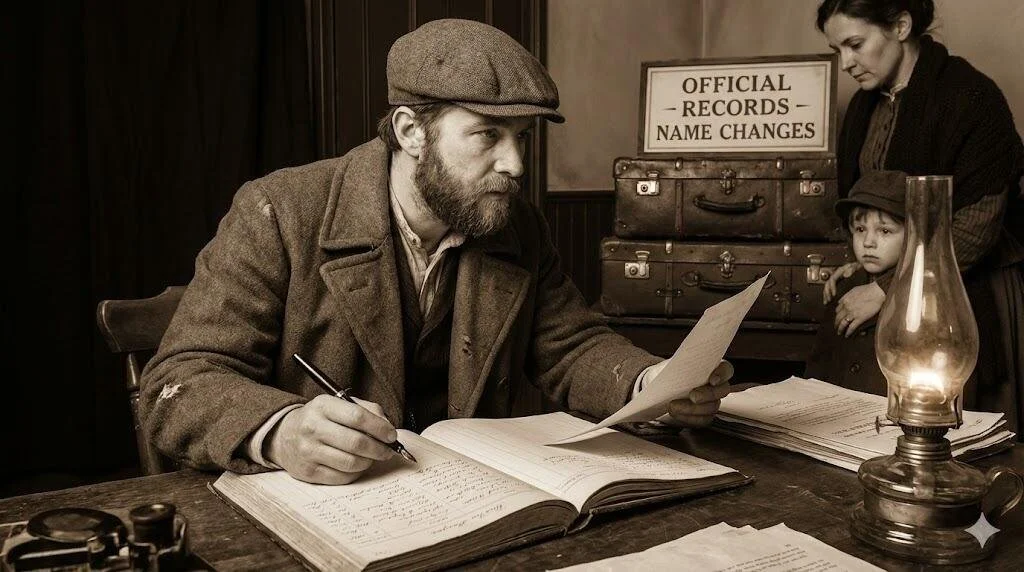
In many colonies, Indigenous names were altered, translated, simplified, or replaced entirely. European naming systems became tools of bureaucratic governance, often disconnecting people from kinship systems, language, and ancestral identity.
Indigenous Naming Systems Before Colonisation in Australia
Before British colonisation, Indigenous Australian communities generally did not organise identity through fixed hereditary surnames in the European sense (Broome 2005). Identity was commonly connected to Country, clan affiliation, totem systems, ceremony, kinship obligations, and language groups.
Names could change throughout life depending upon:
Age
Initiation
Ceremony
Spiritual experience
Family relationships
Community role
Some names were restricted or avoided after death due to cultural protocols surrounding mourning and respect (Rose 1996). Among many Indigenous Australian societies, identity was relational rather than individualised. People were known through their relationships to family, Country, ancestors, and community obligations. This differed significantly from European surname systems focused upon inheritance, property, and patriarchal lineage.
Wadawurrung and Kulin Nation Naming Systems
On Wadawurrung Country and across the broader Kulin Nations of Victoria, identity was deeply connected to clan groups, Country, moieties, ceremony, and kinship systems (Clark 1990). Rather than hereditary surnames, individuals were often identified through place of belonging, community relationships, family connections, and ceremonial position. Many Kulin Nation communities organised social systems through moieties connected to Bunjil (eaglehawk) and Waa (crow). These systems regulated marriage, ceremony, ecological responsibilities, and kinship obligations (Broome 2005). Identity therefore functioned through complex relational systems rather than fixed surnames passed across generations. Language itself reinforced these relationships. Names were often connected to Country, waterways, ancestral beings, or ecological systems. The individual existed within a larger network of social and environmental responsibility.
Colonisation and the Imposition of European Names
Following British colonisation in Victoria during the nineteenth century, Indigenous naming systems were increasingly disrupted. Missions, reserves, churches, police, and colonial administrators imposed Christian first names and European surnames upon Indigenous communities (Barwick 1998).
In many cases:
Original names were removed or altered
Indigenous pronunciations were changed
English spellings replaced Indigenous language
Children were registered under imposed surnames
This process contributed to:
Language loss
Cultural disruption
Family fragmentation
Administrative control
Colonial authorities often viewed Indigenous naming systems as incompatible with European governance and bureaucracy. Imposed surnames therefore became part of broader assimilation policies.
Missions, Christianity, and Renaming
Christian missions played a major role in transforming Indigenous naming systems across Australia. At missions such as Coranderrk, Framlingham, Lake Condah, and Ramahyuck, many Indigenous people received biblical or English names through baptism, schooling, and church administration (Barwick 1998).
Children were frequently pressured or forced to:
Speak English
Abandon traditional names
Use Christian surnames
Adopt European cultural practices
Mission systems often viewed Indigenous languages and naming systems as barriers to assimilation. Naming therefore became closely connected to religious conversion and colonial authority.
The Stolen Generations and Identity Disruption
The forced removal of Indigenous children during the Stolen Generations further disrupted naming systems and kinship continuity (AHRC 1997). Many children:
Lost connection to family names
Were renamed by institutions
Had records altered
Were separated from language and Country
For many Indigenous Australians today, reconnecting family history involves reconstructing genealogies fragmented through missions, child removal policies, and government administration. The loss of naming continuity contributed to broader intergenerational trauma and cultural dislocation.
Comparative Global Indigenous Naming Systems
The disruption of Indigenous naming systems occurred globally under colonialism. Traditional Māori identity systems centred around whakapapa (genealogy), tribal affiliation, and ancestral connection before European surname structures became widespread (Walker 2004). Among Native American nations, colonial authorities frequently translated or replaced Indigenous names with English surnames. Sámi communities in northern Scandinavia experienced similar pressures as governments imposed fixed surnames upon traditionally mobile reindeer-herding populations (Lehtola 2004). Across Africa, missionary systems often replaced local naming traditions with Christian or European names tied to colonial administration. These patterns demonstrate how naming became linked to empire, governance, and bureaucratic control worldwide.
Psychology, Identity, and Names
Names carry profound psychological and emotional significance. They influence:
Identity formation
Belonging
Family continuity
Social recognition
Cultural memory
For Indigenous communities, disruption of naming systems often contributed to:
Identity confusion
Cultural disconnection
Psychological trauma
Loss of belonging
Reclaiming Indigenous names and language therefore represents not only cultural revival but also psychological restoration and reconnection to ancestry and Country (Rose 1996).
Language, Power, and Administration
The spread of surnames reflects broader systems of governance and social control. Governments rely upon naming systems for:
Census data
Taxation
Property ownership
Policing
Passports and borders
Legal administration
European surname systems emerged alongside expanding bureaucratic states and written record systems. Indigenous naming systems often functioned through oral, relational, and kinship-based structures less dependent on written administration. This difference reflects contrasting philosophies of identity. European systems increasingly tied identity to documentation and individual property relations, whereas many Indigenous systems tied identity to relationship, Country, and community obligation.
Indigenous Name Revitalisation Today
Across Australia, many Indigenous communities are revitalising traditional naming practices through language restoration, cultural education, genealogy projects, and community-led initiatives. This includes:
Restoring language names
Reclaiming ancestral identity
Teaching kinship systems
Reviving place names
Embedding Indigenous words back into public life
In Victoria, Wadawurrung and other Kulin Nation communities continue language revitalisation efforts reconnecting people with traditional words, cultural identity, and Country (VACL 2014). These processes challenge colonial erasure while strengthening continuity between past, present, and future generations.
Modern Australia and Hybrid Identity Systems
Today many Indigenous Australians carry:
European surnames
Indigenous first names
Traditional clan identities
Multiple cultural affiliations
Identity has become layered through colonisation, survival, adaptation, resistance, and cultural revival. Some families continue reconnecting genealogies fragmented through missions and government policies, while others integrate both Indigenous and European naming systems within contemporary identity. Names therefore reflect not only colonial history, but also resilience and cultural survival.
Anthropology and the Meaning of Names
Anthropologists increasingly recognise that naming systems reflect deeper cultural structures and worldviews. European surnames historically emphasised inheritance, property, patriarchal lineage, and bureaucratic order. Many Indigenous systems instead emphasised relationship, place, spirituality, ecological belonging, and kinship responsibility (Rose 1996).
Names reveal how societies understand:
Family
Authority
Community
Memory
Identity
Relationship to land and ancestry
Studying surnames therefore provides insight into broader systems of governance, philosophy, and social organisation.
The Future of Naming and Cultural Identity
Globally, Indigenous communities continue reclaiming naming sovereignty through language revitalisation, cultural governance, education, and legal recognition. Digital archives, oral history projects, and genealogical research are helping restore family connections disrupted through colonial administration. In Australia, increasing recognition of Indigenous naming systems contributes to broader truth-telling and cultural restoration. Reclaiming names also strengthens cultural continuity and intergenerational identity. The future of naming may increasingly involve coexistence between traditional identity systems and modern administrative structures.
Conclusion
Last names are often treated as universal and timeless, yet hereditary surnames are relatively recent historical developments closely connected to governance, taxation, religion, and bureaucratic administration. Before colonisation, Indigenous Australian communities—including the Wadawurrung and broader Kulin Nations—organised identity through kinship, Country, clan affiliation, ceremony, and relational systems rather than fixed hereditary surnames. Colonial governments, missions, and churches imposed European naming structures that disrupted traditional identity systems and contributed to language and cultural loss. Across Australia and the world, Indigenous communities continue reclaiming names, language, and ancestral identity. These efforts demonstrate that names are not merely administrative labels, but living expressions of belonging, memory, history, and cultural continuity. Understanding the history of surnames therefore reveals broader questions about power, governance, identity, and humanity’s relationship to family, community, and Country.
References
Anderson, B. (2006) Imagined Communities. Verso.
Australian Human Rights Commission (AHRC) (1997) Bringing Them Home Report.
Barwick, D. (1998) Rebellion at Coranderrk. Aboriginal History Monograph.
Broome, R. (2005) Aboriginal Victorians: A History Since 1800. Allen & Unwin.
Clark, I.D. (1990) Aboriginal Languages and Clans. Monash Publications in Geography.
Foucault, M. (1977) Discipline and Punish. Pantheon Books.
Lehtola, V.P. (2004) The Sámi People. University of Alaska Press.
Pascoe, B. (2014) Dark Emu. Magabala Books.
Reynolds, H. (1987) The Law of the Land. Penguin.
Rose, D.B. (1996) Nourishing Terrains. Australian Heritage Commission.
Scott, J. & Duncan, C. (2000) Demography and the History of Naming Systems. Cambridge University Press.
Victorian Aboriginal Corporation for Languages (VACL) (2014) Nyernila: Listen Continuously.
Walker, R. (2004) Ka Whawhai Tonu Matou: Struggle Without End. Penguin.
Written, Researched and Directed by James Vegter (22 September 2025)
MLA Educational Articles
Sharing the truth of Indigenous and colonial history through film, education, land, and community.
www.magiclandsalliance.org
Copyright MLA – 2025
Magic Lands Alliance acknowledges the Traditional Owners, Custodians, and First Nations communities across Australia and internationally. We honour their enduring connection to the sky, land, waters, language, and culture. We pay respect to Elders past, present, and emerging, and to all First Peoples’ communities and language groups. This article draws only on publicly available information; many cultural practices remain the intellectual property of their respective communities.