

Exploration Research
Abstract
Middens are among the most significant archaeological and cultural sites across Australia. Often consisting of layers of shell, charcoal, bone, stone artefacts, and organic material accumulated over thousands of years, middens provide evidence of long-term Indigenous occupation, environmental management, coastal economies, and cultural continuity. In Victoria, especially across Wadawurrung Country and the broader Kulin Nations, midden sites line coastlines, river systems, wetlands, and estuaries, demonstrating sophisticated ecological knowledge and enduring relationships between people and Country.
For many years, colonial archaeology misunderstood middens as simple “rubbish heaps.” Contemporary Indigenous and archaeological perspectives now recognise middens as highly significant cultural landscapes that contain scientific, historical, ecological, and spiritual knowledge (Lourandos 1980; Clark 1990). They reveal seasonal harvesting systems, sustainable marine resource management, ceremonial gathering places, and evidence of changing coastlines and climate over thousands of years.
This MLA educational article explores the science, archaeology, ecology, and Indigenous cultural significance of midden sites in Victoria and Australia. Focusing particularly on Wadawurrung Country and Kulin Nations coastal regions, the article examines how middens formed, what they reveal about Indigenous life, the impacts of colonisation and coastal destruction, and why these sites should be protected under cultural heritage and environmental law. Integrating archaeology, anthropology, ecology, Indigenous studies, geology, and environmental science, this article argues that middens are not only archaeological records but living cultural archives central to Indigenous sovereignty and truth-telling.
Introduction: What Are Middens?
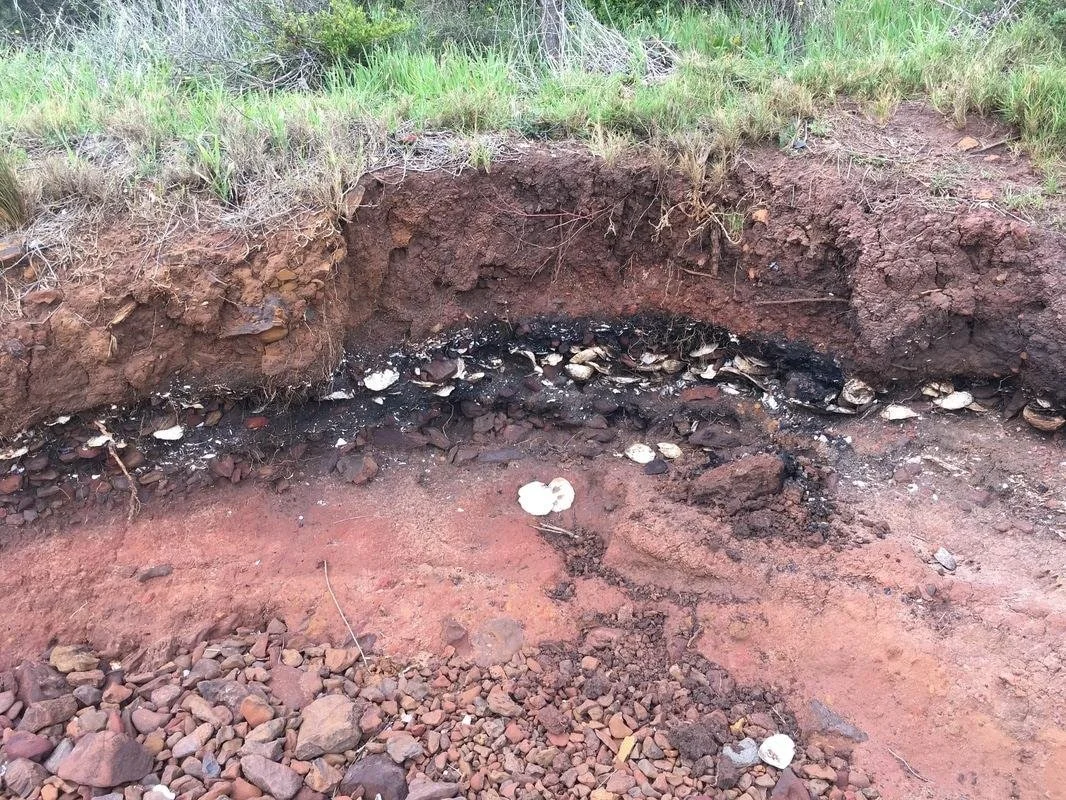
A midden is an accumulation of cultural material left through repeated human activity over time. In Australia, middens commonly contain:
Shellfish remains
Fish bones
Animal bones
Charcoal and ash
Stone tools
Hearth material
Ochre and artefacts
The word “midden” derives from Old Scandinavian and Middle English terms meaning refuse heap or domestic waste pile (Oxford English Dictionary 2024). However, Indigenous midden sites are far more than ancient rubbish dumps. They are evidence of long-term occupation, ecological management, ceremony, trade, and social gathering.
Across Australia, middens can range from:
Small shell deposits
Riverbank camps
Massive coastal shell mounds several metres high
Some midden systems are thousands of years old and provide some of the oldest archaeological evidence of human coastal occupation in Australia (Lourandos 1980).
The Science Behind Midden Formation
Middens formed gradually through repeated seasonal occupation and harvesting practices. Coastal and riverine Indigenous communities collected shellfish, fish, birds, marsupials, and plant foods, leaving remains in concentrated areas over generations.
Scientific analysis of middens reveals:
Dietary systems
Seasonal food harvesting
Climate patterns
Environmental change
Sea-level history
Trade networks
Technological development
Archaeologists use radiocarbon dating, stratigraphy, soil analysis, faunal analysis, and shell chemistry to determine the age, environmental conditions, and ecological history of midden deposits (Lourandos 1997). Shells within middens can also preserve information about ancient ocean temperatures, tidal systems, and environmental conditions. Middens therefore operate as both cultural and environmental archives.
Middens and Indigenous Ecological Knowledge
Indigenous Australians developed highly sustainable harvesting systems adapted to local ecosystems over thousands of years (Pascoe 2014). Middens demonstrate:
Seasonal harvesting cycles
Selective shellfish gathering
Marine ecological knowledge
Resource sustainability
Long-term environmental management
Many midden sites reveal harvesting practices that avoided overexploitation. Shellfish populations remained stable because Indigenous communities harvested according to seasonal availability and ecological balance. For Indigenous peoples, marine systems were governed through lore, kinship obligations, and responsibilities to Country. Middens therefore reflect both survival and sophisticated environmental governance.
Wadawurrung Country and Coastal Midden Systems
On Wadawurrung Country across Geelong, the Bellarine Peninsula, Surf Coast, and Corio Bay regions, extensive midden systems exist along coastlines, estuaries, wetlands, and river mouths (Clark 1990).
These middens contain:
Mussel shells
Oyster shells
Abalone remains
Fish bone deposits
Hearth sites
Stone artefacts
Wadawurrung communities maintained strong relationships with:
Coastal food systems
Eel and fish migration
Wetland ecology
Tidal movement
Seasonal gathering practices
Major coastal zones such as:
Point Lonsdale
Barwon Heads
Lake Connewarre
Swan Bay
Bellarine coastlines
contain important cultural heritage areas connected to thousands of years of occupation.
Many midden sites also functioned as:
Teaching places
Ceremony locations
Seasonal camps
Trade and gathering areas
Country itself functioned as a living cultural system.
Kulin Nations and Victorian Midden Networks
Across the broader Kulin Nations, middens appear throughout:
Port Phillip Bay
Western Port
Gippsland Lakes
Murray River systems
Volcanic plains waterways
These sites demonstrate extensive trade and movement networks connecting communities across Victoria (Broome 2005).
Riverine middens often contain:
Freshwater mussels
Fish remains
Stone tool production evidence
Coastal middens reveal deep maritime knowledge and adaptation to changing sea levels over thousands of years. Some Victorian middens date back more than 6,000 years, formed after post-Ice Age sea-level rise reshaped the coastline (Bird & Frankel 1991).
Middens as Archaeological and Historical Archives
Middens are among the most important archaeological records in Australia because they preserve evidence of:
Long-term habitation
Climate adaptation
Technological development
Social organisation
Trade systems
Marine economies
Archaeologist Harry Lourandos argued that Australian Indigenous societies developed increasingly complex economies and social systems over time rather than remaining static hunter-gatherer societies (Lourandos 1980; 1997). Midden systems support this interpretation through evidence of:
Resource intensification
Long-distance exchange
Permanent and semi-permanent occupation
Ian Clark’s research on Victorian Indigenous history and cultural landscapes further demonstrates the importance of protecting these sites as living records of Indigenous sovereignty and occupation (Clark 1990; 1995).
Colonial Destruction and Coastal Development
Since European colonisation, many midden sites across Victoria and Australia have been:
Destroyed by urban development
Damaged through agriculture
Quarried for lime production
Eroded through coastal engineering
Looted for artefacts
In the nineteenth century, shell middens were sometimes mined and burnt to produce lime for construction materials. Colonial settlers frequently viewed middens as empty shell deposits rather than sacred cultural heritage sites.
Urbanisation around:
Melbourne
Geelong
Port Phillip
Coastal tourism areas
has caused major destruction to midden landscapes.
This destruction represents not only archaeological loss, but damage to living Indigenous cultural memory and connection to Country.
Cultural Heritage Law and Protection
Today, midden sites are protected under various heritage and cultural laws, including:
Aboriginal Heritage Act 2006 (Victoria)
Native Title legislation
Cultural heritage management plans
Environmental protection laws
However, many Indigenous communities argue existing protections remain inadequate due to:
Development pressure
Mining projects
Coastal erosion
Lack of Indigenous authority in decision-making
Traditional Owners increasingly advocate for:
Greater cultural governance
Indigenous-led site management
Stronger legal protections
Truth-telling around destruction of heritage sites
The destruction of Juukan Gorge in Western Australia in 2020 highlighted national concerns regarding the vulnerability of Indigenous heritage under industrial development.
Middens, Climate Change, and Rising Seas
Climate change increasingly threatens coastal midden systems through:
Sea-level rise
Coastal erosion
Storm surges
Acidification
Increased weather extremes
Many midden sites located near beaches, estuaries, and dunes are at risk of irreversible loss.
Ironically, middens themselves contain valuable scientific evidence about:
Ancient climate systems
Coastal change
Sea-level fluctuations
Environmental adaptation over thousands of years
Protecting middens therefore supports both cultural heritage and climate science.
Anthropology and the Misunderstanding of Middens
For much of colonial history, anthropology and archaeology underestimated Indigenous Australian societies. Middens were often interpreted through European assumptions about primitiveness and subsistence living.
Modern research increasingly challenges these misconceptions. Midden systems demonstrate:
Long-term environmental planning
Sophisticated marine knowledge
Seasonal economies
Social organisation
Sustainable harvesting practices
Lourandos’ concept of “intensification” helped reshape understandings of Australian Indigenous societies as dynamic, adaptive, and technologically sophisticated (Lourandos 1997).
Psychology, Memory, and Connection to Place
Midden sites also hold deep emotional and psychological significance for Indigenous communities. They represent:
Ancestors
Family continuity
Shared gathering places
Story and memory
Connection to Country
For many communities, visiting midden sites reinforces identity, belonging, and intergenerational continuity.
The destruction of midden sites therefore impacts not only archaeology but cultural wellbeing and community memory.
Indigenous Sovereignty and Living Heritage
Importantly, middens are not relics of extinct cultures. They remain part of living Indigenous landscapes connected to ongoing cultural practice and sovereignty.
Traditional Owners across Victoria continue:
Caring for coastal Country
Teaching younger generations
Revitalising language and ecological knowledge
Protecting cultural heritage
Middens therefore represent continuing Indigenous presence rather than merely ancient history.
Conclusion
Middens across Victoria and Australia are among the most significant records of Indigenous cultural, ecological, and historical knowledge. Far from being simple refuse heaps, they are living archives documenting thousands of years of occupation, marine science, seasonal harvesting, ceremony, and connection to Country. On Wadawurrung Country and throughout the broader Kulin Nations, midden systems reveal highly sophisticated environmental management and enduring coastal relationships shaped over millennia. Modern archaeology and environmental science increasingly confirm what Indigenous communities have always known: these landscapes contain deep knowledge, memory, and law/lore. Yet many midden sites remain threatened by urban development, climate change, erosion, and insufficient heritage protection. Protecting these places is essential not only for archaeology and environmental science, but for truth-telling, Indigenous sovereignty, cultural continuity, and future generations. Middens are therefore not simply remnants of the past. They are continuing expressions of Indigenous presence, ecological intelligence, and connection to Country across Australia.
References
Bird, C.F.M. & Frankel, D. (1991) Excavations at Koongine Cave. Occasional Papers in Prehistory.
Broome, R. (2005) Aboriginal Victorians: A History Since 1800. Allen & Unwin.
Clark, I.D. (1990) Aboriginal Languages and Clans. Monash Publications in Geography.
Clark, I.D. (1995) Scars in the Landscape. Aboriginal Studies Press.
Lourandos, H. (1980) ‘Change or Stability? Hydraulics, Hunter-Gatherers and Population in Temperate Australia’, World Archaeology.
Lourandos, H. (1997) Continent of Hunter-Gatherers. Cambridge University Press.
Oxford English Dictionary (2024) Midden, n.
Pascoe, B. (2014) Dark Emu. Magabala Books.
Rose, D.B. (1996) Nourishing Terrains. Australian Heritage Commission.
Victorian Aboriginal Heritage Council (2023) Aboriginal Cultural Heritage in Victoria.
UNESCO (2020) Juukan Gorge and Indigenous Heritage Protection.
Written, Researched and Directed by James Vegter (22 September 2025)
MLA Educational Articles
Sharing the truth of Indigenous and colonial history through film, education, land, and community.
www.magiclandsalliance.org
Copyright MLA – 2025
Magic Lands Alliance acknowledges the Traditional Owners, Custodians, and First Nations communities across Australia and internationally. We honour their enduring connection to the sky, land, waters, language, and culture. We pay respect to Elders past, present, and emerging, and to all First Peoples’ communities and language groups. This article draws only on publicly available information; many cultural practices remain the intellectual property of their respective communities.