

Exploration Research
Abstract
The political and legal institutions that later shaped the British Empire did not appear suddenly. They evolved over nearly two thousand years through tribal societies, Roman occupation, Anglo-Saxon kingdoms, Viking invasions, the Norman Conquest, feudalism, constitutional reform, and the gradual development of Parliament and the common law. These institutions eventually became the foundations of British colonial administration across the world, including Australia.
When Britain established colonies in Australia from 1788 onwards, it exported its own legal traditions, constitutional principles, and systems of government. However, these systems were imposed upon existing Indigenous Law/Lore without treaty or consent. British concepts of sovereignty, property, and Crown authority fundamentally transformed the political landscape of Australia while denying recognition of long-established Indigenous governance systems.
This article examines how England's monarchy, legal system, and constitutional government developed, how the British Crown acquired authority, and how these institutions later influenced colonial Australia. It also explores the relationship between law, government, military power, commerce, and religion as interconnected foundations of the British Empire.
Introduction
Modern Australia inherits many of its political institutions from Britain. Parliament, common law, constitutional monarchy, governors, courts, policing, and public administration all developed through centuries of English history before being transported to Australia during British colonisation.
Yet England itself was not always a unified nation. Long before the emergence of the English Crown, Britain was occupied by diverse peoples with their own languages, customs, spiritual beliefs, and systems of law. Over many centuries these societies experienced migration, invasion, conquest, and political transformation.
Understanding this history helps explain how Britain eventually developed one of the world's largest empires and why English constitutional law became so influential across the globe.
It also provides important context for understanding the impact of British law on Indigenous peoples in Australia, whose own sophisticated legal systems had governed Country for tens of thousands of years before British arrival (Reynolds 1987; Broome 2005).
Britain Before England
Human occupation of Britain extends back hundreds of thousands of years, with continuous settlement following the end of the last Ice Age approximately 11,700 years ago (Cunliffe 2013). By the Bronze Age and Iron Age, Britain was home to numerous Celtic-speaking communities organised into independent tribal societies.
These included groups such as the Iceni, Brigantes, Trinovantes, Catuvellauni, Durotriges, Silures, and Ordovices. Each possessed distinctive territories, leadership structures, spiritual traditions, customary laws, and economic systems. Authority was generally local rather than national, and governance often centred upon kinship, councils, warrior elites, and religious leaders known as Druids (Cunliffe 2013).
Like Indigenous peoples elsewhere, these societies maintained deep relationships with their landscapes. Rivers, forests, mountains, sacred groves, and seasonal cycles played important roles in their cultural and spiritual lives. Law emerged through oral tradition, customary practice, and collective memory rather than written constitutions.
Roman Britain (43–410 CE)
A major transformation began in 43 CE when the Roman Emperor Claudius ordered the invasion of Britain.
Over the following centuries Rome established towns, roads, forts, taxation systems, and provincial administration across much of southern Britain. Roman law, engineering, architecture, military organisation, and urban planning profoundly influenced British society (Carroll 2013).
Although Roman authority never fully controlled all of Britain—particularly parts of present-day Scotland—it introduced the concept of centralised government administered through written law and imperial authority.
When Roman forces withdrew around 410 CE, Britain entered a period of political fragmentation.
Anglo-Saxon England
Following Rome's withdrawal, Germanic peoples including the Angles, Saxons, and Jutes gradually established kingdoms across much of southern and eastern Britain.
Rather than forming a single nation, England consisted of competing kingdoms including:
Wessex
Mercia
Northumbria
East Anglia
Kent
Sussex
Essex
Each kingdom possessed its own rulers, assemblies, legal customs, and military forces.
One of the earliest surviving English law codes belongs to King Æthelberht of Kent, written around 600 CE. His laws established penalties for violence, theft, injury, property disputes, and breaches of social order (Maddicott 2010).
Although simple by modern standards, these laws represent one of the earliest written legal systems in England.
Importantly, law was understood not as something entirely invented by rulers but as a combination of custom, royal authority, Christian influence, and local practice.
Viking Expansion
Beginning in the late eighth century, Scandinavian Vikings increasingly raided and later settled parts of Britain.
The famous attack on Lindisfarne monastery in 793 CE marked the beginning of the Viking Age in Britain.
During the ninth century large areas of eastern England became known as the Danelaw, where Scandinavian customs and legal traditions influenced local government (Keynes 1997).
Conflict between Anglo-Saxon and Viking rulers eventually contributed to the emergence of stronger English kingship, particularly under King Alfred the Great and his successors.
The Norman Conquest
Perhaps the single most important event in English constitutional history occurred on 14 October 1066.
At the Battle of Hastings, William, Duke of Normandy, defeated King Harold II and became King William I of England, later known as William the Conqueror.
The Norman Conquest transformed England.
William redistributed land to Norman nobles loyal to the Crown while requiring military service through the feudal system. Castles were constructed across England to consolidate royal authority, and Norman French became the language of government and law for centuries.
One of William's greatest administrative achievements was commissioning the Domesday Book in 1086.
This remarkable survey recorded:
land ownership;
livestock;
agriculture;
settlements;
taxation;
resources.
The Domesday Book enabled the Crown to calculate taxes, organise military obligations, and strengthen royal control over land (Carpenter 2003).
It also established an enduring constitutional principle:
All land was ultimately held from the Crown.
Centuries later this principle became highly significant in colonial Australia through the concept of Crown land.
Feudalism and Crown Authority
Following the Norman Conquest, England operated under a feudal system.
The monarch stood at the apex of society.
Land was granted to powerful nobles.
Nobles granted portions to knights.
Peasants and tenant farmers worked the land.
Political authority, military service, taxation, and land ownership became closely connected.
The Crown did not necessarily own every acre directly, but ultimate legal authority over land derived from the monarch.
This relationship between sovereignty and land later became one of the constitutional foundations exported throughout the British Empire.
Magna Carta: The Beginning of Constitutional Limits
Although Norman kings exercised considerable authority, royal power was never completely unrestricted.
By the early thirteenth century conflict between King John and his barons culminated in one of history's most influential constitutional documents.
On 15 June 1215, King John sealed Magna Carta at Runnymede.
Initially the agreement sought to resolve disputes between the king and powerful nobles.
Yet several principles proved historically transformative.
Magna Carta declared that:
the king was subject to law;
certain rights required legal protection;
taxation required consultation;
justice should follow lawful procedures.
Although these protections originally applied only to limited sections of medieval society, Magna Carta gradually became an enduring symbol of constitutional government and the rule of law (Holt 2015).
Its influence later extended throughout the British Empire, including Australia.
The Origins of Parliament
England's Parliament emerged gradually rather than being created through a single event.
Early kings regularly consulted nobles, bishops, and advisers before making important decisions.
These councils evolved over centuries into Parliament.
A particularly significant milestone occurred in 1295 when King Edward I summoned what later became known as the Model Parliament.
Representatives included:
bishops;
nobles;
knights;
representatives of towns.
Parliament increasingly became responsible for approving taxation needed to finance wars, administration, and government.
In return, Parliament gradually expanded its influence over legislation and public policy (Maddicott 2010).
This balance between monarchy and Parliament became one of Britain's defining constitutional characteristics.
English Common Law
Unlike many European legal systems based primarily upon detailed legal codes, England developed what became known as the common law.
Common law evolved through decisions made by judges hearing individual cases.
Rather than relying solely upon legislation, courts developed legal principles through precedent.
Over centuries these judicial decisions accumulated into a sophisticated legal tradition.
Common law emphasised:
precedent;
judicial reasoning;
property rights;
contractual obligations;
procedural fairness.
When Britain established colonies overseas, common law became one of its most enduring constitutional exports.
Australia continues to operate within this legal tradition today.
The Crown and the Church
Religion also became deeply intertwined with English government.
Following the English Reformation under King Henry VIII during the sixteenth century, the monarch became Supreme Governor of the Church of England.
The relationship between church and state strengthened royal authority while also influencing education, morality, law, and later colonial expansion.
Many later missionary organisations viewed the spread of Christianity alongside British law and government as part of Britain's global responsibilities.
This religious dimension would later become an important feature of colonial Australia.
From Absolute Monarchy to Constitutional Monarchy
By the beginning of the seventeenth century England possessed a monarchy, Parliament, royal courts, and an established common law system. Yet one fundamental question remained unresolved:
Who held ultimate political authority—the King or Parliament?
The Stuart monarchs believed that kings ruled by Divine Right, the idea that royal authority came directly from God rather than from Parliament or the people. King James I (1603–1625) argued that monarchs answered only to God, while Parliament increasingly believed that taxation, legislation, and government required parliamentary consent (Bogdanor 2009).
This constitutional tension eventually erupted into one of the most significant political conflicts in British history.
The English Civil Wars (1642–1651)
Conflict between King Charles I and Parliament escalated throughout the 1630s and early 1640s. Charles attempted to govern without Parliament for eleven years while raising taxes independently and imposing controversial religious reforms.
Civil war broke out in 1642 between Royalists (supporters of the King) and Parliamentarians.
Following years of conflict, Parliament emerged victorious under the military leadership of Oliver Cromwell.
On 30 January 1649, King Charles I was publicly executed outside the Banqueting House in London.
For the first time in English history, a reigning monarch had been tried and executed by his own government.
This event fundamentally altered British constitutional history (Kishlansky 1996).
The Commonwealth of England
Following the execution of Charles I, England briefly became a republic known as the Commonwealth of England.
Oliver Cromwell eventually became Lord Protector in 1653, governing until his death in 1658.
Although the monarchy had been abolished, Cromwell ruled with considerable executive authority supported by Parliament and the army.
The Commonwealth demonstrated that England could exist without a king, but political instability followed Cromwell's death.
In 1660, Parliament restored the monarchy under Charles II.
The restored monarchy, however, would never again possess completely unrestricted authority.
The Glorious Revolution and the Bill of Rights
Another constitutional crisis emerged during the reign of James II.
Many political leaders feared James sought to restore absolute monarchy and strengthen Catholic influence.
In 1688, Parliament invited William of Orange and Mary to assume the throne in what became known as the Glorious Revolution.
Unlike previous changes of monarch, this transition established that Parliament—not hereditary succession alone—determined constitutional authority.
The following year Parliament enacted the Bill of Rights (1689).
The Bill declared that:
monarchs could not suspend laws without Parliament;
taxation required parliamentary approval;
standing armies required parliamentary consent during peacetime;
elections should remain free;
parliamentary debate should be protected.
Historians regard these developments as foundations of Britain's constitutional monarchy (Bogdanor 2009).
Power increasingly shifted from the personal authority of monarchs toward Parliament, ministers, and the courts.
The Development of the British Constitution
Unlike many nations, Britain has never adopted a single written constitutional document.
Instead, the British Constitution evolved gradually through:
Magna Carta (1215);
common law;
parliamentary statutes;
constitutional conventions;
judicial decisions;
historical practice.
This flexible constitutional system became one of Britain's most distinctive political characteristics.
By the eighteenth century Britain had developed a constitutional monarchy in which:
Parliament made laws;
ministers governed;
judges interpreted law;
the monarch remained Head of State.
The Crown continued to symbolise sovereignty, while day-to-day government increasingly rested with elected representatives.
The Crown and the Expansion of Empire
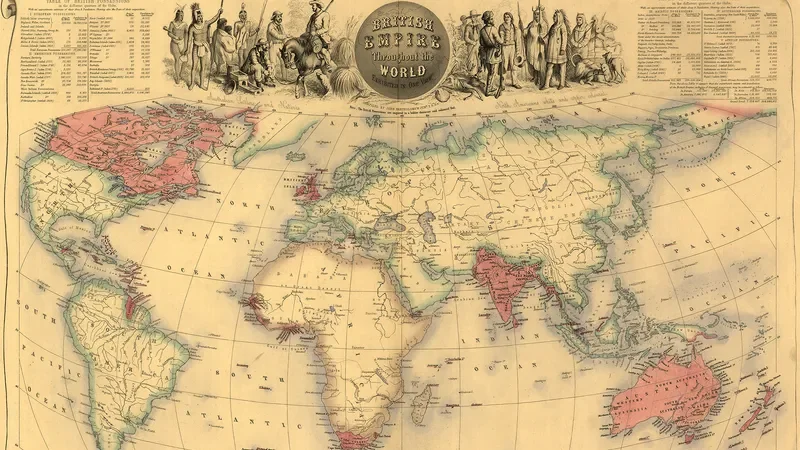
As Britain's constitutional system matured, overseas expansion accelerated.
Rather than personally governing colonies, monarchs authorised imperial expansion through:
Royal Charters;
governors;
military commissions;
colonial constitutions;
land grants.
The Crown became the legal source of sovereignty throughout the Empire.
Governors exercised executive authority on behalf of the monarch.
Courts administered English law.
Surveyors mapped land.
Colonial legislatures gradually emerged in many settlements.
Although Parliament increasingly directed imperial policy, colonial government continued to operate in the monarch's name.
Chartered Companies and Imperial Expansion
One of Britain's most successful imperial strategies involved granting Royal Charters to private companies.
These organisations combined private investment with public authority.
Among the most influential were:
The East India Company (1600)
Granted a Royal Charter by Queen Elizabeth I on 31 December 1600, the East India Company became one of history's most powerful commercial enterprises (Bowen 2006).
It traded:
tea;
cotton;
silk;
spices;
indigo;
porcelain;
opium;
saltpetre.
At its height it governed large parts of India while maintaining private armies larger than many European states.
The Hudson's Bay Company (1670)
Established by King Charles II, the Hudson's Bay Company dominated the North American fur trade for centuries.
The Royal African Company (1660)
Granted a Royal Charter by Charles II, the Royal African Company traded gold, ivory, and enslaved Africans.
Modern historians recognise its major role in Britain's participation in the transatlantic slave trade (Pettigrew 2013).
The Bank of England (1694)
Created to finance government borrowing and military expenditure, the Bank of England became central to Britain's financial system.
Together these institutions created an economic network linking commerce, finance, government, and imperial expansion.
The Fiscal-Military State
The British Empire was sustained not only through commerce but also through military power.
Historian John Brewer describes eighteenth-century Britain as a "fiscal-military state" because government finance, taxation, military organisation, and commerce became closely interconnected (Brewer 1989).
Revenue came from:
customs duties;
excise taxes;
land taxes;
government borrowing;
international trade.
These revenues funded:
the Royal Navy;
the British Army;
colonial administration;
ports;
dockyards;
military infrastructure.
The Royal Navy became Britain's greatest strategic advantage.
By protecting merchant shipping, suppressing piracy, and defeating rival European powers, it secured Britain's global trading networks.
Military power therefore protected both national security and commercial interests.
Evangelical Christianity and the Missionary Movement
Economic and military expansion was accompanied by religious expansion.
During the eighteenth and nineteenth centuries many British Christians believed they possessed a moral responsibility to spread Christianity throughout the world.
Missionary organisations including:
the London Missionary Society (1795);
the Church Missionary Society (1799);
the Wesleyan Methodist Missionary Society (1813)
established missions across Africa, Asia, the Pacific, and Australia (Porter 2004).
Many missionaries sincerely believed that Christianity, literacy, agriculture, European education, and British law would improve the lives of Indigenous peoples.
This belief became closely associated with what historians describe as the "civilising mission."
Why Did Many Colonists Believe British Society Was Superior?
Understanding this question requires examining the intellectual climate of eighteenth- and nineteenth-century Europe.
Many colonial administrators, politicians, missionaries, and scholars were influenced by several interconnected ideas.
The first was ethnocentrism—the tendency to judge other societies according to one's own cultural standards.
The second was the Enlightenment, which encouraged ideas of historical progress. Many Europeans incorrectly assumed that societies developed through fixed stages, with industrial Britain representing the highest stage of civilisation.
The third was Evangelical Christianity, which emphasised Christian conversion and moral reform.
Combined, these ideas encouraged many colonists to believe they possessed a responsibility to spread British institutions around the world (Porter 2004).
Modern anthropology, archaeology, psychology, and history reject these hierarchical assumptions.
Research increasingly recognises Indigenous societies as possessing sophisticated systems of governance, environmental management, astronomy, medicine, law, and philosophy developed over thousands of generations (Diamond 1997; Henrich 2020).
Britain Arrives in Australia
Following the loss of Britain's American colonies after the American War of Independence, the British Government sought a new destination for convict transportation.
The First Fleet departed Portsmouth in 1787 and arrived at Sydney Cove on 26 January 1788.
Governor Arthur Phillip established the first permanent British colony.
British sovereignty was proclaimed without treaty.
Instead, British authorities relied upon legal doctrines that later became associated with terra nullius, treating Australia as available for British occupation despite long-established Indigenous nations (Reynolds 1987).
Crown Land and Colonial Government
Under British constitutional principles, land acquired by the Crown became Crown land.
Governors exercised authority on behalf of the monarch.
Colonial governments established:
courts;
police;
military garrisons;
taxation;
land surveys;
local administration.
Land was surveyed into allotments before being granted, leased, or sold to settlers.
This process fundamentally transformed Indigenous Country into colonial property.
Victoria and the Kulin Nations
Colonisation accelerated rapidly after settlement spread into the Port Phillip District.
The attempted Batman Treaty of 1835 demonstrated that some settlers recognised Indigenous leaders possessed authority over land.
Governor Bourke immediately declared the agreement invalid because only the Crown could acquire land.
This decision reinforced British sovereignty while denying Indigenous legal authority (Broome 2005).
Across Victoria, Wadawurrung, Wurundjeri, Boonwurrung, Dja Dja Wurrung, Taungurung, Gunditjmara, Yorta Yorta, and many other First Nations experienced:
frontier conflict;
land dispossession;
destruction of food systems;
disease;
missions;
government reserves;
language suppression.
Despite these impacts, communities maintained cultural knowledge, kinship, ceremony, and continuing relationships with Country.
The Commonwealth
As Britain's colonies gradually became self-governing, relationships within the Empire evolved.
Australia federated on 1 January 1901, creating the Commonwealth of Australia.
Throughout the twentieth century Australia progressively achieved constitutional independence while retaining the Crown as Head of State.
Today the Commonwealth of Nations consists of independent countries cooperating voluntarily rather than colonies governed directly by Britain.
Conclusion
England's constitutional system developed through centuries of conquest, legal reform, political conflict, and institutional evolution. Monarchy, Parliament, common law, the judiciary, commerce, military power, and Christianity combined to create one of history's most influential systems of government.
These institutions profoundly shaped the British Empire and later Australia.
Yet while British constitutional traditions promoted ideas such as the rule of law and parliamentary government, they were introduced into Australia without recognising Indigenous sovereignty or existing systems of Law/Lore.
Understanding this history reveals both the achievements and contradictions of British constitutional development. It also provides essential context for contemporary discussions surrounding truth-telling, Treaty, reconciliation, constitutional recognition, and the continuing relationship between Indigenous and non-Indigenous Australians.
References
Bogdanor, V. (2009) The New British Constitution. Oxford: Hart Publishing.
Bowen, H.V. (2006) The Business of Empire: The East India Company and Imperial Britain, 1756–1833. Cambridge: Cambridge University Press.
Brewer, J. (1989) The Sinews of Power: War, Money and the English State, 1688–1783. Cambridge, MA: Harvard University Press.
Broome, R. (2005) Aboriginal Victorians: A History Since 1800. Sydney: Allen & Unwin.
Carpenter, D. (2003) The Struggle for Mastery: Britain 1066–1284. London: Penguin.
Carroll, M. (2013) Roman Britain. Oxford: Oxford University Press.
Cunliffe, B. (2013) Britain Begins. Oxford: Oxford University Press.
Diamond, J. (1997) Guns, Germs, and Steel: The Fates of Human Societies. New York: W.W. Norton & Company.
Henrich, J. (2020) The WEIRDest People in the World: How the West Became Psychologically Peculiar and Particularly Prosperous. New York: Farrar, Straus and Giroux.
Holt, J.C. (2015) Magna Carta. 3rd ed. Cambridge: Cambridge University Press.
Keynes, S. (1997) The Viking Age in England. London: British Museum Press.
Kishlansky, M. (1996) A Monarchy Transformed: Britain 1603–1714. London: Penguin.
Maddicott, J.R. (2010) The Origins of the English Parliament, 924–1327. Oxford: Oxford University Press.
Pettigrew, W.A. (2013) Freedom's Debt: The Royal African Company and the Politics of the Atlantic Slave Trade, 1672–1752. Chapel Hill: University of North Carolina Press.
Porter, A. (2004) Religion versus Empire? British Protestant Missionaries and Overseas Expansion, 1700–1914. Manchester: Manchester University Press.
Reynolds, H. (1987) The Law of the Land. Ringwood, VIC: Penguin.
Written, Researched and Directed by James Vegter (22 July, 2026)
MLA Educational Articles
Sharing the truth of Indigenous and colonial history through film, education, land, and community.
www.magiclandsalliance.org
Copyright MLA – 2025
Magic Lands Alliance acknowledges the Traditional Owners, Custodians, and First Nations communities across Australia and internationally. We honour their enduring connection to the sky, land, waters, language, and culture. We pay respect to Elders past, present, and emerging, and to all First Peoples’ communities and language groups. This article draws only on publicly available information; many cultural practices remain the intellectual property of their respective communities.