

Exploration Research
Abstract
The expansion of the British Empire between the sixteenth and twentieth centuries reshaped global history through exploration, trade, colonisation, and industrial development. At its height, the British Empire governed approximately one-quarter of the world's land surface and population. Central to this expansion were the British Crown, Parliament, chartered trading companies, private investors, shipping interests, banks, plantation owners, mining enterprises, and colonial governments.
While the British Royal Family did not directly operate commercial companies in the modern corporate sense, the Crown granted Royal Charters, appointed colonial governors, controlled Crown lands, and benefited politically and financially from imperial expansion through taxation, customs duties, land revenues, and national economic growth (Cain & Hopkins 2001). Chartered companies such as the East India Company and the Hudson's Bay Company became major commercial engines of empire, while private merchants, financiers, aristocratic families, and industrialists accumulated considerable wealth through global trade.
For Indigenous peoples in Australia, colonisation had profoundly different consequences. Rather than economic benefit, many communities experienced dispossession, frontier violence, loss of Country, suppression of language and culture, and exclusion from colonial legal and economic systems (Reynolds 1987; Broome 2005).
This article examines the relationship between the British Crown, chartered companies, colonial commerce, and the development of Australia while distinguishing carefully between the constitutional role of the monarchy and the activities of private commercial organisations.
Introduction
The history of the British Empire is often told through explorers, governors, soldiers, and settlers. Equally important, however, were the economic systems that financed imperial expansion. Ships required investors, colonies required administrators, and global trade depended upon merchants, banks, insurers, and chartered companies.
From the late sixteenth century onward, England developed a model of empire in which the Crown authorised private companies through Royal Charters. These companies were granted exclusive trading rights, territorial authority, and, in some cases, powers to wage war, negotiate treaties, establish settlements, and administer justice overseas (Bowen 2006).
Although the monarchy provided legitimacy through royal authority, most commercial activity was undertaken by private companies rather than the Royal Family itself. Nevertheless, imperial expansion significantly increased Britain's wealth and international influence, strengthening both the Crown and the British state.
Australia formed part of this broader imperial system after British settlement began in 1788.
The British Crown and Royal Authority
The British monarchy has existed in various forms for over one thousand years, evolving from Anglo-Saxon kingdoms to the constitutional monarchy that exists today.
During the seventeenth and eighteenth centuries, the Crown exercised authority by granting Royal Charters that established companies, universities, scientific institutions, colonies, and trading organisations.
Royal Charters were issued to organisations including:
the East India Company (1600);
the Hudson's Bay Company (1670);
the Royal African Company (1660);
the Bank of England (1694);
the Royal Society (1662).
A Royal Charter did not necessarily mean that the monarch owned these organisations. Rather, it provided legal recognition and authority under English law.
As Britain's constitutional system developed, Parliament increasingly controlled taxation and public finance, while the monarchy retained symbolic, diplomatic, and constitutional functions.
The East India Company
Perhaps no commercial organisation influenced the British Empire more than the East India Company.
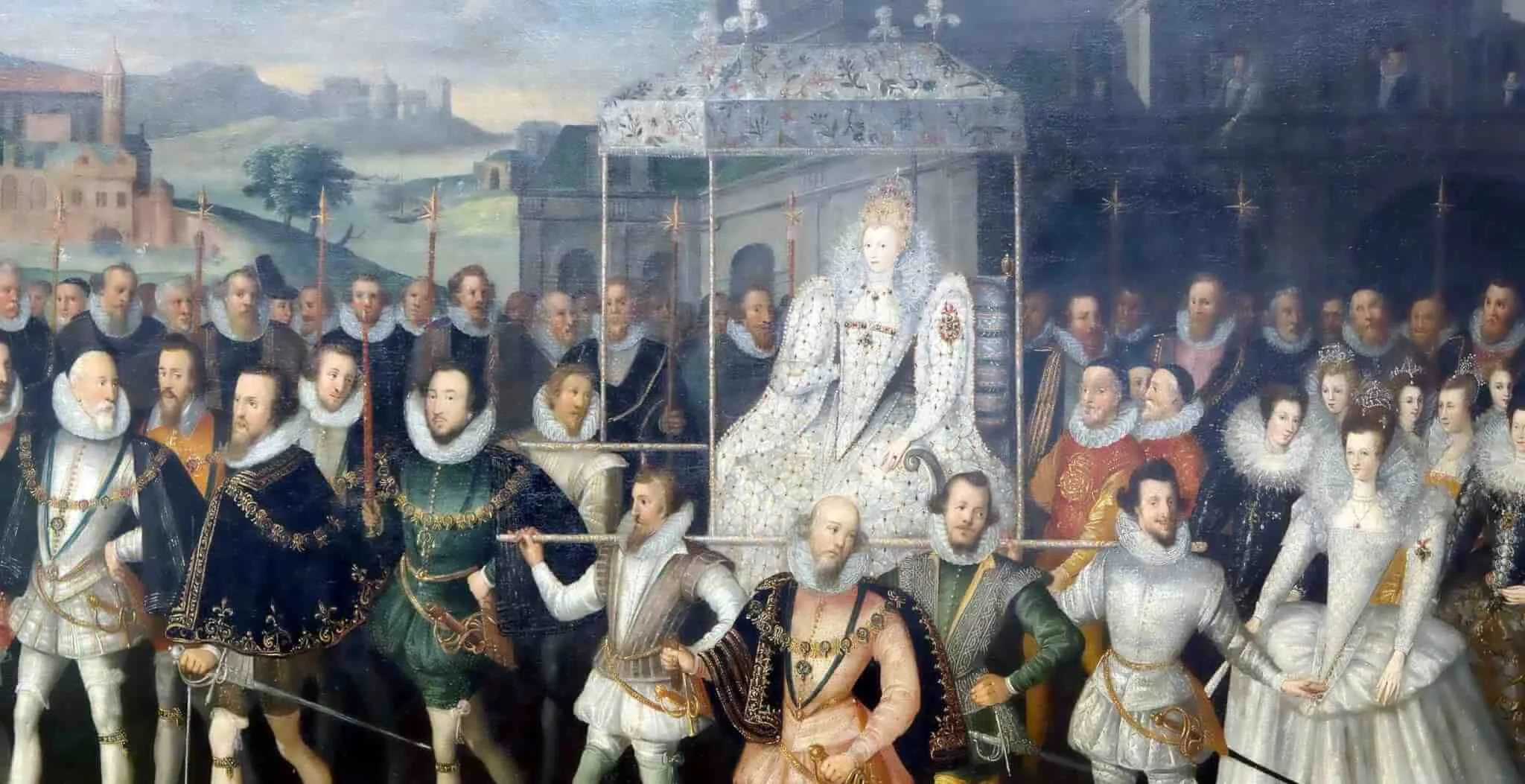
Established on 31 December 1600 by Queen Elizabeth I, the Company initially sought to trade with Asia. Over time it evolved into one of history's most powerful multinational corporations (Bowen 2006).
Its commercial activities included trading:
tea;
spices;
silk;
cotton;
indigo;
saltpetre;
porcelain;
opium;
textiles.
At its height, the Company maintained:
private armies;
naval vessels;
forts;
ports;
warehouses;
diplomatic representatives.
By the eighteenth century, it governed large areas of India and exercised authority over tens of millions of people.
Its wealth became enormous, contributing significantly to Britain's economy and helping finance imperial expansion.
Other Chartered Companies
The East India Company was only one component of Britain's commercial empire.
Other influential organisations included:
Hudson's Bay Company (1670)
Established by Royal Charter under King Charles II, the Company controlled vast areas of northern North America and traded primarily in furs.
Royal African Company (1660)
Granted a Royal Charter by Charles II, this company traded gold, ivory, and enslaved Africans along the west coast of Africa. Historians estimate that it transported tens of thousands of enslaved people across the Atlantic before losing its monopoly (Pettigrew 2013).
South Sea Company (1711)
Created to manage government debt while pursuing trade in South America, the company became famous for the South Sea Bubble financial collapse of 1720.
Together these organisations linked commerce, finance, shipping, and imperial expansion across multiple continents.
Who Profited from Empire?
The wealth generated through colonial expansion flowed to many different groups within Britain.
These included:
chartered companies;
merchant families;
bankers;
insurers;
plantation owners;
mining companies;
shipping companies;
manufacturers;
investors;
landed aristocracy.
Important commercial and financial families associated with Britain's imperial economy included:
Rothschild;
Barings;
Wedgwood;
Cadbury (later industrial era);
Lever;
Guinness (Ireland within the United Kingdom);
Sassoon (nineteenth-century Asian trade).
Many aristocratic estates also generated wealth through investments in colonial enterprises, plantations, mining, shipping, or government bonds linked to imperial commerce (Cain & Hopkins 2001).
It is important to distinguish these private fortunes from the finances of the Royal Family itself.
Did the Royal Family Personally Profit?
The question of whether the British Royal Family profited from empire is historically complex.
The monarchy did not directly own companies such as the East India Company.
However, the Crown benefited indirectly through several mechanisms.
These included:
customs duties collected on international trade;
taxation generated through expanding commerce;
Crown land revenues;
increased national wealth;
political influence associated with imperial expansion.
Some individual members of the Royal Family also held investments or shares in various enterprises during different historical periods, although the extent varied considerably across reigns.
Modern historians generally distinguish between:
the British state;
the constitutional monarchy;
private commercial companies;
individual investors.
These categories often overlapped politically but remained legally distinct.
Australia Within the Imperial Economy
Unlike India, Australia was not established primarily as a trading colony.
The first British settlement at Sydney Cove in 1788 functioned initially as a penal colony.
Nevertheless, Australia rapidly became economically significant through:
wool production;
whaling;
sealing;
timber;
agriculture;
gold;
copper;
pastoral expansion.
The wool industry became one of Britain's most valuable colonial enterprises during the nineteenth century, supplying textile mills throughout England (Blainey 2003).
Following the discovery of gold in 1851, Australia's economy expanded dramatically, attracting migrants from across the world.
Mining, agriculture, shipping, banking, and land speculation created substantial fortunes for many settlers and investors.
Indigenous Australians and Colonial Economics
While many settlers accumulated wealth through land ownership and commerce, Indigenous Australians were largely excluded from the colonial economy.
The doctrine of terra nullius denied recognition of Indigenous ownership and governance, allowing the Crown to claim land without treaty or compensation (Reynolds 1987).
Consequently many Indigenous communities experienced:
dispossession of Country;
destruction of food systems;
frontier violence;
restricted access to traditional resources;
exclusion from property ownership;
limited participation in colonial commerce.
Traditional economies based upon fishing, hunting, gathering, aquaculture, and environmental management were profoundly disrupted.
The economic consequences of colonisation therefore differed dramatically between settlers and Indigenous peoples.
Indigenous Knowledge and Intellectual Property
Another important aspect of colonial history concerns knowledge itself. European scientists, explorers, and settlers frequently relied upon Indigenous knowledge concerning:
water sources;
medicinal plants;
animal behaviour;
seasonal cycles;
navigation;
geography.
Historically this knowledge was rarely recognised as intellectual property belonging to Indigenous communities. Today, Indigenous Cultural and Intellectual Property (ICIP) seeks to ensure that Indigenous peoples retain authority over traditional knowledge, languages, stories, ceremonies, artistic designs, and ecological practices (Janke 1998). Modern research increasingly emphasises ethical partnerships and benefit-sharing rather than extraction.
The Commonwealth
The modern Commonwealth of Nations differs fundamentally from the British Empire. Established progressively during the twentieth century, the Commonwealth consists of independent sovereign nations that cooperate voluntarily. Although the British monarch serves as Head of the Commonwealth, member countries remain politically independent. Australia became increasingly autonomous through:
Federation (1901);
the Statute of Westminster (1931; adopted by Australia in 1942);
the Australia Acts (1986).
The Commonwealth therefore represents cooperation rather than imperial control.
The Origins of English Government, Constitutional Monarchy, and the Rule of Law
To understand how Britain established a global empire, it is first necessary to understand how political power developed within England itself. Unlike many European kingdoms where monarchs exercised absolute authority, England gradually evolved a constitutional system in which power became shared between the monarch, Parliament, the courts, and the law (Bogdanor 2009). The English monarchy traces its origins to the early Anglo-Saxon kingdoms of the seventh and eighth centuries. Following the Norman Conquest in 1066, William I centralised royal authority, introduced the feudal system, and commissioned the Domesday Book in 1086, one of Europe's earliest comprehensive surveys of land ownership and taxation (Carpenter 2003). Under feudalism, all land was theoretically held from the Crown, creating the legal principle that ultimate ownership rested with the monarch.
During the thirteenth century, royal authority became increasingly limited by law. On 15 June 1215, King John sealed the Magna Carta at Runnymede after pressure from English barons. Although originally intended to resolve disputes between the king and the nobility, Magna Carta established the enduring principle that even the monarch was subject to the law (Holt 2015). This document became one of the foundational texts of constitutional government and later influenced legal systems throughout the British Empire, including Australia. Parliament gradually emerged as a permanent institution. Edward I convened the so-called "Model Parliament" in 1295, bringing together nobles, clergy, knights, and representatives of towns. Over subsequent centuries, Parliament developed into the principal legislative body responsible for approving taxation and passing laws (Maddicott 2010).
The seventeenth century marked a decisive constitutional turning point. Conflict between King Charles I and Parliament led to the English Civil Wars (1642–1651), his execution in 1649, the republican Commonwealth under Oliver Cromwell, and ultimately the restoration of the monarchy in 1660. The subsequent Glorious Revolution established that monarchs ruled with parliamentary consent rather than by absolute divine authority. The Bill of Rights further limited royal powers and affirmed Parliament's authority over taxation, legislation, and succession (Bogdanor 2009).
This constitutional evolution created a comparatively stable legal framework that supported commercial expansion, overseas investment, and the granting of Royal Charters to trading companies such as the East India Company. Rather than governing alone, the monarchy increasingly operated alongside Parliament, the judiciary, and an expanding civil administration.
Law, the Military, and the Protection of Imperial Interests
The growth of the British Empire depended not only upon commerce but also upon military and naval power. The British Army and, especially, the Royal Navy protected shipping routes, defended colonies, enforced treaties, and safeguarded commercial interests across the globe (Black 1999). Unlike private companies, the military was funded primarily through taxation authorised by Parliament. Revenue came from customs duties, excise taxes, land taxes, government borrowing, and later income taxes. As Britain's commercial economy expanded through overseas trade, government revenues also increased, allowing larger investments in military infrastructure (Brewer 1989).
The Royal Navy became one of Britain's greatest strategic assets. By protecting merchant vessels from piracy and rival European powers, it enabled British companies to transport goods between Europe, Africa, Asia, the Caribbean, and Australia. Naval superiority also supported exploration, scientific expeditions, and colonial settlement. The relationship between commerce and military power was mutually reinforcing. Expanding trade generated tax revenue that financed the armed forces, while military protection secured trade routes and colonial possessions. Historians often describe this as the "fiscal-military state," in which government finance, commerce, and military capability developed together (Brewer 1989).
In Australia, military forces initially accompanied the First Fleet in 1788 to establish the penal colony at Sydney Cove. During the nineteenth century, soldiers were used to protect settlements, enforce British law, suppress resistance during frontier conflict, and secure expanding pastoral districts (Reynolds 1987). Although presented as maintaining order, these military actions often supported the expansion of colonial settlement onto Aboriginal lands.
It is important to distinguish between the interests of the Crown, the British Government, and private companies. While these institutions were legally separate, they frequently operated within the same imperial system. Chartered companies generated wealth through trade; governments collected taxes and administered colonies; and military forces protected strategic and commercial interests. Together, these institutions formed the political and economic foundations of the British Empire.
Conclusion
The expansion of the British Empire depended upon complex relationships between the Crown, Parliament, chartered companies, private investors, merchants, scientists, explorers, and colonial governments. While the British Royal Family did not directly own most colonial businesses, the monarchy provided constitutional authority through Royal Charters and benefited indirectly from the economic growth and political influence generated by empire. Companies such as the East India Company, Hudson's Bay Company, and Royal African Company became major commercial engines of imperial expansion, while banks, manufacturers, shipping firms, and investors accumulated enormous wealth through global trade. For Indigenous Australians, however, colonisation brought fundamentally different outcomes. Rather than prosperity, many communities experienced dispossession, violence, exclusion from colonial economies, and the loss of lands that had sustained sophisticated societies for tens of thousands of years. Understanding these histories requires recognising both the economic structures that supported empire and the enduring resilience of Indigenous peoples whose cultures continue despite the profound disruptions of colonisation.
Timeline
31 December 1600 – East India Company established by Royal Charter.
1660 – Royal African Company established.
28 November 1660 – Royal Society founded.
15 July 1662 – Royal Society receives Royal Charter.
2 May 1670 – Hudson's Bay Company established.
1694 – Bank of England founded.
1711 – South Sea Company established.
26 January 1788 – First British colony established at Sydney Cove.
1835 – Batman Treaty signed and later declared invalid.
1851 – Australian gold rush begins.
1 January 1901 – Federation of Australia.
11 December 1931 – Statute of Westminster enacted.
3 September 1942 – Australia adopts the Statute of Westminster.
3 March 1986 – Australia Acts come into force.
References
Blainey, G. (2003). A History of Victoria. Cambridge University Press.
Bowen, H.V. (2006). The Business of Empire: The East India Company and Imperial Britain, 1756–1833. Cambridge University Press.
Broome, R. (2005). Aboriginal Victorians: A History Since 1800. Allen & Unwin.
Cain, P.J. & Hopkins, A.G. (2001). British Imperialism, 1688–2000. 2nd ed. Longman.
Janke, T. (1998). Our Culture: Our Future – Report on Australian Indigenous Cultural and Intellectual Property Rights. Michael Frankel & Co.
Pettigrew, W.A. (2013). Freedom's Debt: The Royal African Company and the Politics of the Atlantic Slave Trade, 1672–1752. University of North Carolina Press.
Reynolds, H. (1987). The Law of the Land. Penguin.
Statute of Westminster Adoption Act 1942 (Cth).
The National Archives (UK). Royal Charters and Chartered Companies.
Black, J. (1999) Britain as a Military Power, 1688–1815. UCL Press.
Bogdanor, V. (2009) The New British Constitution. Hart Publishing.
Brewer, J. (1989) The Sinews of Power: War, Money and the English State, 1688–1783. Harvard University Press.
Carpenter, D. (2003) The Struggle for Mastery: Britain 1066–1284. Penguin.
Holt, J.C. (2015) Magna Carta. 3rd ed. Cambridge University Press.
Maddicott, J.R. (2010) The Origins of the English Parliament, 924–1327. Oxford University Press.
Reynolds, H. (1987) The Law of the Land. Penguin.
Written, Researched and Directed by James Vegter (22 July, 2026)
MLA Educational Articles
Sharing the truth of Indigenous and colonial history through film, education, land, and community.
www.magiclandsalliance.org
Copyright MLA – 2025
Magic Lands Alliance acknowledges the Traditional Owners, Custodians, and First Nations communities across Australia and internationally. We honour their enduring connection to the sky, land, waters, language, and culture. We pay respect to Elders past, present, and emerging, and to all First Peoples’ communities and language groups. This article draws only on publicly available information; many cultural practices remain the intellectual property of their respective communities.