

Exploration Research
Abstract
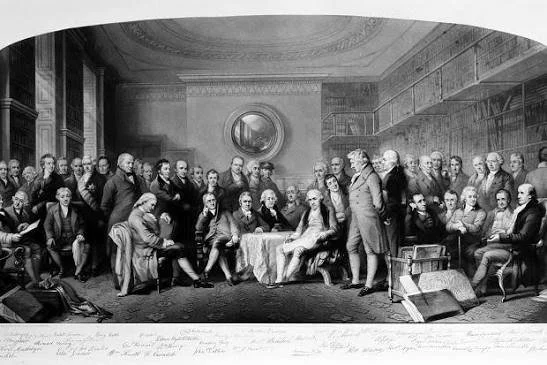
The Royal Society of London is the world's oldest continuously operating scientific academy and one of the most influential institutions in the history of science. Founded in 1660 during the Restoration of the English monarchy and granted a Royal Charter by King Charles II in 1662, the Society emerged during a period now known as the Scientific Revolution. It transformed the way knowledge was produced by promoting observation, experimentation, mathematics, and evidence over tradition and authority.
Although the Royal Society was not a colonial government, trading company, or commercial corporation, its Fellows profoundly influenced exploration, navigation, cartography, astronomy, medicine, geology, botany, and natural history across the expanding British Empire. Scientific discoveries made under its influence helped shape European understandings of Australia and supported many of the expeditions that eventually contributed to British colonisation.
This article explores the origins and philosophy of the Royal Society, its relationship to the Scientific Revolution and the British Empire, its connections with Australia during the eighteenth and nineteenth centuries, and its continuing influence on science today. It also examines how scientific exploration often intersected with Indigenous knowledge systems, colonial expansion, and the development of global scientific institutions.
Introduction
Few scientific organisations have shaped world history as profoundly as the Royal Society of London. For more than 360 years it has influenced discoveries in astronomy, mathematics, physics, chemistry, biology, medicine, geology, engineering, and environmental science. Many of history's greatest scientists—including Isaac Newton, Robert Hooke, Edmond Halley, Charles Darwin, Michael Faraday, Ernest Rutherford, Dorothy Hodgkin, Stephen Hawking, and numerous Nobel Prize winners—have been elected Fellows of the Society.
The influence of the Royal Society extends well beyond scientific discovery. During the seventeenth, eighteenth, and nineteenth centuries, scientific knowledge became increasingly connected with exploration, navigation, commerce, agriculture, and empire. Maps, botanical collections, astronomical observations, geological surveys, and natural history all contributed to European understanding of the wider world. Australia formed an important part of this global scientific story.
Long before Britain established a colony at Sydney Cove in 1788, Indigenous Australians had developed sophisticated knowledge systems based upon astronomy, ecology, seasonal observation, medicine, navigation, and environmental management over tens of thousands of years (Gammage 2011; Pascoe 2014). European scientific exploration entered an already deeply understood continent, although colonial science rarely recognised Indigenous knowledge as scientific in its own right. Understanding the Royal Society therefore provides insight not only into the history of science but also into the relationship between knowledge, exploration, empire, and colonisation.
The Scientific Revolution
The Royal Society emerged during one of the most transformative periods in human intellectual history. Between the sixteenth and seventeenth centuries, Europe experienced what historians call the Scientific Revolution. Traditional explanations of the natural world based primarily upon ancient authorities such as Aristotle gradually gave way to systematic observation, experimentation, mathematics, and empirical evidence (Shapin 1996).
Major developments included:
Nicolaus Copernicus proposing that Earth orbits the Sun (1543).
Johannes Kepler describing planetary motion mathematically.
Galileo Galilei using telescopes to observe celestial bodies.
William Harvey discovering blood circulation.
René Descartes promoting rational inquiry.
Francis Bacon advocating experimental investigation.
Rather than accepting inherited ideas simply because respected authorities had written them, scientists increasingly believed that knowledge should be tested through careful observation and repeatable experimentation.
This intellectual transformation laid the foundations for modern science.
The Birth of the Royal Society
The origins of the Royal Society can be traced to informal meetings held by natural philosophers during the 1640s and 1650s in Oxford and London. These scholars shared an interest in experimental science and sought to investigate the natural world using observation rather than speculation. On 28 November 1660, following a lecture by Christopher Wren at Gresham College in London, a group of scholars agreed to establish "a College for the Promoting of Physico-Mathematical Experimental Learning." This meeting is generally recognised as the birth of the Royal Society. King Charles II strongly supported the initiative and, on 15 July 1662, granted the Society its first Royal Charter. Additional charters followed in 1663, formally recognising the organisation as The Royal Society of London for Improving Natural Knowledge (Royal Society 2024). Unlike universities of the period, which often focused upon theology and classical learning, the Royal Society encouraged experimental science across every field of inquiry.
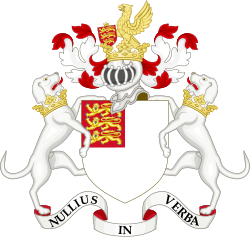
The Motto: Nullius in Verba
Perhaps the Society's greatest contribution is expressed through its famous Latin motto:
Nullius in verba
The phrase is commonly translated as: "Take nobody's word for it."
Rather than accepting authority unquestioningly, Fellows were encouraged to investigate claims through observation, evidence, experimentation, and critical discussion.
This philosophy helped establish many of the principles that continue to underpin modern scientific research, including:
empirical observation;
reproducible experiments;
peer review;
open scientific debate;
publication of results.
The motto remains central to scientific practice today.
Francis Bacon and the Philosophy of Science
Although Francis Bacon died before the Royal Society was formally established, his writings profoundly influenced its development. In Novum Organum (1620), Bacon argued that reliable knowledge should be built through systematic observation and experimentation rather than inherited philosophical assumptions. He proposed that scientists should carefully collect evidence before drawing conclusions. This inductive method transformed scientific inquiry and helped establish the experimental approach adopted by the Royal Society. Many historians therefore regard Bacon as one of the intellectual founders of modern science.
The First Scientific Journal
One of the Royal Society's most important innovations occurred in 1665 with the publication of Philosophical Transactions. Edited initially by Henry Oldenburg, it became the world's first continuously published scientific journal. For the first time, scientists could regularly publish discoveries, allowing knowledge to spread rapidly across Europe. Today, scientific journals remain one of the principal ways new discoveries are communicated. The Royal Society therefore helped create one of the most enduring systems of scientific communication in history.
Early Fellows Who Changed the World
Many of history's greatest scientific figures became Fellows of the Royal Society. Sir Isaac Newton transformed mathematics and physics through his laws of motion and universal gravitation. His work unified terrestrial and celestial mechanics, providing one of the most influential scientific frameworks ever developed. Robert Hooke pioneered microscopy and elasticity while contributing significantly to architecture, astronomy, and engineering. His observations of microscopic cells fundamentally changed biology. Edmond Halley combined astronomy, navigation, and mathematics to predict the return of the comet that now bears his name. His work also improved maritime navigation, which proved essential during the age of global exploration. Christopher Wren, better known today as an architect, made important contributions to astronomy, mathematics, and engineering before designing St Paul's Cathedral following the Great Fire of London. Together these scholars demonstrated the extraordinary breadth of inquiry encouraged by the Royal Society.
Science and the British Empire
As Britain's overseas influence expanded during the seventeenth and eighteenth centuries, science became increasingly intertwined with imperial exploration.
European governments required accurate knowledge of:
coastlines;
ocean currents;
climate;
astronomy;
natural resources;
agriculture;
navigation.
Scientific expeditions therefore served multiple purposes. They expanded human knowledge while also assisting navigation, commerce, diplomacy, and colonial administration. The Royal Society itself did not govern colonies or own commercial enterprises. However, many of its Fellows advised:
the Royal Navy;
the British Admiralty;
Parliament;
colonial governors;
commercial trading companies.
Scientific expertise became an important form of national power.
Joseph Banks and Australia
No Fellow of the Royal Society had greater influence on Australia's scientific history than Sir Joseph Banks. Banks joined Lieutenant James Cook aboard HMS Endeavour during the voyage of 1768–1771, travelling as the expedition's principal botanist. Landing on Australia's east coast in April 1770, Banks and Swedish botanist Daniel Solander collected thousands of plant specimens that were previously unknown to European science. Botany Bay received its name because of the extraordinary diversity of plants observed there. Banks later became President of the Royal Society in 1778, a position he held for forty-two years. During this period he became one of Britain's most influential scientific advisers and strongly supported further exploration of Australia. He advised the British Government on the establishment of the New South Wales colony and promoted scientific investigation across the continent. His influence extended far beyond botany into agriculture, economic development, colonial administration, and global scientific networks.
William Dampier: Science Before Settlement
Long before Cook reached Australia's east coast, English navigator William Dampier visited the continent during 1688 and again in 1699. Unlike many sailors of his era, Dampier carefully recorded observations of Australia's plants, animals, weather, coastlines, and Indigenous peoples. His writings represented some of the earliest English scientific descriptions of Australia and influenced later explorers, including Cook and Banks. Although Dampier was not always recognised primarily as a scientist, his detailed natural history observations reflected many of the empirical principles later championed by the Royal Society.
Matthew Flinders and Scientific Cartography
Following Cook's voyages, Matthew Flinders undertook the first circumnavigation of Australia between 1801 and 1803. Working alongside botanist Robert Brown and other scientists, Flinders combined navigation, astronomy, geology, and cartography to produce the first comprehensive map of the Australian continent. His publication, A Voyage to Terra Australis (1814), became one of the foundational scientific works on Australia. Scientific mapping transformed European understanding of the continent while also facilitating later colonial settlement.
Charles Darwin and Australia's Scientific Importance
During the nineteenth century, Australia became increasingly important to European science. One of the most influential figures associated with this period was Charles Darwin, who was elected a Fellow of the Royal Society in 1839 following the publication of his early scientific work. Although Darwin is most closely associated with the voyage of HMS Beagle between 1831 and 1836, his observations extended beyond the Galápagos Islands to include Australia, Tasmania, and other parts of the southern hemisphere. He visited Sydney in January 1836 and later travelled through the Blue Mountains, examining Australia's distinctive geology, marsupials, birds, insects, and plant life (Darwin 1839).
Australia posed fascinating scientific questions. Why did marsupials dominate Australian mammals? Why were its plants and animals so different from those of Europe? These observations later contributed to Darwin's theory of evolution by natural selection, published in On the Origin of Species in 1859. Darwin's work fundamentally transformed biology and remains one of the most influential scientific contributions in history. Like many Royal Society Fellows, his discoveries were made possible through global exploration, specimen collection, and detailed observation of environments across the British Empire.
Indigenous Australian Knowledge and European Science
Long before European scientific expeditions reached Australia, Indigenous Australians had developed highly sophisticated knowledge systems through tens of thousands of years of observation, experimentation, and adaptation.
Across the continent, Indigenous peoples possessed detailed understandings of:
astronomy;
seasonal cycles;
navigation;
geology;
hydrology;
medicine;
botany;
zoology;
fire ecology;
fisheries;
agriculture;
weather systems.
In Victoria, the Wadawurrung and neighbouring Kulin Nations carefully observed seasonal indicators, astronomical movements, flowering plants, bird migrations, eel movements, and climatic variations to guide harvesting, travel, ceremony, and environmental management (Gammage 2011; Pascoe 2014). However, much of this knowledge was overlooked or misunderstood by European scientists during the eighteenth and nineteenth centuries. Colonial science often regarded Indigenous knowledge as folklore rather than empirical observation, despite the fact that it had developed through thousands of generations of systematic environmental experience. Today, many historians of science recognise Indigenous knowledge as an important scientific tradition in its own right, particularly in ecology, astronomy, climate observation, and environmental management.
Science, Exploration, and Colonial Expansion
Although the Royal Society itself never governed colonies, science increasingly became intertwined with imperial expansion.
European governments required accurate scientific information to support:
navigation;
surveying;
agriculture;
military planning;
commerce;
settlement.
Naturalists collected plant specimens. Astronomers determined longitude. Surveyors mapped coastlines. Geologists identified mineral deposits. Botanists investigated crops suitable for cultivation. Medical researchers studied unfamiliar diseases. Scientific exploration therefore often preceded or accompanied colonial settlement. Australia became one of the world's largest scientific laboratories during the nineteenth century, attracting botanists, zoologists, geologists, anthropologists, and astronomers from across Europe.
The Royal Society and Global Commerce
A common misconception is that the Royal Society itself accumulated enormous commercial wealth through empire. In reality, the Society has never functioned as a trading company or commercial corporation. Instead, it has operated as an independent learned academy whose primary purposes have been to:
promote scientific research;
publish discoveries;
advise governments;
support education;
encourage innovation.
However, many individual Fellows maintained close relationships with organisations that profoundly shaped the British Empire.
These included:
the British Admiralty;
the Royal Navy;
the East India Company;
the Hudson's Bay Company;
colonial governments;
universities;
botanical gardens;
museums.
Scientific knowledge frequently informed commercial activity. Improvements in navigation increased global trade. Botanical research identified economically valuable crops. Geological surveys located coal, gold, copper, and other mineral resources. Medical discoveries reduced disease among sailors and settlers. Science and commerce therefore became closely interconnected, even though the Royal Society itself remained a non-commercial institution.
The East India Company and Scientific Networks
Among Britain's most influential commercial organisations was the East India Company, founded on 31 December 1600 by Queen Elizabeth I. The Company controlled extensive trading networks throughout Asia, dealing in:
tea;
spices;
silk;
cotton;
porcelain;
opium.
Numerous Royal Society Fellows travelled throughout Company territories, collecting botanical specimens, conducting astronomical observations, and documenting geology, medicine, languages, and natural history. The East India Company often employed scientists, surveyors, physicians, and engineers whose work contributed simultaneously to commerce and scientific understanding. Although institutionally separate, the Royal Society and the East India Company frequently interacted through shared personnel and intellectual networks.
Wealth, Funding, and Financial Support
Unlike commercial corporations, the Royal Society does not generate wealth through trade or resource extraction.
Historically, its financial support has come from several sources, including:
Fellowship subscriptions;
Royal patronage;
philanthropic donations;
charitable trusts;
government grants;
scientific endowments;
research funding.
Today, the Society distributes millions of pounds annually through research grants, fellowships, education programs, and scientific collaborations rather than accumulating commercial profits. It is therefore inaccurate to estimate how much money the Society has "earned" throughout history because its purpose has never been commercial profit. Its greatest wealth lies in scientific knowledge rather than financial capital.
Famous Families Associated with the Royal Society
Throughout its history, many members of Britain's scientific, political, and aristocratic families have become Fellows of the Royal Society.
Notable families include:
Darwin;
Huxley;
Wedgwood;
Cavendish;
Hooke;
Herschel;
Banks;
Russell;
Bragg.
These families often contributed to science across multiple generations. Some members inherited wealth through commerce, industry, or aristocratic estates, enabling them to pursue scientific research independently. Others rose through universities, medicine, engineering, or public service. Election to the Royal Society has always depended upon scientific achievement rather than hereditary status alone.
How Someone Becomes a Fellow Today
Election as a Fellow of the Royal Society (FRS) remains one of the highest honours in international science. Candidates cannot simply apply. Instead, they are nominated by existing Fellows based upon outstanding contributions to scientific knowledge.
The selection process involves:
nomination by current Fellows;
detailed assessment of scientific achievements;
independent review;
election through voting.
Each year approximately fifty to sixty new Fellows are elected from across the United Kingdom and internationally. Many Nobel Prize winners, leading researchers, physicians, mathematicians, engineers, and environmental scientists have received this honour. International scientists who have made exceptional contributions may also be elected as Foreign Members.
The Royal Society in Modern Science
Today, the Royal Society continues to influence science globally.
Its work includes supporting research in:
climate science;
artificial intelligence;
medicine;
genetics;
renewable energy;
biodiversity;
environmental conservation;
quantum computing;
astronomy;
mathematics.
The Society also advises governments on scientific policy while supporting education, international collaboration, and public understanding of science. Although its role has changed considerably since the seventeenth century, its mission of improving natural knowledge remains unchanged.
Criticism and Historical Reassessment
Like many institutions associated with European colonial history, the Royal Society has become the subject of increasing historical examination. Historians acknowledge that scientific exploration frequently accompanied imperial expansion and that many collections housed in European museums were obtained during colonial periods.
Questions have therefore been raised concerning:
ownership of cultural objects;
repatriation of ancestral remains;
Indigenous intellectual property;
scientific collecting practices;
recognition of Indigenous knowledge systems.
Rather than diminishing scientific achievement, these discussions seek to present a more complete understanding of how science, empire, and colonialism often developed together. Modern scientific institutions increasingly collaborate with Indigenous communities to recognise Traditional Knowledge, support cultural heritage, and develop more ethical research partnerships.
Science, Philosophy, and Human Curiosity
Beyond its institutional history, the Royal Society represents something larger: humanity's enduring curiosity about the natural world. Its guiding philosophy—that knowledge should be tested through observation, evidence, and critical inquiry—helped establish many of the foundations of modern science. Yet contemporary science increasingly recognises that multiple knowledge systems can contribute to understanding complex environments.
Across Australia, Indigenous ecological knowledge is now informing:
bushfire management;
biodiversity conservation;
water management;
climate adaptation;
archaeology;
astronomy.
Rather than opposing one another, Indigenous knowledge and Western science increasingly work together to address contemporary environmental challenges. This collaborative approach reflects a growing recognition that scientific understanding benefits from multiple perspectives grounded in careful observation and respect for evidence.
The Royal Society and the Development of Australian Science
Although founded in England, the influence of the Royal Society extended throughout the British Empire and continues to shape Australian science today. Many of Australia's earliest scientific institutions, universities, museums, observatories, botanical gardens, and learned societies were established according to traditions developed by the Royal Society during the seventeenth and eighteenth centuries. Institutions such as the Australian Museum (1827), the Royal Botanic Gardens Sydney (1816), Museums Victoria (1854), and numerous colonial scientific societies adopted methods of specimen collection, taxonomy, peer review, publication, and public education that originated within European scientific practice (MacLeod 2009).
Australian universities similarly inherited the British model of scientific education. Institutions including the University of Sydney (1850), the University of Melbourne (1853), and later universities across Australia established faculties of medicine, geology, botany, engineering, astronomy, and natural history that reflected Royal Society traditions of observation, experimentation, and publication. Many Australian scientists have subsequently been elected Fellows of the Royal Society, demonstrating the continuing relationship between Australian scientific research and one of the world's oldest scientific academies.
The Australian Academy of Science
The influence of the Royal Society is perhaps most clearly seen in the establishment of the Australian Academy of Science. Founded in 1954, the Academy was modelled directly upon the Royal Society and was established through the leadership of Sir Mark Oliphant, an Australian physicist and Fellow of the Royal Society.
Like its British counterpart, the Academy exists to:
promote scientific excellence;
support research;
advise governments;
encourage science education;
recognise outstanding scientific achievement.
Many Fellows of the Australian Academy are also Fellows of the Royal Society, demonstrating the close relationship between the two institutions.
CSIRO and Australia's Scientific Leadership
One of Australia's greatest scientific achievements has been the development of the Commonwealth Scientific and Industrial Research Organisation (CSIRO). Established in 1926 as the Council for Scientific and Industrial Research and renamed CSIRO in 1949, the organisation became Australia's leading scientific research agency.
CSIRO research has transformed:
agriculture;
environmental science;
astronomy;
radio communications;
computing;
climate science;
medicine;
mining;
renewable energy.
Although CSIRO operates independently of the Royal Society, both organisations share similar philosophical foundations based upon evidence, experimentation, peer review, and public benefit. Australian science today therefore reflects both Indigenous knowledge systems and scientific traditions inherited from Britain.
Indigenous Knowledge and Modern Science
One of the most significant developments of the twenty-first century has been the growing recognition that Indigenous knowledge represents a sophisticated scientific tradition developed over tens of thousands of years. For much of Australia's colonial history, European scientists generally regarded Indigenous knowledge as folklore or mythology rather than empirical observation. This reflected broader colonial assumptions about civilisation and scientific authority. Today, however, researchers increasingly recognise the remarkable sophistication of Indigenous environmental knowledge.
Examples include:
cultural burning practices that reduce catastrophic bushfires (Gammage 2011);
sophisticated aquaculture systems at Budj Bim constructed by the Gunditjmara (UNESCO 2019);
seasonal calendars based upon ecological indicators rather than fixed dates (Bureau of Meteorology 2016);
astronomical observations that accurately track lunar cycles, eclipses, planetary movements, and seasonal change (Norris & Hamacher 2014);
medicinal plant knowledge developed through thousands of years of experimentation (Clarke 2008).
Rather than replacing Western science, Indigenous knowledge increasingly complements scientific research by providing long-term ecological observations accumulated over many generations. Many contemporary scientists now work collaboratively with Traditional Owners to integrate Indigenous knowledge into environmental management, biodiversity conservation, archaeology, climate adaptation, and cultural heritage protection.
Museums, Collections, and Repatriation
During the eighteenth and nineteenth centuries, scientific expeditions collected vast numbers of specimens from around the world.
These collections included:
plants;
animals;
fossils;
minerals;
archaeological artefacts;
ethnographic objects;
ancestral human remains.
Museums throughout Britain and Europe became important centres of scientific research, education, and public exhibition. However, many collections were obtained during periods of colonial expansion without the free, prior, and informed consent of Indigenous communities. In recent decades, museums and scientific institutions have increasingly recognised the importance of repatriating ancestral remains and culturally significant objects. Across Australia, organisations including the Australian Institute of Aboriginal and Torres Strait Islander Studies (AIATSIS), Museums Victoria, and the National Museum of Australia have participated in programs returning ancestors and cultural heritage to Traditional Owners. These initiatives acknowledge that scientific collecting occurred within broader colonial histories that affected Indigenous communities.
Science, Ethics, and Decolonising Knowledge
Science has transformed human understanding of the universe, medicine, engineering, agriculture, and countless other fields. Yet historians increasingly acknowledge that scientific institutions developed within particular historical, political, and cultural contexts. During the nineteenth century, some scientists promoted ideas now recognised as scientifically invalid and ethically unacceptable, including scientific racism and theories of racial hierarchy. Such ideas were often used to justify colonial expansion, dispossession, and unequal treatment of Indigenous peoples. Modern science rejects these theories.
Contemporary genetics demonstrates that all humans belong to a single species with remarkably small genetic variation between populations (Reich 2018). Modern anthropology likewise recognises the richness and sophistication of Indigenous knowledge systems developed across diverse cultural traditions.
The concept of "decolonising science" does not reject scientific inquiry. Rather, it seeks to broaden scientific practice by recognising multiple knowledge systems, improving ethical research partnerships, respecting Indigenous Cultural and Intellectual Property (ICIP), and ensuring that research is conducted collaboratively rather than extractively.
The Royal Society and Global Challenges
Today the Royal Society focuses on some of humanity's greatest challenges.
These include:
climate change;
biodiversity loss;
global health;
artificial intelligence;
quantum technologies;
renewable energy;
pandemic preparedness;
food security;
space exploration.
Its Fellows advise governments worldwide while collaborating with universities, research organisations, and scientific academies across more than 100 countries. Rather than serving empire, the Society increasingly serves international scientific cooperation. This represents a significant evolution from its seventeenth-century origins.
Science and the Philosophy of Curiosity
Beyond individual discoveries, perhaps the Royal Society's greatest legacy lies in its philosophy of curiosity. Science begins with questions.
Why do planets move?
How do plants grow?
What causes disease?
How old is the universe?
How does climate change occur?
These questions continue to inspire scientific inquiry across every discipline. Yet curiosity is not unique to European science. Indigenous Australians have asked similar questions for tens of thousands of years, developing detailed understandings of astronomy, ecology, medicine, weather, geology, and human relationships with Country. Today, many researchers recognise that the future of science may depend increasingly upon collaboration between multiple knowledge systems rather than competition between them. The most powerful scientific discoveries often emerge when diverse perspectives work together.
The Continuing Legacy of the Royal Society
For more than three and a half centuries the Royal Society has remained one of the world's most influential scientific institutions.
Its Fellows helped establish:
modern physics;
chemistry;
biology;
medicine;
geology;
engineering;
astronomy;
meteorology;
mathematics.
Its publications created the modern scientific journal. Its commitment to peer review helped establish scientific standards used throughout the world. Its philosophy encouraged evidence over authority and observation over assumption. These contributions continue to influence universities, governments, museums, schools, and research organisations across the globe.
Conclusion
The Royal Society of London emerged during the Scientific Revolution at a time when Europe was fundamentally transforming its understanding of the natural world. Through its commitment to observation, experimentation, and critical inquiry, it helped establish many of the principles that continue to underpin modern science.
Its Fellows played significant roles in the exploration of Australia through astronomy, navigation, botany, geology, cartography, and natural history. Figures such as William Dampier, Joseph Banks, Matthew Flinders, and Charles Darwin profoundly influenced European understanding of the Australian continent.
At the same time, Australia was already home to some of the world's oldest continuous knowledge systems. Indigenous Australians had developed sophisticated scientific understandings of astronomy, ecology, medicine, seasonal change, and environmental management over tens of thousands of years. While colonial science frequently overlooked these traditions, modern research increasingly recognises their importance.
Today the Royal Society continues to support international scientific collaboration while scientific institutions worldwide increasingly acknowledge the value of Indigenous knowledge alongside Western scientific traditions. Together, these approaches remind us that science is not simply a collection of facts but a shared human endeavour built upon curiosity, observation, ethical responsibility, and the continual search for understanding.
Timeline
1543 – Nicolaus Copernicus publishes De revolutionibus orbium coelestium.
1620 – Francis Bacon publishes Novum Organum.
28 November 1660 – Royal Society founded.
15 July 1662 – First Royal Charter granted.
1665 – Philosophical Transactions first published.
1687 – Isaac Newton publishes Philosophiæ Naturalis Principia Mathematica.
1688 – William Dampier lands in north-west Australia.
1699 – Dampier returns aboard HMS Roebuck.
1768–1771 – Cook's Endeavour voyage with Joseph Banks.
29 April 1770 – Cook reaches Australia's east coast.
1778 – Banks becomes President of the Royal Society.
1801–1803 – Matthew Flinders circumnavigates Australia.
1814 – A Voyage to Terra Australis published.
1831–1836 – Darwin's voyage aboard HMS Beagle.
1839 – Darwin elected Fellow of the Royal Society.
1859 – On the Origin of Species published.
1954 – Australian Academy of Science established.
Present – Royal Society continues supporting global scientific research and international collaboration.
References
Australian Academy of Science (2024). History of the Australian Academy of Science. Canberra.
Bureau of Meteorology. (2016). Indigenous Weather Knowledge. Melbourne.
Clarke, P.A. (2008). Aboriginal Healing Practices: Smoke, Fire and Medicinal Plants. Canberra: Aboriginal Studies Press.
Gammage, B. (2011). The Biggest Estate on Earth: How Aboriginal Australians Made Australia. Sydney: Allen & Unwin.
MacLeod, R. (2009). Archibald Liversidge: Imperial Science under the Southern Cross. Sydney University Press.
Norris, R.P. & Hamacher, D.W. (2014). Astronomical Knowledge and Traditions of Aboriginal Australians. Sydney: CSIRO Publishing.
Pascoe, B. (2014). Dark Emu. Broome: Magabala Books.
Reich, D. (2018). Who We Are and How We Got Here: Ancient DNA and the New Science of the Human Past. Oxford University Press.
Royal Society. (2024). History of the Royal Society. London.
UNESCO. (2019). Budj Bim Cultural Landscape World Heritage Listing. Paris: UNESCO.
Written, Researched and Directed by James Vegter (July 2026)
MLA Educational Articles
Sharing the truth of Indigenous and colonial history through film, education, land, and community.
www.magiclandsalliance.org
Copyright MLA – 2025
Magic Lands Alliance acknowledges the Traditional Owners, Custodians, and First Nations communities across Australia and internationally. We honour their enduring connection to the sky, land, waters, language, and culture. We pay respect to Elders past, present, and emerging, and to all First Peoples’ communities and language groups. This article draws only on publicly available information; many cultural practices remain the intellectual property of their respective communities.