
Ancient Animals and Ecology
Introduction
Victoria is home to a remarkable diversity of mammals that inhabit forests, grasslands, wetlands, alpine regions, coastlines, and volcanic plains. From kangaroos and koalas to echidnas, bats, seals, wombats, possums, and whales, mammals have shaped the ecological and cultural history of the region for millions of years (Strahan 1995). For Indigenous communities across Victoria — including Wadawurrung, Wurundjeri, Gunditjmara, Gunaikurnai, Dja Dja Wurrung, and Yorta Yorta peoples — mammals were never viewed simply as wildlife. They were kin, ancestral beings, food sources, teachers, and part of sophisticated environmental systems connecting land, water, sky, spirit, and people (Clark 1990; Broome 2005). Today, mammals remain central to Victoria’s biodiversity and cultural identity, yet many species face pressures from habitat loss, climate change, invasive predators, pollution, and urbanisation. Understanding mammals through both Indigenous ecological knowledge and modern science reveals the deep interconnectedness between animals, ecosystems, and Country.
Deep-Time Origins of Mammals in Australia
The mammalian history of Australia stretches back more than 100 million years to the age of Gondwana, when Australia was still connected to Antarctica and South America (Archer 1984). Over millions of years, Australia became isolated, allowing mammals to evolve into highly specialised forms. Marsupials diversified into kangaroos, possums, wombats, and koalas, while monotremes such as the platypus and echidna retained ancient egg-laying characteristics dating back to early mammalian evolution.
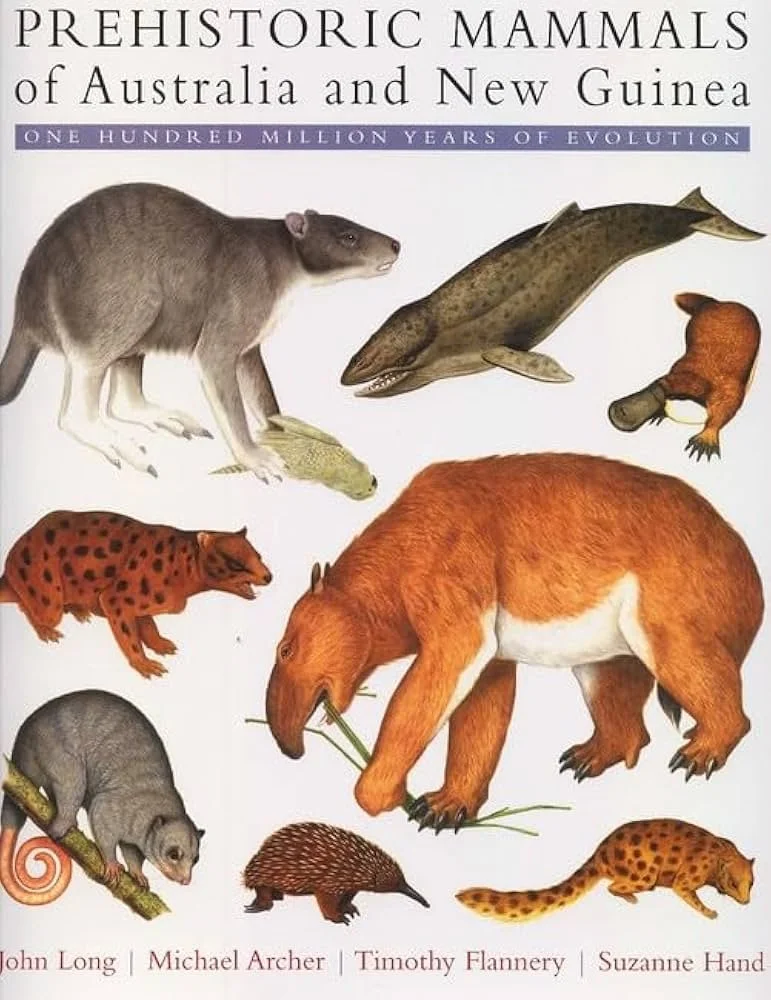
During the Pleistocene Epoch, Victoria supported giant megafauna including:
Diprotodon — the largest marsupial to ever exist,
giant kangaroos,
marsupial lions (Thylacoleo),
and enormous wombat relatives (Flannery 1994).
Fossil records from western Victoria, caves, river systems, and volcanic plains demonstrate how mammals adapted to changing climates, fire regimes, volcanic activity, and shifting vegetation systems over thousands of generations.
Major Mammals of Victoria
Victoria supports more than 100 native mammal species across terrestrial and marine environments.
Kangaroos and Wallabies
Eastern Grey Kangaroos, Swamp Wallabies, and Red-necked Wallabies remain widespread throughout forests, grasslands, and woodland edges.
These grazing and browsing marsupials help maintain vegetation balance and were culturally important within Indigenous hunting, ceremony, and kinship systems.
Koalas
Koalas inhabit eucalyptus forests and woodlands across parts of Victoria, particularly in western districts and the Otway region. They are highly specialised eucalyptus feeders and remain vulnerable to habitat fragmentation, disease, drought, and bushfires.
Possums and Gliders
Victoria supports several possum and glider species including:
Common Brushtail Possums,
Ringtail Possums,
Sugar Gliders,
and Greater Gliders.
These nocturnal mammals play important roles in pollination, seed dispersal, and forest regeneration.
Wombats
Bare-nosed Wombats inhabit forests, grasslands, and heathlands across Victoria. Their extensive burrowing systems improve soil turnover, water infiltration, and habitat diversity.
Monotremes
Victoria is one of the few places in the world where egg-laying mammals survive.
Platypus (Ornithorhynchus anatinus)
The platypus inhabits freshwater rivers and creeks across eastern Victoria.
Short-beaked Echidna (Tachyglossus aculeatus)
Echidnas inhabit forests, heathlands, grasslands, and alpine regions, feeding mainly on ants and termites.
Marine Mammals
Victoria’s coastline supports marine mammals including:
Australian Fur Seals,
dolphins,
and migrating Southern Right and Humpback Whales.
Marine mammals formed important parts of Sea Country knowledge systems for coastal Indigenous communities.
Mammals in Indigenous Culture
Mammals formed essential parts of Indigenous life across Victoria for thousands of years, shaping food systems, ceremony, clothing, spirituality, and ecological knowledge.
Many mammals acted as totemic beings connecting individuals and clans to responsibilities of care, kinship, and environmental balance (Clark 1990). Kangaroos, possums, wombats, seals, dolphins, and whales all appear within stories, ceremonial lore, and teaching systems connected to Country and ancestry.
Mammals also provided food, skins, tools, sinew, and materials harvested according to seasonal protocols and sustainability practices developed over thousands of years (Flood 2001). Possum skins, in particular, were sewn into cloaks used for warmth, identity, ceremony, and storytelling across southeastern Australia.
Indigenous communities closely observed mammal movement, breeding cycles, tracks, feeding behaviour, and habitat patterns to understand:
seasonal change,
weather patterns,
fire conditions,
water availability,
and ecosystem health.
Mammals therefore formed part of broader environmental reading systems connecting animals, plants, stars, waterways, weather, and spirit.
Indigenous Names and Language of Mammals
Mammals appear throughout the languages and oral traditions of Indigenous communities across Victoria and Australia. Animal names often reflected behaviour, movement, habitat, ecological role, and spiritual significance rather than simply physical appearance (Blake 1991; Clark 1990). Within Wadawurrung and broader Kulin Nation traditions, mammals such as kangaroos, possums, wombats, echidnas, and koalas were deeply connected to forests, grasslands, waterways, and seasonal cycles.
Across Victorian Indigenous communities:
kangaroos were associated with movement and open Country,
possums with forests and night knowledge,
wombats with underground systems and persistence,
and platypus with rivers, water movement, and hidden life.
Due to colonisation and language suppression, many traditional mammal names became fragmented during the nineteenth century. However, language revival programs led by Traditional Owner groups and the Victorian Aboriginal Corporation for Languages (VACL) continue rebuilding mammal vocabulary and ecological terminology connected to Country and cultural continuity. Because Australia contains more than 250 distinct Indigenous language groups, there is no single Indigenous naming system for mammals. Each Nation developed unique relationships according to local ecology, spirituality, and cultural tradition.
Mammals on Wadawurrung Country
Wadawurrung Country historically supported rich mammal diversity across volcanic plains, forests, wetlands, rivers, and coastal environments. Kangaroos grazed the open basalt plains surrounding Geelong, Ballarat, and the You Yangs, while possums, koalas, gliders, and wallabies inhabited forested regions including the Brisbane Ranges and Otway margins. Wombats shaped grassland and woodland soils through burrowing activity, while platypus occupied rivers and waterways connected to broader freshwater systems. Marine mammals including seals, whales, and dolphins also formed part of Wadawurrung Sea Country knowledge and coastal observation systems. These ecosystems were maintained through sophisticated Indigenous land management practices including cultural burning, seasonal harvesting, and long-term environmental stewardship (Gammage 2011). Today, Wadawurrung Traditional Owners continue protecting mammal habitat through Caring for Country initiatives, ecological restoration, cultural education, and environmental management programs.
Colonisation and Ecological Disruption
European colonisation dramatically altered mammal populations and ecosystems across Victoria. Large-scale clearing of forests, wetlands, and grasslands destroyed habitat and migration pathways, while many mammals were heavily hunted for meat, fur, trade, and pest control throughout the nineteenth and twentieth centuries (Rolls 1969). Introduced predators such as foxes and feral cats caused severe declines in smaller mammals, while river regulation, pollution, fencing, mining, and urban expansion fragmented ecosystems across the state. The suppression of Indigenous cultural burning practices also transformed grassland and forest systems that many mammals depended upon. As a result, numerous species became regionally threatened, fragmented, or locally extinct.
Science and Conservation
Modern ecology recognises mammals as essential ecosystem engineers and indicators of environmental health. Across Victoria, mammals contribute to seed dispersal, pollination, grazing regulation, soil turnover, forest regeneration, nutrient cycling, and aquatic ecosystem balance. However, many species now face ongoing pressures from habitat fragmentation, climate change, bushfires, disease, pollution, vehicle collisions, and invasive predators. Increasingly, conservation programs combine Traditional Ecological Knowledge with contemporary wildlife science through Indigenous-led Caring for Country initiatives, habitat restoration, cultural burning, revegetation, marine protection, and ecological monitoring. These approaches recognise that mammals are part of living cultural landscapes shaped through thousands of years of Indigenous environmental stewardship.
Symbolism and Meaning
Mammals carry layered meanings across Indigenous culture, environmental science, and modern Australian identity.
Within Indigenous cultures: mammals symbolise kinship, survival, balance, spirit, and responsibility to Country.
Within ecology: mammals represent biodiversity, ecosystem health, and environmental resilience.
Within Australian identity: species such as kangaroos, koalas, platypus, and whales have become globally recognised symbols of Australia.
Yet their deepest significance remains connected to living relationships between people, animals, land, water, and sky.
Conclusion
The mammals of Victoria are ancient survivors shaped by millions of years of evolution and tens of thousands of years of Indigenous ecological knowledge. For Indigenous communities, mammals were never merely resources or wildlife — they were teachers, kin, spiritual beings, ecological partners, and part of the living fabric of Country. Across Wadawurrung Country and throughout Victoria, these animals continue to carry stories of survival, adaptation, and connection. Protecting mammals today means protecting forests, rivers, wetlands, grasslands, oceans, and cultural knowledge systems that sustain both biodiversity and human history.
References
Archer, M 1984, Vertebrate Zoogeography and Evolution in Australasia, Hesperian Press, Perth.
Blake, BJ 1991, Woiwurrung: The Melbourne Language of the Kulin Nation, Pacific Linguistics, Canberra.
Broome, R 2005, Aboriginal Victorians: A History Since 1800, Allen & Unwin, Sydney.
Clark, ID 1990, Aboriginal Languages and Clans: An Historical Atlas of Western and Central Victoria, 1800–1900, Monash Publications in Geography, Melbourne.
Flannery, TF 1994, The Future Eaters: An Ecological History of the Australasian Lands and People, Reed Books, Sydney.
Flood, J 2001, The Original Australians: Story of the Aboriginal People, Allen & Unwin, Sydney.
Gammage, B 2011, The Biggest Estate on Earth: How Aboriginal People Made Australia, Allen & Unwin, Sydney.
Howitt, AW 1904, The Native Tribes of South-East Australia, Macmillan, London.
Rolls, EC 1969, They All Ran Wild: The Animals and Plants that Plague Australia, Angus & Robertson, Sydney.
Strahan, R 1995, The Mammals of Australia, Reed Books, Sydney.
VACL (Victorian Aboriginal Corporation for Languages) 2022, Language Revival and Naming Project Reports, Melbourne.
Written, Researched and Directed by James Vegter (16 September 2025)
MLA Educational Articles
Sharing the truth of Indigenous and colonial history through film, education, land, and community.
www.magiclandsalliance.org
Copyright MLA – 2025
Magic Lands Alliance acknowledges the Traditional Owners, Custodians, and First Nations communities across Australia and internationally. We honour their enduring connection to the sky, land, waters, language, and culture. We pay respect to Elders past, present, and emerging, and to all First Peoples’ communities and language groups. This article draws only on publicly available information; many cultural practices remain the intellectual property of their respective communities.