
Native Animals History and Science
Introduction
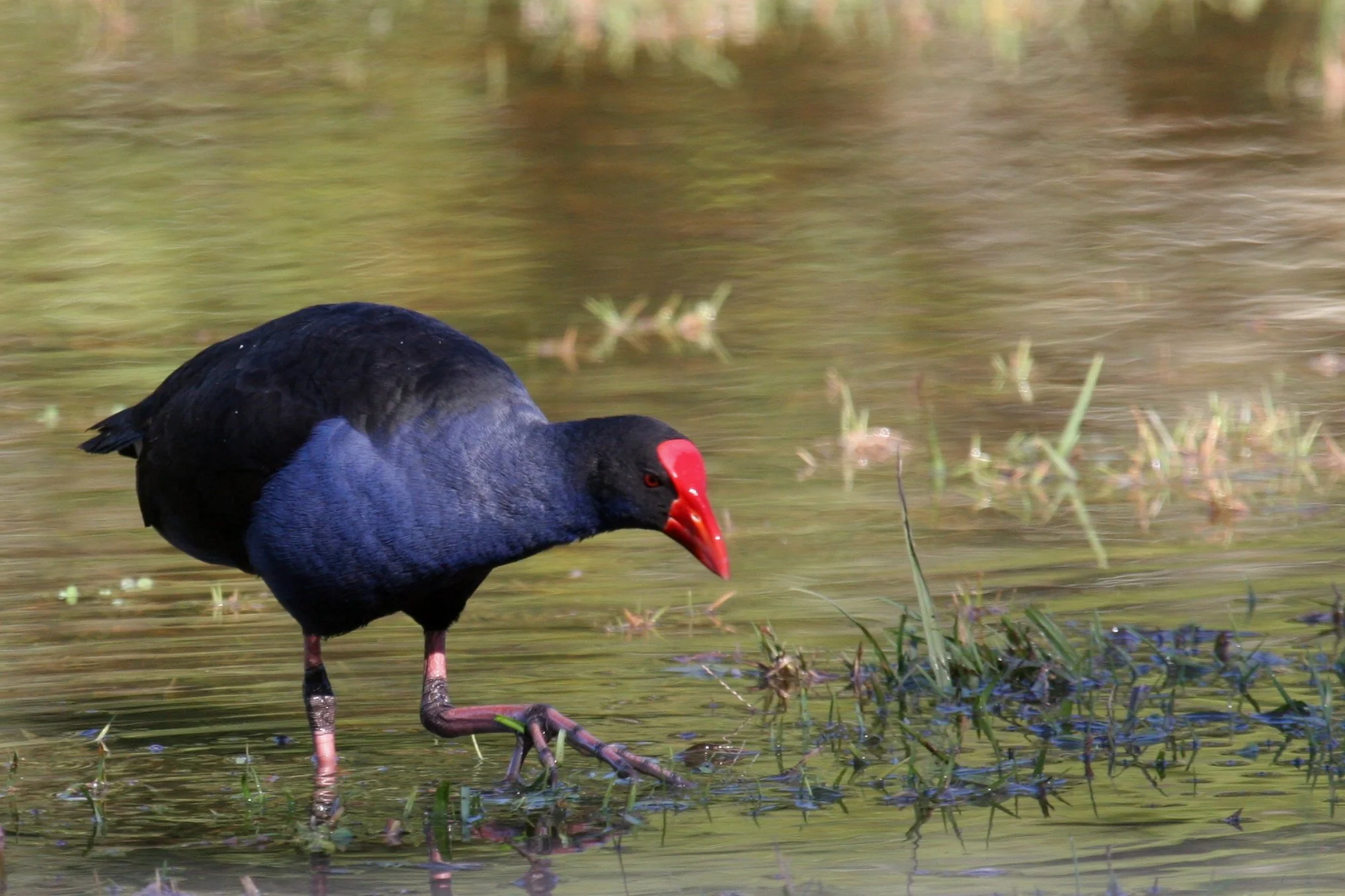
The Purple Swamphen (Porphyrio porphyrio melanotus), commonly known in Australia as the Purple Swamphen or “Purple Hen,” is one of Victoria’s most striking wetland birds. Recognisable by its vivid blue-purple plumage, long red legs, and bright crimson bill, the swamphen inhabits marshes, river systems, estuaries, reed beds, and freshwater wetlands throughout much of the state (Marchant & Higgins 1993). For Indigenous communities across Victoria, Purple Swamphens were far more than wetland birds. They formed part of broader ecological and spiritual relationships connected to waterways, reeds, food systems, seasonal movement, and the health of Country (Clark 1990; Flood 2001). Their calls, nesting behaviour, and movement through reed beds were carefully observed as indicators of water conditions and environmental balance. European settlers later viewed swamphens as curious “native hens” inhabiting wetlands that were increasingly drained or altered through colonisation. Today, Purple Swamphens remain important ecological indicators and visible reminders of Victoria’s fragile wetland systems and continuing Indigenous connections to water Country.
Biology and Ecology
Purple Swamphens belong to the rail family (Rallidae) and are highly adapted to wetland life.
Appearance
Deep blue and purple plumage with green-blue iridescence.
Bright red frontal shield and bill.
Long red legs and oversized toes allowing movement across reeds and floating vegetation.
Adult birds can reach approximately 45–50 centimetres in height.
Habitat
Purple Swamphens inhabit:
freshwater wetlands,
marshes,
reed beds,
floodplains,
estuaries,
and slow-moving rivers.
In Victoria they are commonly found in areas such as:
Western Treatment Plant wetlands,
Lake Connewarre,
Gippsland Lakes,
Kerang wetlands,
and river systems across northern Victoria.
Diet
Swamphens feed on:
reeds and aquatic plants,
shoots and seeds,
frogs and insects,
snails and small aquatic animals.
They are highly dexterous birds, often grasping food with their feet while feeding (Marchant & Higgins 1993).
Behaviour
Purple Swamphens are social and territorial birds, often living in family groups. Their loud calls echo across wetlands, especially during breeding periods and territorial disputes.
As wetland herbivores and foragers, swamphens contribute to ecological balance by shaping aquatic vegetation and supporting nutrient cycling within wetlands.
Deep-Time Origins and Evolution
The ancestors of swamphens evolved within ancient wetland systems millions of years ago. Fossil evidence suggests rail-like birds diversified during the Paleogene period after the extinction of dinosaurs, adapting to marshes, reed beds, and shallow freshwater ecosystems (Mayr 2009). The genus Porphyrio spread across Africa, Eurasia, Australasia, and Pacific regions over millions of years, with Australian Purple Swamphens adapting to highly variable wetland conditions. Throughout the Quaternary period, swamphens survived dramatic climate shifts, changing sea levels, volcanic activity, and long drought cycles that repeatedly reshaped Australia’s river systems and floodplains (Kershaw et al. 2003). For tens of thousands of years, Indigenous communities observed swamphens as part of complex wetland knowledge systems connecting water, reeds, fish, birds, and seasonal cycles.
Purple Swamphens in Indigenous Culture
Across many Indigenous communities, Purple Swamphens were associated with wetlands, abundance, family cooperation, and environmental awareness.
Wetland Guardians
Swamphens living among reeds and waterways were often viewed as guardians of marshes and water systems. Their presence indicated healthy wetlands rich in fish, frogs, reeds, and aquatic plant life.
Seasonal Indicators
The movement and breeding behaviour of swamphens helped signal seasonal change, rainfall patterns, and wetland conditions. Their nesting activity often corresponded with periods of water abundance and reed growth.
Food and Resource Knowledge
Eggs and occasionally birds themselves could be harvested under strict cultural protocols connected to sustainability and seasonal responsibility (Flood 2001).
Teaching and Observation
Because swamphens move carefully through dense reeds while remaining alert and vocal, they became associated with awareness, family protection, and cooperation within community life. Among some communities, wetland birds such as swamphens also featured within stories concerning water spirits, floodplains, and respect for aquatic environments.
Indigenous Names and Language of Purple Swamphens
Purple Swamphens appear throughout the languages and oral traditions of many Indigenous communities connected to wetlands, rivers, lakes, and marsh Country. Like many waterbirds, swamphen-related language often reflected behaviour, habitat, sound, and ecological role rather than simply physical appearance (Clark 1990; Blake 1991).
Wadawurrung and Kulin Nation Perspectives
Within Wadawurrung and broader Kulin Nation traditions, surviving swamphen-specific words are limited due to colonisation, displacement from waterways, and suppression of language throughout the nineteenth century. However, oral histories and language revival work continue to recognise wetland birds as spiritually and ecologically important beings connected to water systems and seasonal balance.
Across Wadawurrung, Bunurong, and Wurundjeri communities, Purple Swamphens were often associated with:
reed-bed wetlands,
freshwater abundance,
nesting and family protection,
and communication through wetland calls.
Rather than functioning solely through fixed Western naming systems, many Indigenous languages described birds through movement, sound, habitat, and behaviour.
Victorian Indigenous Communities
Across Victorian Indigenous communities, swamphens were respected as indicators of healthy marshlands and functioning waterways. Their loud calls and movement through reeds often signalled changing water conditions or seasonal transitions. Among Gunditjmara, Gunaikurnai, Dja Dja Wurrung, and Yorta Yorta communities, wetland birds formed part of broader ecological knowledge systems connected to fish traps, eel harvesting, floodplains, and water management (Howitt 1904).
Indigenous Waterbird Names Across Australia
Many Indigenous Australian languages maintain distinct names and classifications for swamphens and related wetland birds:
Yolngu communities (Arnhem Land): wetland birds are integrated into freshwater and saltwater songlines connected to kinship and ecological lore (Morphy 1991).
Noongar communities (south-west Western Australia): marsh birds are associated with estuaries, seasonal flooding, and wetland ecology (Green 1984).
Ngarrindjeri communities (South Australia): waterbirds are deeply connected to Murray River and Coorong ecological knowledge systems.
Palawa communities (Tasmania): wetland birds were linked to seasonal movement, food systems, and environmental observation (Ryan 2013).
Because Indigenous Australia contains more than 250 distinct language groups, there is no single Indigenous word for Purple Swamphen. Each Nation developed its own names and meanings according to local ecology, waterways, spirituality, and cultural traditions.
Purple Swamphens and Wetland Lore
Swamphens were important indicators within Indigenous environmental knowledge systems.
Communities observed:
nesting patterns,
reed movement,
feeding behaviour,
and vocal calls
to understand:
water levels,
seasonal flooding,
breeding cycles of aquatic species,
and wetland health.
For Wadawurrung communities, swamphens inhabiting Lake Connewarre, Barwon River wetlands, and coastal estuaries formed part of the broader water lore of Country. Their movement between reeds and open water symbolised the interconnected relationship between concealment and openness, caution and communication.
Purple Swamphens on Wadawurrung Country
Across Wadawurrung Country — including the Bellarine Peninsula, Barwon River, and volcanic plains wetlands — Purple Swamphens remain strongly associated with freshwater marsh systems.
Lake Connewarre
Lake Connewarre and surrounding wetlands continue to provide important habitat for swamphens and many migratory waterbirds.
Wetland Knowledge
Swamphens formed part of wider ecological knowledge systems connected to reeds, fish movement, eel migration, and seasonal flooding.
Cultural Continuity
Today, Wadawurrung Traditional Owners continue protecting wetlands through cultural education, waterway restoration, and environmental management programs.
Swamphens remain visible reminders of the deep relationship between wetlands, biodiversity, and cultural continuity.
Colonisation and Environmental Change
Colonisation dramatically transformed Victoria’s wetlands.
Wetland Drainage
Large areas of marshland and floodplain were drained for agriculture, grazing, and urban expansion, destroying habitat for swamphens and other wetland species.
Pollution and Water Regulation
River modification, pollution, and altered flooding cycles affected breeding systems and wetland vegetation.
Decline of Cultural Water Systems
The disruption of Indigenous water management practices also impacted ecological relationships that had sustained wetlands for thousands of years. Despite these pressures, Purple Swamphens have survived in many restored or protected wetland systems across Victoria.
Science and Conservation
Modern ecology recognises Purple Swamphens as important indicators of wetland health.
Ecological Indicators
Healthy swamphen populations often reflect:
stable water systems,
healthy reed beds,
and functioning aquatic biodiversity.
Conservation Efforts
Programs across Victoria now focus on:
wetland restoration,
invasive species management,
water-quality improvement,
and Indigenous-led Caring for Country initiatives.
Indigenous Partnerships
Traditional Owner groups increasingly collaborate with scientists and environmental agencies to combine cultural knowledge with ecological monitoring.
These approaches recognise that wetlands are not only ecosystems, but living cultural landscapes.
Symbolism and Meaning
Purple Swamphens carry layered meanings across Indigenous and environmental perspectives.
Within Indigenous cultures: they symbolise wetlands, communication, awareness, family protection, and ecological balance.
Within ecology: they represent healthy marsh systems and wetland resilience.
Within broader symbolism: their vivid colouration and hidden movement through reeds evoke mystery, adaptability, and connection to water.
Their calls across wetlands continue to remind people of the living relationship between water, spirit, biodiversity, and Country.
Conclusion
The Purple Swamphen is far more than a colourful wetland bird. Across Victoria, it remains connected to waterways, ecological knowledge, cultural continuity, and the living spirit of wetlands. For Indigenous communities, swamphens formed part of sophisticated environmental systems linking reeds, fish, birds, seasons, and water lore. Colonisation disrupted many of these wetlands and cultural relationships, yet the bird continues to survive within marshes and waterways across the state. Protecting Purple Swamphens means protecting wetlands themselves — the reeds, floodplains, rivers, and cultural knowledge systems upon which both biodiversity and human history depend.
References
Blake, BJ 1991, Woiwurrung: The Melbourne Language of the Kulin Nation, Pacific Linguistics, Canberra.
Broome, R 2005, Aboriginal Victorians: A History Since 1800, Allen & Unwin, Sydney.
Clark, ID 1990, Aboriginal Languages and Clans: An Historical Atlas of Western and Central Victoria, 1800–1900, Monash Publications in Geography, Melbourne.
Flood, J 2001, The Original Australians: Story of the Aboriginal People, Allen & Unwin, Sydney.
Green, N 1984, Broken Spears: Aboriginals and Europeans in the Southwest of Australia, Focus Education Services, Perth.
Howitt, AW 1904, The Native Tribes of South-East Australia, Macmillan, London.
Kershaw, AP, van der Kaars, S & Flenley, J 2003, ‘The Quaternary history of Australian vegetation’, in A History of the Australian Vegetation: Cretaceous to Recent, ed RH Groves, Cambridge University Press, Cambridge, pp. 236–306.
Marchant, S & Higgins, PJ (eds) 1993, Handbook of Australian, New Zealand and Antarctic Birds, Volume 2: Raptors to Lapwings, Oxford University Press, Melbourne.
Mayr, G 2009, Paleogene Fossil Birds, Springer, Berlin.
Morphy, H 1991, Ancestral Connections: Art and an Aboriginal System of Knowledge, University of Chicago Press, Chicago.
Ryan, L 2013, The Aboriginal Tasmanians, Allen & Unwin, Sydney.
Written, Researched and Directed by James Vegter and Uncle Reg Abrahams (22 September 2025)
MLA Educational Articles
Sharing the truth of Indigenous and colonial history through film, education, land, and community.
www.magiclandsalliance.org
Copyright MLA – 2025
Magic Lands Alliance acknowledges the Traditional Owners, Custodians, and First Nations communities across Australia and internationally. We honour their enduring connection to the sky, land, waters, language, and culture. We pay respect to Elders past, present, and emerging, and to all First Peoples’ communities and language groups. This article draws only on publicly available information; many cultural practices remain the intellectual property of their respective communities.