

Native Plants, Trees and Flowers
Introduction
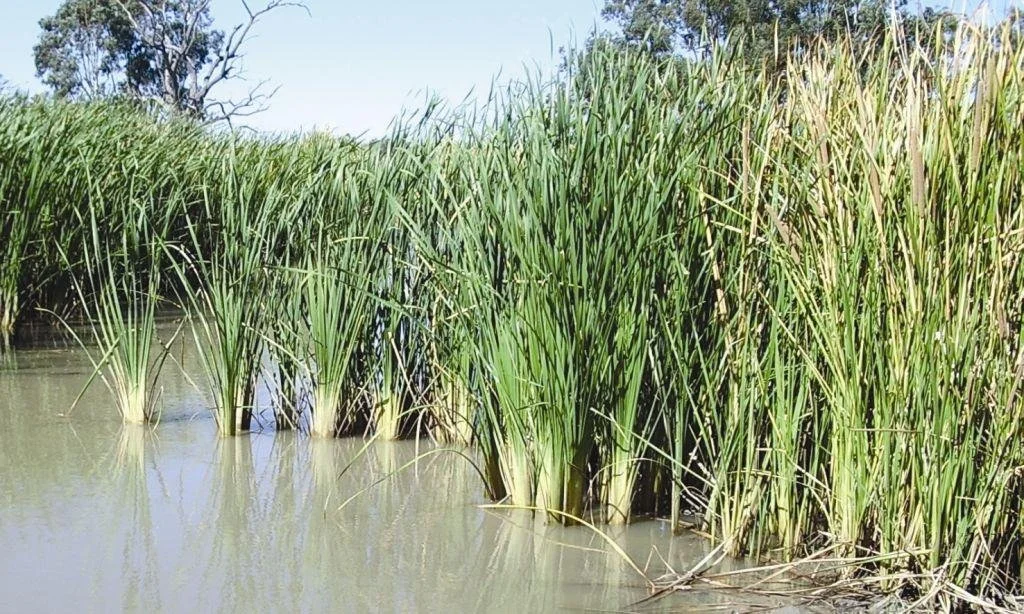
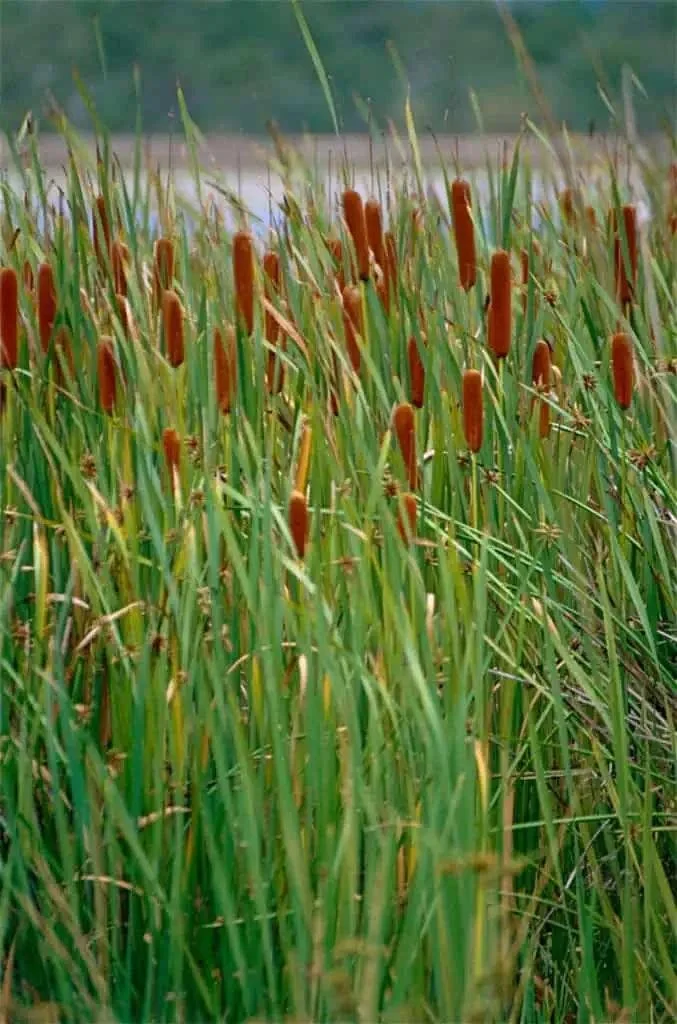
Among the most important wetland plants of southeastern Australia is Cumbungi (Typha species), a tall reed-like plant found throughout rivers, wetlands, lakes, billabongs, swamps, and floodplains. Recognisable by its long leaves and distinctive brown cigar-shaped flower spikes, Cumbungi has sustained Indigenous communities for thousands of years as a source of food, fibre, medicine, shelter materials, and ecological knowledge.
Across Wadawurrung, Wurundjeri, Boon Wurrung, Dja Dja Wurrung, and broader Kulin Nations Country, Cumbungi formed part of highly productive freshwater ecosystems supporting fish, eels, birds, insects, amphibians, and people. Growing in dense stands along waterways, the plant provided important resources for daily life while helping maintain the health of wetland systems (Clarke 2007).
Today, Cumbungi remains one of Victoria's most significant freshwater plants and continues to play an important role in cultural education, ecological restoration, and Traditional Owner land management programs.
What is Cumbungi?
Cumbungi refers to several species of Typha, commonly known as bulrushes or cattails. In Victoria, the most common species include:
Typha domingensis (Narrow-leaf Cumbungi)
Typha orientalis (Broadleaf Cumbungi)
These perennial wetland plants grow in dense colonies and can reach heights of more than three metres. Their long strap-like leaves emerge from extensive underground rhizomes, while their distinctive flower spikes produce large quantities of seeds dispersed by wind.
Cumbungi commonly grows in:
Freshwater wetlands
Lakes and lagoons
Billabongs
River edges
Floodplains
Swamps
Estuaries with low salinity
(Costermans 2009)
Across Wadawurrung Country, Cumbungi occurs around Lake Connewarre, Reedy Lake, Hospital Swamps, the Barwon River system, and numerous freshwater wetlands throughout western Victoria.
Indigenous Names and Language Connections
Like many important Indigenous plants across Victoria, local names for Cumbungi varied between language groups and regions.
Unfortunately, many Victorian plant names were incompletely recorded following colonisation, and some traditional names have been lost or survive only within fragmented historical records (Clark 1990).
While there is currently no widely published and verified Wadawurrung word specifically attributed to Typha species in publicly accessible sources, the plant's widespread use suggests it almost certainly possessed local names across Wadawurrung, Wurundjeri, Boon Wurrung, and other Kulin Nations languages.
Indigenous naming systems frequently reflected:
Ecological roles
Food uses
Habitat associations
Seasonal characteristics
Cultural significance
rather than functioning as simple botanical labels. Today, language revitalisation programs led by Traditional Owners and language organisations continue recovering plant names and ecological knowledge across Victoria.
Cumbungi and Life on Country
Cumbungi grew within some of the most productive freshwater environments in southeastern Australia. Wetlands containing extensive Cumbungi stands often supported abundant wildlife and became important locations for seasonal gathering, fishing, hunting, and food harvesting.
Its presence often indicated:
Reliable freshwater
Productive fish habitat
Eel populations
Bird breeding areas
Healthy wetland ecosystems
(Rose 1996)
For Indigenous communities, wetlands were not isolated resources but interconnected living systems where plants, animals, water, weather, and people existed in relationship. The seasonal growth and flowering of Cumbungi helped communities understand changes occurring across the broader landscape.
Cumbungi as a Food Plant
One of the most important uses of Cumbungi was as a food source. The underground rhizomes contain significant amounts of starch and could be harvested, processed, and cooked. These rhizomes provided valuable carbohydrates and were often collected from wetland margins (Clarke 2007). Young shoots could also be eaten when tender, while pollen collected from flowering heads could sometimes be incorporated into food preparation. Cumbungi provided an important supplementary food source, particularly during periods when other plant foods were less abundant.
The harvesting of rhizomes required detailed knowledge of:
Seasonal growth cycles
Wetland conditions
Sustainable harvesting methods
allowing communities to utilise the resource while ensuring future regeneration.
Fibre, Weaving, and Basket Making
The long leaves of Cumbungi were widely used for weaving and fibre production.
After harvesting and drying, leaves could be woven into:
Baskets
Mats
Carrying vessels
Floor coverings
Sleeping mats
Fishing equipment
(Gott 2019)
The flexibility and strength of the leaves made them particularly suitable for weaving. In many regions of southeastern Australia, Cumbungi became one of the most important wetland fibre plants alongside Sea-rush and Mat-rush. Weaving practices carried cultural knowledge between generations and formed an important part of everyday life. Many contemporary Indigenous weaving programs across Victoria continue to use Cumbungi today.
Fishing and Wetland Technologies
Cumbungi wetlands supported sophisticated Indigenous fishing economies.
Dense stands provided habitat for:
Fish
Eels
Frogs
Crustaceans
Waterbirds
The leaves and fibres could be incorporated into:
Fish traps
Eel harvesting systems
Nets
Storage containers
(Pascoe 2014)
Communities understood how fish moved through wetland systems and utilised this knowledge alongside woven technologies to harvest resources sustainably. The relationship between Cumbungi and freshwater ecosystems demonstrates the sophisticated environmental knowledge developed over thousands of years.
Shelter and Camp Construction
Cumbungi was also an important construction material.
Its leaves could be bundled and layered into:
Shelter walls
Roof coverings
Windbreaks
Bedding
Insulation
The soft seed fluff from mature flower heads could also be used as padding and insulation material. Around lakes, wetlands, and river systems, Cumbungi provided an abundant renewable resource for temporary and seasonal camps. Its use reflects the ingenuity of Indigenous engineering and adaptation to wetland environments.
Medicine and Wellbeing
Although primarily known as a food and fibre plant, Cumbungi also contributed to wellbeing in practical ways.
Soft plant fibres and seed down could be used for:
Padding
Wound protection
Bedding
Insulation
Some Indigenous communities across Australia also utilised parts of the plant for minor medicinal applications, particularly where cooling or soothing properties were beneficial (Clarke 2007). More broadly, healthy wetlands supported by Cumbungi contributed directly to community wellbeing through access to food, clean water, and ecological stability.
Cumbungi and Wetland Ecology
Ecologically, Cumbungi is one of the most important freshwater plants in Australia.
Its extensive root systems:
Stabilise sediments
Reduce erosion
Filter pollutants
Improve water quality
Slow water movement
(CSIRO 2021)
Dense Cumbungi stands provide habitat for:
Frogs
Fish
Insects
Waterbirds
Reptiles
Small mammals
Many fish species utilise Cumbungi wetlands as nursery habitat, while birds nest and shelter among the dense vegetation. The plant plays a critical role in maintaining biodiversity and ecological function within freshwater systems.
Fire, Flooding, and Regeneration
Cumbungi is highly resilient to environmental change.
Its underground rhizomes allow rapid regeneration following:
Flooding
Drought
Grazing
Fire
(Gammage 2011)
Indigenous land management practices helped maintain healthy wetland mosaics that supported both biodiversity and cultural resource use. Through careful observation of water cycles and seasonal conditions, communities managed wetland resources sustainably over long periods of time.
Colonisation and Wetland Loss
Since European settlement, many Victorian wetlands have been drained, modified, or destroyed through:
Agriculture
Urban development
Water diversion
Pollution
Infrastructure development
(Gammage 2011)
These changes have significantly reduced wetland habitats and impacted Indigenous cultural practices connected to freshwater ecosystems.
The loss of wetlands has affected:
Fish populations
Waterbird habitat
Traditional food resources
Cultural harvesting practices
Today, many freshwater wetlands remain under pressure despite increasing conservation efforts.
Contemporary Cultural and Ecological Revival
Across Victoria, Traditional Owners, ecologists, and conservation organisations are working to restore wetlands and revive cultural knowledge associated with Cumbungi.
Projects increasingly focus on:
Wetland restoration
Waterway rehabilitation
Cultural education
Indigenous weaving programs
Traditional ecological knowledge
These initiatives recognise that healthy wetlands support both biodiversity and cultural continuity. For many communities, restoring Cumbungi is also about restoring relationships between people and water.
Philosophical Perspectives: Wetlands as Living Systems
Martin Heidegger — Dwelling Within Country
Heidegger argued that humans should dwell within the world rather than dominate it (Heidegger 1971). The relationship between Indigenous peoples and Cumbungi reflects this philosophy. Wetlands were understood through reciprocity, observation, and care rather than exploitation.
Michel Foucault — Knowledge Through Observation
Foucault noted that societies organise knowledge in different ways (Foucault 1970). Long before modern wetland ecology emerged, Indigenous peoples understood the relationships between Cumbungi, fish, birds, water movement, and seasonal change through careful observation and lived experience. This knowledge remains one of the oldest continuously practised environmental knowledge systems in the world.
Conclusion
Cumbungi (Typha species) is far more than a wetland reed. For thousands of years it has supported food gathering, weaving, fishing technologies, shelter construction, ecological knowledge, and cultural continuity across Wadawurrung and Kulin Nations Country. Its rhizomes provided food. Its leaves became baskets and mats. Its wetlands supported fish, birds, and countless other species. Today, as Victoria works to restore its remaining freshwater ecosystems, Cumbungi continues to teach important lessons about resilience, sustainability, and caring for Country.
To care for Cumbungi is therefore to care for:
wetlands, biodiversity, freshwater systems, cultural knowledge, and the enduring relationship between people and Country.
References
Clark, ID 1990, Aboriginal Languages and Clans: An Historical Atlas of Western and Central Victoria, 1800–1900, Monash Publications in Geography, Melbourne.
Clarke, PA 2007, Aboriginal People and Their Plants, Rosenberg Publishing, Sydney.
Costermans, L 2009, Native Trees and Shrubs of South-Eastern Australia, Reed New Holland, Sydney.
CSIRO 2021, Wetland Ecology and Freshwater Plants of Australia, CSIRO Publishing, Canberra.
Foucault, M 1970, The Order of Things, Tavistock Publications, London.
Gammage, B 2011, The Biggest Estate on Earth: How Aborigines Made Australia, Allen & Unwin, Sydney.
Gott, B 2019, Aboriginal Plant Use in South-Eastern Australia, Aboriginal Studies Press, Canberra.
Heidegger, M 1971, Poetry, Language, Thought, Harper & Row, New York.
Pascoe, B 2014, Dark Emu, Magabala Books, Broome.
Rose, DB 1996, Nourishing Terrains: Australian Indigenous Views of Landscape and Wilderness, Australian Heritage Commission, Canberra.
Wadawurrung Traditional Owners Aboriginal Corporation 2020, Cultural and Ecological Resources, Victoria.
Wurundjeri Woi Wurrung Cultural Heritage Aboriginal Corporation 2019, Caring for Country Resources, Victoria.
Written, Researched and Directed by James Vegter (22 May 2026)
MLA Educational Articles
Sharing the truth of Indigenous and colonial history through film, education, land, and community.
www.magiclandsalliance.org
Magic Lands Alliance acknowledges the Traditional Owners, Custodians, and First Nations communities across Australia and internationally. We honour their enduring connection to the sky, land, waters, language, and culture. We pay respect to Elders past, present, and emerging, and to all First Peoples’ communities and language groups. This article draws only on publicly available information; many cultural practices remain the intellectual property of their respective communities.