

Native Plants, Trees and Flowers
Introduction
Across the volcanic plains, river valleys, wetlands, and open woodlands of Victoria grows one of southeastern Australia’s most important native grasses — Common Tussock Grass (Poa labillardierei). Known for its graceful arching leaves and dense clumps, this perennial grass once dominated vast areas of the Victorian landscape and played an important role in the lives of Indigenous communities for thousands of years.
Throughout Wadawurrung, Wurundjeri, Boon Wurrung, Dja Dja Wurrung, and broader Kulin Nations Country, Tussock Grass formed part of highly productive grassland ecosystems that supported kangaroos, emus, insects, birds, reptiles, and people. These grasslands were not wilderness in the European sense but carefully managed cultural landscapes shaped through observation, seasonal harvesting, and cultural burning practices (Gammage 2011).
Tussock Grass provided materials for weaving, shelter construction, bedding, and fibre production. It also supported important food systems by maintaining habitat for animals that were hunted and harvested throughout the year. Today, as Victoria's native grasslands have become some of Australia's most endangered ecosystems, Tussock Grass remains a symbol of both ecological resilience and cultural continuity.
What is Tussock Grass?
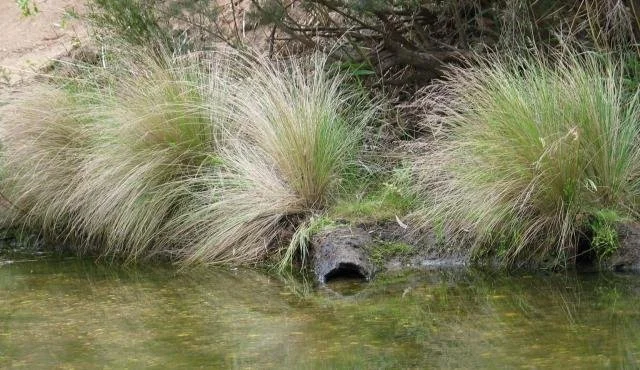
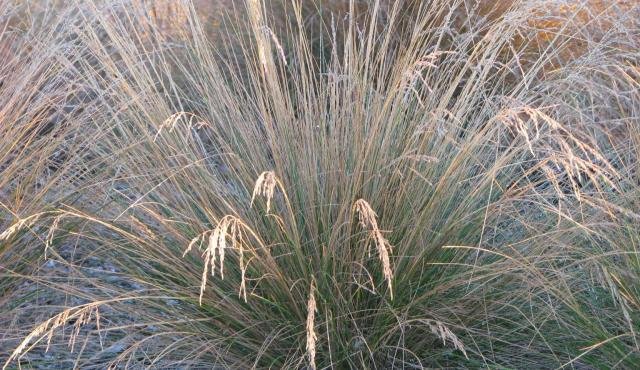
Poa labillardierei is a perennial native grass belonging to the Poaceae family. It grows in large, dense clumps that can reach over one metre in height and width. Its fine green leaves arch gracefully from the base, while tall flowering stems produce seed heads that sway in the wind.
The species occurs throughout southeastern Australia and is particularly common across Victoria in:
Grasslands
River corridors
Wetlands
Woodland openings
Volcanic plains
Coastal hinterlands
(Costermans 2009)
Historically, extensive areas of Wadawurrung Country, including the Western Volcanic Plains and regions surrounding the Barwon River system, were dominated by native grasslands containing large populations of Tussock Grass and other native grasses. Its deep root systems make it highly resilient to drought, flooding, grazing, and fire, contributing to its ecological importance across many landscapes.
Indigenous Names and Language Connections
Like many Indigenous plants across Victoria, traditional names for Tussock Grass were often specific to individual language groups and local ecological contexts. Unfortunately, many Victorian plant names were either not recorded or only partially documented during the nineteenth century due to the impacts of colonisation and language disruption (Clark 1990). There is currently no widely published and verified Wadawurrung-specific name available for Poa labillardierei in publicly accessible records. This does not mean the plant lacked a traditional name. Rather, it reflects the broader disruption of Indigenous languages and cultural knowledge systems across southeastern Australia (Blake 1991).
Given the ecological importance of grasslands and the widespread use of grasses throughout Victoria, it is highly likely that local names existed for Tussock Grass and related species. Indigenous naming systems frequently reflected:
Habitat
Practical use
Ecological role
Seasonal behaviour
Relationships with animals and Country
Today, language revitalisation projects led by Traditional Owners, Elders, and organisations such as the Victorian Aboriginal Corporation for Languages continue working to recover plant names and ecological knowledge across Victoria.
Tussock Grass and Grassland Country
For thousands of years, extensive native grasslands covered large areas of Victoria. These grasslands supported extraordinary biodiversity and were central to Indigenous economies and seasonal movement.
Across Wadawurrung Country, native grasslands provided habitat for:
Kangaroos
Wallabies
Emus
Reptiles
Ground-nesting birds
Insects
The presence of healthy Tussock Grass often indicated productive hunting grounds and stable ecosystems. Communities observed grass growth, flowering, and seasonal conditions to understand broader environmental changes occurring across Country (Rose 1996).
Grasslands were not simply landscapes to pass through. They were living systems that required active management and care.
Cultural Burning and Grassland Management
One of the most important relationships between Indigenous communities and Tussock Grass involved cultural burning.
For thousands of years, carefully managed low-intensity burns were used to:
Encourage fresh grass growth
Reduce fuel loads
Support biodiversity
Improve hunting opportunities
Maintain open grassland structure
(Gammage 2011)
Fresh green shoots emerging after fire attracted kangaroos and other grazing animals, creating productive hunting environments. These burns also prevented the build-up of dense vegetation that could lead to destructive wildfires. Tussock Grass evolved alongside these management practices and responds strongly to low-intensity burning. Following fire, new growth emerges rapidly from its extensive root system. Modern ecological science increasingly recognises the sophistication of Indigenous fire management and its role in maintaining healthy grassland ecosystems.
Fibre, Weaving, and Practical Uses
Although Mat-rush and Sea-rush were generally preferred for major weaving projects, Tussock Grass still provided useful fibres for a range of practical purposes.
The leaves could be gathered and woven into:
Mats
Bedding
Temporary coverings
Insulation materials
Small baskets
Cordage
(Clarke 2007)
In some areas, dried grasses were layered together to create comfortable sleeping surfaces within shelters and camps. Grass also played an important role in lining structures and improving insulation during colder months. Because Tussock Grass was abundant and widely available, it often supplemented other fibre plants used throughout Victoria.
Shelter and Camp Construction
Tussock Grass was frequently used in the construction and maintenance of temporary camps.
Large bundles of dried grass could be incorporated into:
Windbreaks
Shelter walls
Roof coverings
Bedding areas
Floor insulation
The grass helped provide protection from cold weather while also creating comfortable surfaces for sleeping and resting. In open grassland environments where trees and bark resources were less abundant, grasses became particularly important construction materials. The use of Tussock Grass demonstrates how Indigenous communities adapted building techniques to different environments across Country.
Food Systems and Grassland Ecology
While Tussock Grass itself was not a major food source, it played a vital role in supporting broader Indigenous food systems. Healthy grasslands sustained many animals that were regularly harvested, including kangaroos, wallabies, emus, and smaller mammals. The grass also provided habitat for insects and birds that formed part of complex ecological networks (Gott 2019).
The flowering and seeding cycles of grasses helped indicate:
Seasonal transitions
Animal movement
Grazing patterns
Environmental conditions
These observations formed part of broader Indigenous seasonal calendars that guided movement, harvesting, and resource management throughout the year. In this way, Tussock Grass contributed indirectly to food production by supporting entire ecosystems.
Tussock Grass and Biodiversity
Ecologically, Poa labillardierei is one of Victoria's most important native grass species.
Its extensive root systems:
Stabilise soil
Reduce erosion
Improve water infiltration
Increase soil carbon
Support nutrient cycling
(CSIRO 2021)
Dense grass clumps provide habitat for:
Frogs
Reptiles
Insects
Small mammals
Ground-dwelling birds
Native grasslands once ranked among the most biodiverse ecosystems in southeastern Australia. Today, many restoration projects use Tussock Grass because of its ability to rebuild ecological resilience and support wildlife.
Colonisation and the Loss of Victoria's Grasslands
Since European settlement, Victoria has lost the vast majority of its native grasslands.
Large areas were cleared for:
Agriculture
Grazing
Urban development
Roads
Industry
(Gammage 2011)
The destruction of grasslands led to dramatic declines in biodiversity and disrupted Indigenous cultural practices connected to these environments. Today, less than a small percentage of Victoria's original native grasslands remain intact. Many of the surviving remnants occur on roadsides, reserves, and isolated patches of land. The loss of grassland ecosystems represents one of Australia's greatest environmental transformations since colonisation.
Contemporary Cultural and Ecological Revival
Across Victoria, Traditional Owners, conservation groups, and ecologists are working to restore native grasslands and revive cultural knowledge associated with these landscapes.
Projects involving Tussock Grass focus on:
Grassland restoration
Biodiversity recovery
Cultural burning
Indigenous ecological knowledge
Education programs
These initiatives recognise that ecological restoration and cultural restoration are closely connected. For many communities, restoring native grasslands is also about restoring relationships between people and Country.
Philosophical Perspectives: Grasslands as Living Systems
Martin Heidegger — Dwelling Within Country
Heidegger argued that humans should dwell within the world rather than seek to dominate it (Heidegger 1971).
The relationship between Indigenous communities and Tussock Grass reflects this philosophy. Grasslands were understood not as empty spaces but as living systems requiring care, observation, and reciprocity.
Michel Foucault — Knowledge Through Observation
Foucault observed that different societies organise knowledge in different ways (Foucault 1970).
Long before modern ecology emerged, Indigenous peoples understood the relationships between grasses, fire, animals, weather, and landscape through direct observation and experience.
This ecological knowledge remains one of the oldest continuously practised environmental knowledge systems on Earth.
Conclusion
Tussock Grass (Poa labillardierei) is far more than a native grass. For thousands of years it has supported Indigenous life through habitat creation, grassland management, shelter construction, fibre use, hunting systems, and ecological knowledge. Its roots stabilise landscapes. Its leaves provide materials for daily life. Its grasslands sustain biodiversity and support countless species. Today, as Victoria works to restore its remaining grassland ecosystems, Tussock Grass continues to teach important lessons about resilience, sustainability, and caring for Country.
To care for Tussock Grass is therefore to care for:
grasslands, biodiversity, cultural knowledge, ecological restoration, and the enduring relationship between people and Country.
References
Blake, BJ 1991, Woiwurrung: The Melbourne Language of the Kulin Nation, Pacific Linguistics, Canberra.
Clark, ID 1990, Aboriginal Languages and Clans: An Historical Atlas of Western and Central Victoria, 1800–1900, Monash Publications in Geography, Melbourne.
Clarke, PA 2007, Aboriginal People and Their Plants, Rosenberg Publishing, Sydney.
Costermans, L 2009, Native Trees and Shrubs of South-Eastern Australia, Reed New Holland, Sydney.
CSIRO 2021, Native Grasslands and Ecological Restoration in Australia, CSIRO Publishing, Canberra.
Foucault, M 1970, The Order of Things, Tavistock Publications, London.
Gammage, B 2011, The Biggest Estate on Earth: How Aborigines Made Australia, Allen & Unwin, Sydney.
Gott, B 2019, Aboriginal Plant Use in South-Eastern Australia, Aboriginal Studies Press, Canberra.
Heidegger, M 1971, Poetry, Language, Thought, Harper & Row, New York.
Rose, DB 1996, Nourishing Terrains: Australian Indigenous Views of Landscape and Wilderness, Australian Heritage Commission, Canberra.
Wadawurrung Traditional Owners Aboriginal Corporation 2020, Cultural and Ecological Resources, Victoria.
Wurundjeri Woi Wurrung Cultural Heritage Aboriginal Corporation 2019, Caring for Country Resources, Victoria.
Written, Researched and Directed by James Vegter (22 May 2026)
MLA Educational Articles
Sharing the truth of Indigenous and colonial history through film, education, land, and community.
www.magiclandsalliance.org
Magic Lands Alliance acknowledges the Traditional Owners, Custodians, and First Nations communities across Australia and internationally. We honour their enduring connection to the sky, land, waters, language, and culture. We pay respect to Elders past, present, and emerging, and to all First Peoples’ communities and language groups. This article draws only on publicly available information; many cultural practices remain the intellectual property of their respective communities.