

Native Plants, Trees and Flowers
Introduction
Across the wetlands, coastal heathlands, swamps, and river systems of Victoria, dense stands of Tea-tree have long formed part of some of the state's most important ecological and cultural landscapes. Known for its aromatic leaves, medicinal qualities, papery bark, and resilience within difficult environments, Tea-tree has held significance for First Nations peoples across southeastern Australia for thousands of years.
Throughout Wadawurrung, Wurundjeri, Boon Wurrung, and broader Kulin Nations Country, Tea-tree was valued not only as a medicinal plant, but also as part of broader systems of healing, shelter, smoke practices, environmental observation, and wetland ecology (Clarke 2007).
Tea-tree ecosystems often grew around wetlands, swamps, coastal estuaries, river edges, and damp heathlands. These landscapes supported birds, fish, frogs, insects, eels, and water systems central to seasonal movement and cultural life across Victoria.
Today, modern science increasingly recognises what Indigenous communities understood for generations: Tea-tree possesses powerful antiseptic properties, supports biodiversity, stabilises wetland systems, and plays an important role in ecological regeneration.
This article explores the Indigenous knowledge, ecology, science, medicine, and cultural meaning of Tea-tree across Wadawurrung and Kulin Nations Country.
What is Tea-tree?
The term "Tea-tree" commonly refers to several species within the Melaleuca and Leptospermum genera. In Victoria, important native species include:
Swamp Paperbark (Melaleuca ericifolia)
Coast Tea-tree (Leptospermum laevigatum)
Prickly Tea-tree (Leptospermum continentale)
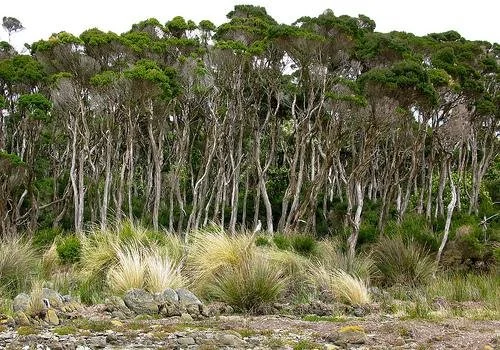
Tea-tree species are especially common around coastal wetlands, estuaries, swamp forests, damp heathlands, rivers, and floodplains.
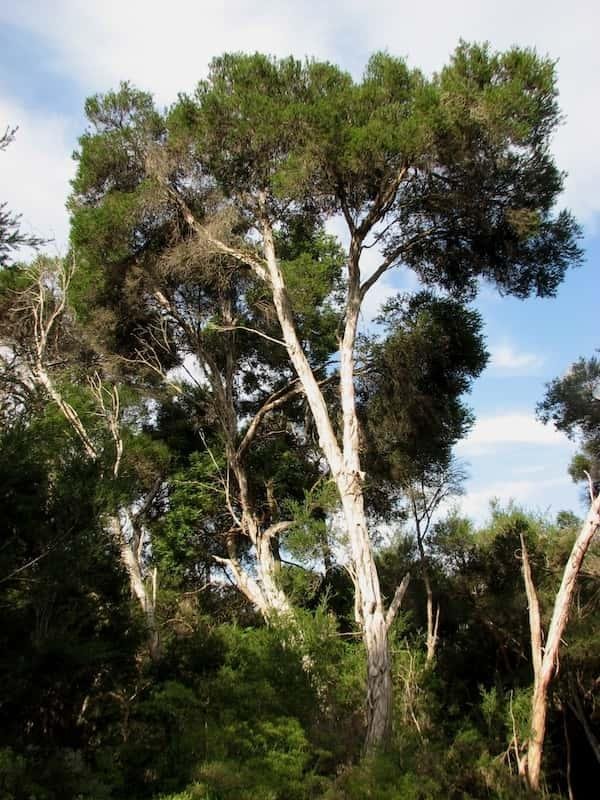
Tea-tree is recognised by its:
Small aromatic leaves
Dense branching structures
White flowers
Papery bark in some species
Strong medicinal scent when crushed
These plants are highly adapted to difficult conditions including salt winds, waterlogged soils, coastal exposure, and fire-prone environments (Costermans 2009).
Indigenous Names and Language Connections
Like many important Indigenous plants across Victoria, Tea-tree was known by different names across language groups and regions. Prior to colonisation, Wadawurrung, Wurundjeri, Boon Wurrung, Dja Dja Wurrung, and other Kulin Nations peoples maintained detailed knowledge systems relating to local plants, waterways, animals, and seasonal cycles.
Unfortunately, many Victorian plant names were either incompletely recorded or lost following the disruption of Indigenous languages during the nineteenth century. Early settlers often documented only a small portion of local botanical knowledge, while many traditional names survived through oral transmission rather than written records (Clark 1990).
For Tea-tree species such as Melaleuca ericifolia (Swamp Paperbark), Leptospermum laevigatum (Coast Tea-tree), and Leptospermum continentale (Prickly Tea-tree), there is currently no single widely published and verified Wadawurrung word available in public historical sources that can be confidently attributed across all Tea-tree species. This does not suggest the plant lacked traditional names. Rather, it reflects the broader impacts of language loss and incomplete colonial recording throughout Victoria (Blake 1991).
Because Tea-tree was one of the most important wetland and medicinal plants across southeastern Australia, it almost certainly possessed local names that varied between clans, language groups, and ecological regions. Indigenous naming systems frequently reflected the plant's medicinal use, habitat near waterways, seasonal flowering patterns, relationships with birds and animals, and its role in healing and cultural practices.
Rather than functioning solely as botanical labels, Indigenous plant names often formed part of broader ecological knowledge systems connecting Country, language, and cultural practice.
Today, language revitalisation programs led by Traditional Owners, Elders, linguists, and organisations such as the Victorian Aboriginal Corporation for Languages continue working to recover plant names and ecological knowledge across Victoria. As additional historical records are examined and community language projects expand, further traditional names associated with Tea-tree may become known.
For Wadawurrung and Kulin Nations communities, Tea-tree remains more than a medicinal plant. It represents an enduring connection between language, wetland ecology, cultural knowledge, and Country itself.
Tea-tree on Wadawurrung and Kulin Nations Country
Across Wadawurrung Country, Tea-tree commonly grew around Lake Connewarre, Barwon River wetlands, Breamlea, estuaries, and low-lying swamp systems. These environments formed important ecological zones supporting fish, eels, birds, amphibians, and medicinal plant systems (Wadawurrung Traditional Owners Aboriginal Corporation 2020).
Tea-tree wetlands often became seasonal gathering areas because they provided:
Freshwater access
Shelter from coastal winds
Bird and eel habitats
Medicinal resources
Dense vegetation for temporary camps
The flowering and growth cycles of Tea-tree also helped indicate seasonal change, moisture levels, and wetland health.
Its presence often signalled reliable water nearby, productive wetland ecosystems, and suitable environments for hunting and gathering.
Like many Indigenous ecological systems, Tea-tree was understood relationally — connected to birds, insects, fish migration, water quality, and seasonal movement.
Traditional Medicinal Uses
Tea-tree was one of the most important medicinal plants across southeastern Australia. Indigenous communities used the leaves, bark, smoke, and vapours for a variety of healing purposes (Clarke 2007).
Crushed leaves were commonly inhaled or steeped in water because of their strong aromatic oils. These oils helped relieve congestion, coughs, respiratory discomfort, and minor infections.
Steam and smoke from Tea-tree were also associated with cleansing practices. Leaves could be placed onto fires, producing aromatic smoke used around camps or during periods of illness.
Tea-tree washes and infusions were used to assist with:
Skin irritations
Minor wounds
Insect bites
Fungal conditions
Modern science later identified compounds within Tea-tree oils possessing antibacterial, antifungal, and antiseptic properties, validating many traditional healing applications (CSIRO 2021).
Smoke, Cleansing, and Spiritual Practices
Across many Indigenous Victorian communities, smoke was understood not only physically, but spiritually and emotionally.
Tea-tree smoke was often associated with:
Cleansing spaces
Supporting healing
Refreshing camps
Assisting recovery after sickness
Compared with stronger smokes such as Eucalyptus, Tea-tree smoke was often regarded as softer and more soothing.
Wetland Tea-tree environments themselves were also associated with calmness, reflection, and restoration. The cool filtered air within swamp forests and paperbark systems created sheltered spaces often linked to healing and ecological balance.
Smoke practices formed part of broader Indigenous understandings that wellbeing emerges through balance between people, plants, water, atmosphere, and Country itself (Atkinson 2002).
Tea-tree and Wetland Ecology
Tea-tree ecosystems are among the most biodiverse environments in Victoria. Dense wetland vegetation provides habitat for frogs, fish, waterbirds, insects, reptiles, and eels.
Tea-tree root systems stabilise wetland soils and help regulate water movement through floodplains and estuaries (CSIRO 2021).
Paperbark systems also:
Retain moisture
Filter water
Reduce erosion
Provide nesting habitat
Protect waterways during floods
These ecological relationships were long understood within Indigenous seasonal knowledge systems, where wetland plant health directly reflected broader environmental balance.
The flowering of Tea-tree often aligned with insect emergence, bird activity, fish movement, and seasonal warming.
Bark, Shelter, and Material Uses
The bark of some Tea-tree and Paperbark species had many practical uses.
Paperbark could be used for:
Wrapping food during cooking
Temporary shelter coverings
Bedding material
Carrying containers
Protection from rain and damp ground
Its soft layered structure made it lightweight, waterproof, and highly adaptable (Clarke 2007).
Branches and dense foliage were also used as windbreaks around camps, particularly in exposed wetland and coastal areas.
Fire Ecology and Regeneration
Tea-tree species are highly resilient within fire-prone Australian environments. Many regenerate rapidly after low-intensity burns, while their seeds and underground systems are adapted to disturbance cycles (Gammage 2011).
Indigenous cultural burning helped maintain:
Open wetland systems
Biodiversity
Habitat diversity
Fuel reduction
Carefully timed burns prevented catastrophic fires while encouraging regeneration across swamp forests and heathlands.
The removal of Indigenous fire management practices after colonisation contributed to dense vegetation build-up, altered wetland systems, habitat decline, and increased fire intensity.
Modern land management increasingly recognises the importance of cultural burning in maintaining ecological health across Tea-tree ecosystems.
Colonisation and Wetland Destruction
Since colonisation, large areas of Victoria's wetlands and Tea-tree systems have been drained, cleared, or fragmented through agriculture, urban expansion, grazing, roads, pollution, and water diversion.
Wetland destruction impacted not only biodiversity but also Indigenous food systems, seasonal movement, medicinal knowledge, and cultural practices connected to these landscapes (Rose 1996).
Many swamp forests and paperbark systems once widespread across Victoria have declined significantly.
As with many Indigenous ecological systems, the destruction of Tea-tree environments reflected a broader disruption of relationships between people and Country.
Revival and Restoration
Today, Traditional Owners, conservation groups, and ecologists are increasingly restoring wetland and Tea-tree ecosystems throughout Victoria.
Projects across:
Lake Connewarre
Western District wetlands
Gippsland wetlands
Coastal estuaries
focus on:
Revegetation
Water restoration
Cultural burning
Indigenous ecological management
These restoration efforts recognise that wetland recovery cannot be separated from Indigenous knowledge systems and cultural continuity.
Tea-tree remains central to many revegetation projects because of its ecological resilience, habitat value, water regulation, and cultural significance.
Philosophical Perspectives: Tea-tree and Living Systems
Martin Heidegger — Dwelling Within Wetland Systems
Heidegger argued that humans should dwell within the world rather than dominate it (Heidegger 1971). Indigenous relationships with Tea-tree ecosystems reflect this philosophy through reciprocal care, seasonal observation, and coexistence with wetland systems.
Michel Foucault — Knowledge and Ecology
Western science later isolated Tea-tree oils chemically and classified their medicinal properties. Indigenous peoples, however, already understood Tea-tree relationally through long-term ecological observation and lived experience.
This reflects differing systems of knowledge:
Western systems often isolate compounds
Indigenous systems observe relationships between environment, health, season, and Country
(Foucault 1970)
Conclusion
Tea-tree is far more than a wetland shrub or medicinal plant. Across Wadawurrung and Kulin Nations Country, it represents healing, shelter, water, ecological balance, and the interconnected intelligence of wetland systems.
Its leaves provided medicine.
Its smoke supported cleansing.
Its bark sheltered communities.
Its wetlands sustained birds, fish, insects, and life itself.
Today, as Victoria faces wetland loss, biodiversity decline, and climate pressure, Tea-tree continues to offer important lessons about regeneration, resilience, and ecological care.
To care for Tea-tree is therefore to care for:
healing, water, biodiversity, cultural continuity, language, and the living relationship between people and Country.
References
Atkinson, J 2002, Trauma Trails: Recreating Song Lines, Spinifex Press, Melbourne.
Blake, BJ 1991, Woiwurrung: The Melbourne Language of the Kulin Nation, Pacific Linguistics, Canberra.
Clark, ID 1990, Aboriginal Languages and Clans: An Historical Atlas of Western and Central Victoria, 1800–1900, Monash Publications in Geography, Melbourne.
Clarke, PA 2007, Aboriginal People and Their Plants, Rosenberg Publishing, Sydney.
Costermans, L 2009, Native Trees and Shrubs of South-Eastern Australia, Reed New Holland, Sydney.
CSIRO 2021, Australian Wetland Ecology and Native Medicinal Plants, CSIRO Publishing, Canberra.
Foucault, M 1970, The Order of Things, Tavistock Publications, London.
Gammage, B 2011, The Biggest Estate on Earth, Allen & Unwin, Sydney.
Gott, B 2019, Aboriginal Plant Use in South-Eastern Australia, Aboriginal Studies Press, Canberra.
Heidegger, M 1971, Poetry, Language, Thought, Harper & Row, New York.
Low, T 1991, Wild Food Plants of Australia, Angus & Robertson, Sydney.
Rose, DB 1996, Nourishing Terrains, Australian Heritage Commission, Canberra.
Victorian Aboriginal Corporation for Languages, language revitalisation resources.
Wadawurrung Traditional Owners Aboriginal Corporation 2020, Cultural and Ecological Resources, Victoria.
Wurundjeri Woi Wurrung Cultural Heritage Aboriginal Corporation 2019, Caring for Country Resources, Victoria.
Written, Researched and Directed by James Vegter (22 May 2026)
MLA Educational Articles
Sharing the truth of Indigenous and colonial history through film, education, land, and community.
www.magiclandsalliance.org
Magic Lands Alliance acknowledges the Traditional Owners, Custodians, and First Nations communities across Australia and internationally. We honour their enduring connection to the sky, land, waters, language, and culture. We pay respect to Elders past, present, and emerging, and to all First Peoples’ communities and language groups. This article draws only on publicly available information; many cultural practices remain the intellectual property of their respective communities.