

Native Plants, Trees and Flowers
Introduction
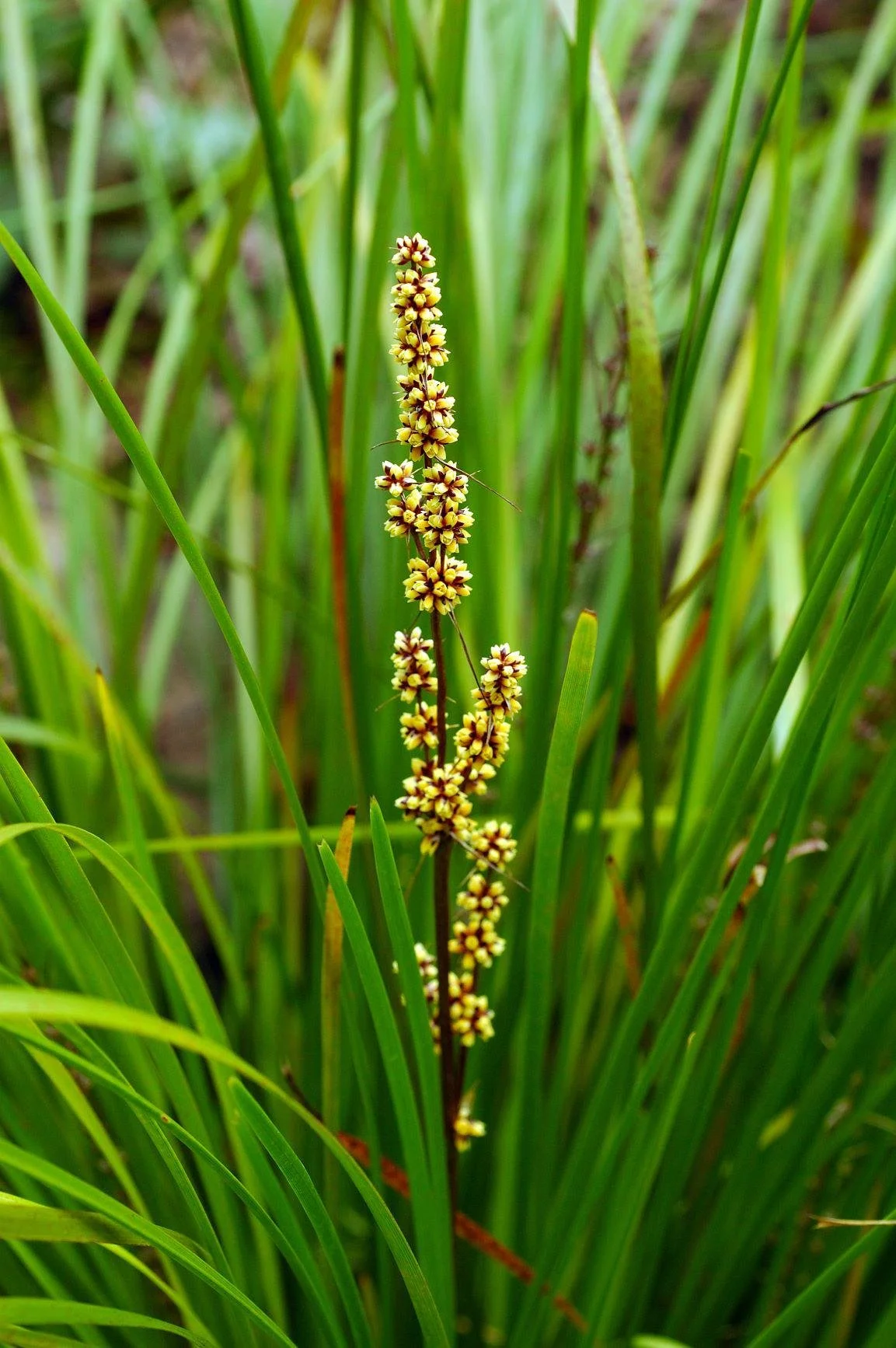
Among the most important native plants of southeastern Australia is Mat-rush (Lomandra longifolia), a hardy grass-like species found throughout Victoria’s grasslands, woodlands, wetlands, coastal dunes, and river systems. Recognised for its long strap-like leaves and remarkable durability, Mat-rush has supported Indigenous communities for thousands of years as a source of fibre, food, shelter materials, fishing technology, and cultural knowledge.
Across Wadawurrung, Wurundjeri, Boon Wurrung, and broader Kulin Nations Country, Mat-rush was far more than a useful plant. It formed part of everyday life through weaving, basket making, net construction, eel traps, cordage, mats, and carrying bags. It was also an important indicator of healthy ecosystems and was closely connected to seasonal movement across Country (Clarke 2007).
Today, Mat-rush remains one of the most significant Indigenous fibre plants in Victoria and continues to play an important role in cultural revival, ecological restoration, and educational programs.
What is Mat-rush?
Mat-rush (Lomandra longifolia) belongs to the Asparagaceae family. Although often mistaken for a grass, it is not a true grass. It grows in dense clumps with tough, flexible leaves that can withstand drought, strong winds, poor soils, and fire.
The plant occurs widely across Victoria, including coastal dunes, river corridors, volcanic plains, woodland environments, wetland edges, and open grasslands (Costermans 2009). It is particularly common throughout Wadawurrung Country around the Bellarine Peninsula, Surf Coast, Barwon River system, Lake Connewarre, and the You Yangs region.
Its abundance and resilience made it one of the most accessible and valuable plants available to Indigenous communities throughout southeastern Australia.
Indigenous Names and Language Connections
One of the challenges when researching Indigenous plant knowledge across Victoria is that many traditional plant names were never fully recorded during the nineteenth century, while others were documented inconsistently by early settlers, missionaries, and government officials. As a result, numerous plant names that were once widely known across Wadawurrung, Wurundjeri, Boon Wurrung, and other Victorian language groups have either been lost or survive only in fragmented records (Clark 1990).
For Mat-rush (Lomandra longifolia), there is currently no widely published and verified Wadawurrung-specific name available within publicly accessible historical sources. This should not be interpreted as evidence that the plant lacked a traditional name. Rather, it reflects the broader disruption of language, culture, and knowledge systems that occurred following colonisation throughout Victoria (Clark 1990; Blake 1991).
Because Mat-rush was one of the most important fibre plants across southeastern Australia, it is highly likely that local names existed across different language groups and clan estates. Indigenous naming systems often reflected not only the plant itself, but also its use, ecological role, seasonal behaviour, or relationship to particular places and activities.
Historical records from other parts of Australia show that fibre plants were frequently associated with words relating to string making, basket weaving, net production, or wetland resources rather than a single universal botanical name (Clarke 2007).
Today, language revitalisation projects led by Traditional Owners, Elders, linguists, and organisations such as the Victorian Aboriginal Corporation for Languages continue working to recover and restore traditional plant knowledge across Victoria. As additional historical records are examined and community language programs expand, further names and knowledge relating to Mat-rush may become available.
For Wadawurrung and Kulin Nations communities, the significance of Mat-rush extends beyond its scientific classification. The plant remains a living connection between language, ecological knowledge, cultural practice, and Country itself.
Mat-rush and Life on Country
Because Mat-rush grows across so many different environments, it became deeply integrated into daily life. Its presence often indicated healthy soils, stable ecosystems, and reliable environmental conditions.
Communities understood where the strongest plants grew, which leaves were best suited for weaving, and when harvesting could occur without damaging future growth. Knowledge about the plant was passed between generations through observation, practice, and cultural teaching (Gott 2019).
Mat-rush was particularly important around waterways and wetlands, where its fibres could be transformed into tools used for fishing and eel harvesting. In grassland areas, it provided materials for baskets, shelter construction, and everyday household objects.
The plant became part of a broader relationship between people and Country, where practical use was balanced with careful management and long-term sustainability.
Fibre Technology and Weaving
The most significant use of Mat-rush was its fibre. The long leaves could be harvested, split, softened, and woven into a wide range of objects essential to daily life.
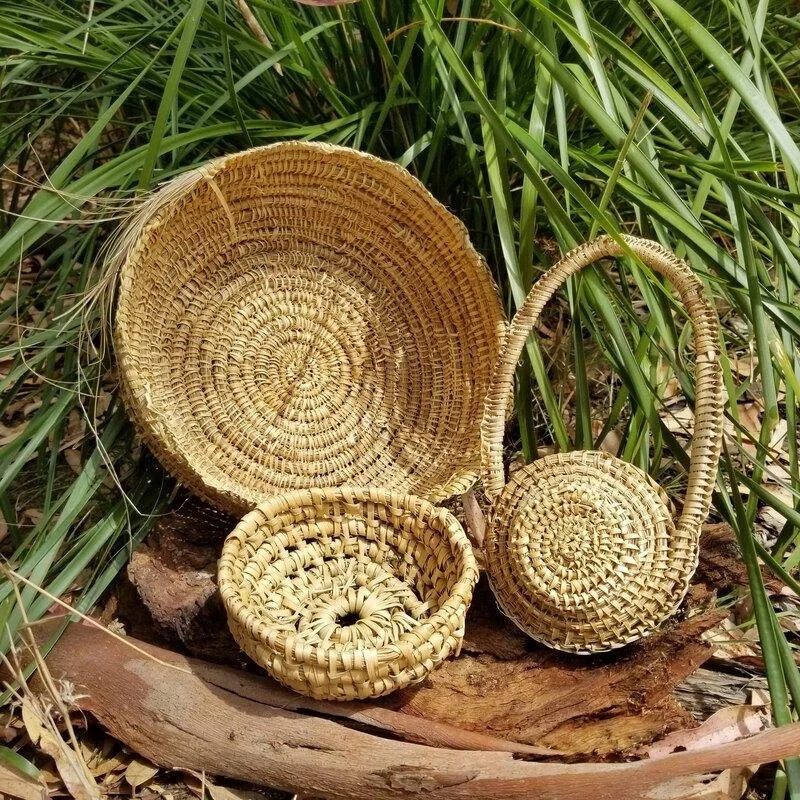
Across southeastern Australia, Mat-rush fibres were used to create baskets, carrying bags, string, cordage, fishing lines, nets, mats, and eel traps (Clarke 2007; Gott 2019). The strength and flexibility of the fibres made them ideal for use in wet environments where durability was essential.
The process of harvesting and preparing the leaves required skill and patience. Leaves were carefully selected, stripped, and sometimes softened before weaving. The resulting products were lightweight, strong, and capable of lasting for many years.
Weaving was not simply a practical activity. It was also a cultural practice that carried knowledge, stories, and connections between generations. The patterns and techniques used often reflected local traditions and relationships with Country.
Many contemporary Indigenous weaving traditions across Victoria continue to utilise Mat-rush, maintaining knowledge systems that stretch back thousands of years.
Eel Traps and Fishing Technology
For communities living near rivers, wetlands, estuaries, and lakes, Mat-rush played a crucial role in fishing technology.
The fibres were woven into traps, nets, baskets, and funnel-shaped devices used to capture fish and eels. Around waterways such as the Barwon River, Lake Connewarre, and numerous wetland systems across Victoria, these technologies formed part of sophisticated fishing economies that operated for millennia.
Successful fishing depended not only on the strength of the woven fibres but also on detailed ecological knowledge. Communities understood eel migration routes, seasonal water levels, fish behaviour, and wetland ecology. The woven technologies worked in combination with this environmental knowledge to create sustainable harvesting systems (Pascoe 2014).
The existence of these complex fishing systems demonstrates the advanced engineering and ecological understanding present within Indigenous societies long before European settlement.
Food and Seasonal Knowledge
Although Mat-rush was primarily valued for its fibres, it also provided food. The white bases of younger leaves and underground portions of the plant could be eaten, while seeds from some Lomandra species were occasionally collected and processed (Low 1991).
The flowering and growth cycles of Mat-rush also helped signal seasonal change. Communities observed flowering times, seed production, moisture levels, and animal activity around Mat-rush stands as part of broader seasonal knowledge systems.
These observations helped guide decisions about movement, harvesting, fishing, and other activities throughout the year. In this way, the plant functioned not only as a resource but also as part of Country’s living calendar.
Shelter and Camp Construction
Mat-rush was also used in the construction of temporary shelters and camps.
Its long leaves could be woven into mats used for bedding, flooring, windbreaks, and insulation. Around wetlands and coastal camps, woven Mat-rush mats helped protect people from cold ground conditions and moisture.
Because the plant was lightweight, abundant, and durable, it was an ideal material for temporary structures used during seasonal movement across Country. Its flexibility allowed it to be adapted for many different purposes while remaining strong enough to withstand repeated use.
The use of Mat-rush in camp construction demonstrates the resourcefulness of Indigenous engineering and the sophisticated understanding of natural materials developed over thousands of years.
Medicine and Wellbeing
While Mat-rush is not as widely known for medicinal uses as Tea-tree or Eucalyptus, it nevertheless contributed to wellbeing in practical ways.
Soft fibres could be used as padding or simple bandaging material, while woven mats provided clean and comfortable sleeping surfaces. Shelter materials made from Mat-rush protected people from weather and contributed to health through improved living conditions.
Indigenous understandings of wellbeing recognised that health emerged through relationships between shelter, food, water, community, and Country rather than through medicine alone (Rose 1996). Within this broader understanding, Mat-rush played an important role in supporting daily life.
Mat-rush and Ecology
Mat-rush is one of Victoria’s most ecologically important native plants. Its extensive root systems help stabilise soil, reduce erosion, retain moisture, and improve water infiltration (CSIRO 2021).
Dense stands of Mat-rush provide habitat for insects, reptiles, frogs, small mammals, and ground-nesting birds. Around wetlands and waterways, the plant contributes to healthy ecological systems by protecting soil and supporting biodiversity.
Because of its resilience and environmental value, Mat-rush is now widely used in revegetation and restoration projects throughout Victoria.
The ecological importance of the plant mirrors its cultural importance, demonstrating how Indigenous knowledge often aligned closely with long-term environmental sustainability.
Fire and Regeneration
Mat-rush is highly adapted to Australia’s fire-prone environments. Following low-intensity burns, the plant regenerates rapidly from its underground root systems.
For thousands of years, Indigenous cultural burning practices helped maintain open grasslands, encourage biodiversity, and support healthy Mat-rush populations (Gammage 2011). These carefully timed burns reduced fuel loads while promoting new growth and ecological balance.
Following colonisation, the suppression of cultural burning altered many Victorian grassland ecosystems. Changes in fire regimes contributed to the decline of some native grassland communities and disrupted long-established ecological relationships.
Modern environmental science increasingly recognises the importance of Indigenous fire management in maintaining resilient ecosystems.
Colonisation and the Loss of Fibre Landscapes
Since colonisation, large areas of Victoria’s grasslands, wetlands, and coastal environments have been cleared for agriculture, urban development, and infrastructure.
The destruction of these landscapes reduced access to important fibre plants such as Mat-rush and disrupted traditional weaving practices, seasonal harvesting systems, and cultural knowledge transmission (Pascoe 2014).
Many Victorian grassland ecosystems are now among Australia’s most endangered ecological communities. The loss of these environments represents not only ecological decline but also the disruption of cultural relationships built over countless generations.
Mat-rush in Contemporary Cultural Revitalisation
Today, Mat-rush remains one of the most important plants used in Indigenous cultural revitalisation programs across Victoria. Traditional weaving workshops conducted by Wadawurrung, Wurundjeri, Bunurong, Dja Dja Wurrung, Gunditjmara, and other communities frequently utilise Mat-rush because of its strength, flexibility, and deep connection to traditional fibre technologies (Gott 2019).
Through weaving, participants learn not only practical skills but also broader cultural knowledge connected to language, storytelling, ecological observation, seasonal harvesting, cultural protocols, and relationships with Country.
The harvesting and preparation of fibres continues to teach principles of sustainability and respect. Leaves are carefully selected to ensure plants remain healthy and continue growing for future generations.
In this way, Mat-rush functions as more than a useful plant. It acts as a teacher, carrying cultural knowledge across generations while helping reconnect communities with traditional practices and landscapes.
Philosophical Perspectives: Weaving Country Together
Martin Heidegger — Dwelling and Making
Heidegger argued that making and dwelling connect people to place (Heidegger 1971). The weaving of Mat-rush reflects this relationship, transforming a living plant into objects that support daily life while maintaining a connection to Country.
Michel Foucault — Knowledge Through Practice
Much Indigenous knowledge surrounding Mat-rush was transmitted through practice rather than writing. Harvesting, preparing fibres, weaving, and teaching formed living systems of knowledge passed through generations.
This challenges Western assumptions that knowledge exists only within books or institutions. Instead, knowledge lives through action, observation, and participation in Country (Foucault 1970).
Conclusion
Mat-rush (Lomandra longifolia) is one of the most important cultural plants of southeastern Australia. For thousands of years it provided fibre, fishing technology, shelter materials, food resources, ecological knowledge, and cultural continuity for Indigenous communities across Victoria.
Its leaves became baskets, nets, eel traps, string, mats, and shelters. Its presence helped stabilise landscapes and support biodiversity. Its harvesting connected people to seasonal rhythms and the living systems of Country.
Today, Mat-rush remains a powerful symbol of resilience, adaptation, and cultural continuity.
To care for Mat-rush is therefore to care for:
weaving traditions, ecological knowledge, biodiversity, language revitalisation, and the enduring relationship between people and Country.
References
Blake, BJ 1991, Woiwurrung: The Melbourne Language of the Kulin Nation, Pacific Linguistics, Canberra.
Clark, ID 1990, Aboriginal Languages and Clans: An Historical Atlas of Western and Central Victoria, 1800–1900, Monash Publications in Geography, Melbourne.
Clarke, PA 2007, Aboriginal People and Their Plants, Rosenberg Publishing, Sydney.
Costermans, L 2009, Native Trees and Shrubs of South-Eastern Australia, Reed New Holland, Sydney.
CSIRO 2021, Native Grasslands and Ecological Restoration in Australia, CSIRO Publishing, Canberra.
Foucault, M 1970, The Order of Things, Tavistock Publications, London.
Gammage, B 2011, The Biggest Estate on Earth: How Aborigines Made Australia, Allen & Unwin, Sydney.
Gott, B 2019, Aboriginal Plant Use in South-Eastern Australia, Aboriginal Studies Press, Canberra.
Heidegger, M 1971, Poetry, Language, Thought, Harper & Row, New York.
Low, T 1991, Wild Food Plants of Australia, Angus & Robertson, Sydney.
Pascoe, B 2014, Dark Emu, Magabala Books, Broome.
Rose, DB 1996, Nourishing Terrains: Australian Indigenous Views of Landscape and Wilderness, Australian Heritage Commission, Canberra.
Victorian Aboriginal Corporation for Languages, language revitalisation resources.
Wadawurrung Traditional Owners Aboriginal Corporation 2020, Cultural and Ecological Resources, Victoria.
Wurundjeri Woi Wurrung Cultural Heritage Aboriginal Corporation 2019, Caring for Country Resources, Victoria.
Written, Researched and Directed by James Vegter (22 September 2025)
MLA
Sharing the truth of Indigenous and colonial history through film, education, land, and community.
www.magiclandsalliance.org
Copyright MLA – 2025
Magic Lands Alliance acknowledges the Traditional Owners, Custodians, and First Nations communities across Australia and internationally. We honour their enduring connection to the sky, land, waters, language, and culture. We pay respect to Elders past, present, and emerging, and to all First Peoples’ communities and language groups. This article draws only on publicly available information; many cultural practices remain the intellectual property of their respective communities.