

Native Animals History and Science
Keepers of Colour, Balance, and Renewal
MLA Education Articles - Country, Native Animals and Natural Science
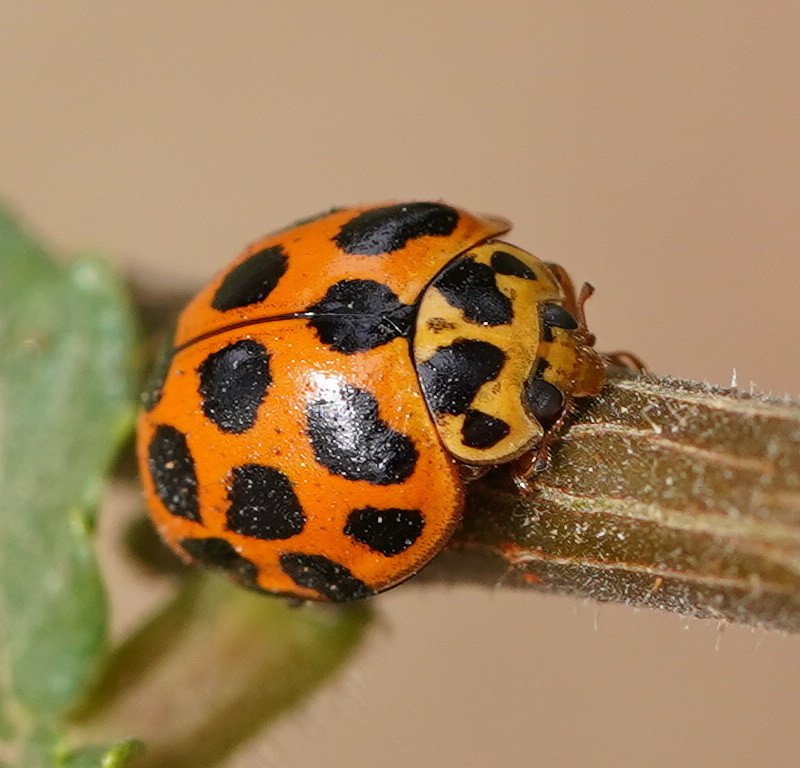
Among Victoria’s smallest and most beloved creatures, the ladybug — or ladybird beetle (Coccinellidae) — is both a scientific wonder and a cultural symbol of luck, love, and renewal. Bright, rounded, and gently patterned with dots like a painter’s careful brushwork, these insects flutter quietly through forests, grasslands, and gardens, performing one of the most essential roles on Country: maintaining balance.
In Indigenous cultures of Victoria, including the Wadawurrung, Wurundjeri, and Dja Dja Wurrung, ladybugs are seen as messengers of renewal and care. Their arrival marks the blooming of plants after rain and the reawakening of Country — a time when grasses grow, insects return, and the land breathes again (Clarke 2008; Gott 2015).
Worldwide, the ladybug has captured human imagination — a small being carrying big meaning. From Europe to Japan, and from the rainforests of Australia to the highlands of the Andes, it is a universal emblem of beauty and good fortune.
Origins and Deep Time
Ladybugs belong to the beetle order, Coleoptera, one of Earth’s most ancient and diverse lineages. Their ancestors first appeared over 250 million years ago, long before dinosaurs (Grimaldi & Engel 2005).
The ladybird family (Coccinellidae) emerged around 100 million years ago, during the Cretaceous, evolving alongside flowering plants and the aphids they would come to feed upon (Slipinski 2007).
As Australia separated from Gondwana, the continent’s climate grew drier and more seasonal. Ladybugs adapted by developing a wide range of colours and behaviours suited to grasslands, eucalyptus forests, and alpine meadows.
Fossil beetles discovered in Australian lake sediments reveal that even ancient species had the same characteristic domed shape and spotted elytra (wing covers) seen today (Oberprieler 2000).
These small but resilient insects embody evolution’s quiet endurance — surviving mass extinctions, climate shifts, and ice ages through patience, adaptability, and cooperation with plants and other insects.
Deep-Time and Cultural Timeline
Permian (250 Ma): Early beetles evolve; ancestors of modern ladybugs emerge.
Cretaceous (100–65 Ma): Coccinellidae diversify with flowering plants; co-evolution with aphids begins (Grimaldi & Engel 2005).
Paleogene (65–23 Ma): Australian ladybugs adapt to eucalyptus ecosystems and shifting climate zones.
Pleistocene (2.6 Ma–10 ka): Populations adjust to glacial–interglacial vegetation cycles; insect communities linked to flowering and fire regimes.
>40,000 years ago: Indigenous peoples integrate insect cycles into ecological calendars (Howitt 1904).
Pre-1788: Ladybugs used as environmental indicators — signalling healthy vegetation and rain return (Clarke 2008).
1798–1900: European agriculture changes landscapes; native insect diversity declines.
1900s–Present: Ladybugs become global icons of natural pest control and ecological resilience (Hodek et al. 2012).
Ecology and Role in the Environment
Ladybugs are keystone invertebrates that maintain the balance of ecosystems:
Natural pest control: They prey on aphids, scale insects, and mites, keeping native plants and crops healthy.
Pollination support: As they feed and move, they transfer pollen among flowers.
Soil health: Decomposing ladybugs return trace nutrients to soil systems.
Bioindicators: Their presence indicates healthy vegetation and biodiversity.
In Victoria, native species such as the Common Spotted Ladybird (Harmonia conformis) and Mealybug Ladybird (Cryptolaemus montrouzieri) play vital roles in maintaining forest and grassland balance.
A single ladybug may consume 5,000 aphids in its lifetime — proof that even the smallest creatures are powerful custodians of ecological harmony (Hodek et al. 2012).
Ladybugs in Indigenous Knowledge and Seasonal Lore
For the Wadawurrung and other Kulin Nations, ladybugs are seen as small healers of Country — arriving after rainfall when new shoots sprout and insects emerge.
Their presence signals abundance and renewal, especially following cultural burns that stimulate regrowth (Wadawurrung TOAC 2023).
In traditional ecological knowledge:
Their return marks early warmth and seasonal transitions.
Their bright red shells symbolise fire and fertility — the life force of Country.
They teach that even small beings have sacred roles — embodying the law of balance, or murrup ngarrwa (spirit equilibrium).
Indigenous elders sometimes referred to them as “rain beads” or “fire keepers”, associating their colour with lightning and regeneration after fire (Clarke 2011).
Story from Wadawurrung Country: The Ladybug and the Flowering Season
Long ago, when the plains of Djilang (Geelong) were dry and cracked, the yam daisies did not bloom. The people were hungry and asked the ancestors for help.
A tiny red beetle, Ngarrwa-djinang, saw their sorrow and whispered to the clouds. When her red shell glowed beneath the sun, rain began to fall. The plants woke, the murnong bloomed, and the people gathered food again.
Since that time, when the ladybugs return, the Wadawurrung know the land is healing. They call her “the small fire spirit”, a keeper of colour who brings life back to Country.
(Wadawurrung Traditional Owners Aboriginal Corporation, oral story adapted with permission, 2023.)
The Physics and Biology of Ladybugs
Ladybugs are marvels of natural engineering — small machines of flight, light, and chemistry:
Wing design: The hard outer shell (elytra) acts as a protective shield and aerodynamic stabiliser. Beneath it lie flexible wings that unfold and refold using hinged micro-joints with perfect mechanical precision (Zhang et al. 2017).
Colour and optics: Their red and orange colours are produced by carotenoid pigments and light-scattering nanostructures, creating reflective warning hues (Seago et al. 2009).
Defence chemistry: When threatened, they release alkaloid compounds through leg joints — a toxic deterrent known as “reflex bleeding.”
Vision: Compound eyes detect ultraviolet light and motion, helping them locate pollen and prey.
Thermoregulation: Dark spots absorb heat, allowing morning activity even on cool Victorian days.
Their combination of form and function — beauty and physics — reflects an ancient principle of ecological design: efficiency through simplicity.
Ladybugs on Wadawurrung Country and Across Victoria
Ladybugs thrive across Victoria’s ecosystems — from the volcanic plains of Ballarat and Werribee to the forests of the Otways and Gippsland.
They are most visible in spring and early summer, when grasses and wattles bloom.
After cultural burning or rainfall, populations surge, reflecting the cyclical renewal of the land. Their activity correlates with the flowering of murnong (Microseris lanceolata) and kangaroo grass (Themeda triandra) — key indicators in Indigenous seasonal calendars (Gott 2015).
These connections reveal how insects were — and remain — part of interwoven ecological and cultural systems, linking fire, fertility, and food.
Analogies Across Australia and the World
Ladybugs occupy a special place in global culture and science:
Australia-wide: Indigenous groups from northern Queensland to Tasmania associate ladybugs with renewal after rain and flowering time (Clarke 2008).
Europe: Called “Our Lady’s Beetle,” they were seen as protectors of crops, named for the Virgin Mary.
Japan: Known as tentō-mushi (“sun insect”), they symbolise joy and are seen as carriers of prayers to heaven.
China: Represent love, luck, and transformation — their red shells embodying qi, the life force.
Native American traditions: Seen as signs of hope and balance, appearing after storms or famine.
These parallels show that, wherever people live close to nature, the ladybug embodies the same message — that life’s beauty and resilience rest in harmony, patience, and care.
Colonial Impacts and Modern Challenges
European settlement transformed Victoria’s grasslands and ecosystems. The introduction of foreign crops, livestock, and pesticides disrupted insect populations.
Many native ladybird species declined, while introduced ones such as the Seven-Spotted Ladybird (Coccinella septempunctata) spread widely.
By the 20th century, industrial agriculture had reduced insect biodiversity. But modern conservation and Indigenous ecological renewal projects are reversing the trend — restoring native plants, reducing chemicals, and valuing insects as ecological allies (DELWP 2021; Sands 2018).
Conservation and Cultural Renewal
Today, ladybugs are at the heart of integrated ecological and cultural restoration in Victoria:
Habitat restoration: Indigenous-led planting of native flora supports insect and pollinator corridors.
Organic farming: Ladybugs are reintroduced for pest control — combining traditional and modern knowledge.
Education: Ladybugs feature in cultural education programs as symbols of balance and respect for all life.
Citizen science: Victorian communities track ladybug populations through biodiversity apps and Indigenous ranger programs (Wadawurrung TOAC 2023).
Their return to gardens, parks, and bushland marks the reweaving of cultural and ecological harmony.
Symbolism and Meaning
In Indigenous law, the ladybug is a teacher of humility — small, gentle, and vital.
In science, it is a guardian of ecosystems, balancing pest and plant life.
In culture, it symbolises renewal, joy, and love.
Every red wing and black spot is a reminder of Country’s enduring lesson: that beauty and strength live in balance, not dominance.
Conclusion
Ladybugs may be tiny, but their story spans deep time, global cultures, and the living memory of Country.
In Victoria, they represent resilience, transformation, and respect for life’s smallest forms.
Their journey — from fossil beetles in Gondwana to fluttering visitors on Wadawurrung Country — shows how the threads of science and story weave together through time.
To protect them is to protect the colour and balance of the land itself — a promise of renewal carried on red wings across generations.
References
Clarke, P.A. (2008). Aboriginal Healing Practices: Smoke, Fire and Water in South-Eastern Australia. Aboriginal Studies Press, Canberra.
Clarke, P.A. (2011). Australian Aboriginal Ethnobotany: An Overview. CSIRO Publishing, Melbourne.
DELWP (2021). Biodiversity 2037 Strategy. Department of Environment, Land, Water and Planning, Melbourne.
Gott, B. (2015). ‘Aboriginal use of plants in south-eastern Australia.’ Proceedings of the Royal Society of Victoria, 127(2), pp. 64–73.
Grimaldi, D. & Engel, M.S. (2005). Evolution of the Insects. Cambridge University Press, New York.
Hodek, I., van Emden, H.F. & Honek, A. (2012). Ecology and Behaviour of the Ladybird Beetles (Coccinellidae). Wiley-Blackwell, London.
Howitt, A.W. (1904). The Native Tribes of South-East Australia. Macmillan, London.
Oberprieler, R.G. (2000). ‘Fossil beetles of Australia.’ Records of the Australian Museum, 52, pp. 1–18.
Sands, D.P.A. (2018). Conservation of Butterflies and Other Insects in Australia: Progress and Prospects. Springer Nature, Singapore.
Seago, A.E., Brady, P., Vigneron, J.P. & Schultz, T.D. (2009). ‘Gold and black beetles: structural colour and its role in warning displays.’ Journal of the Royal Society Interface, 6(41), pp. 165–173.
Slipinski, A. (2007). Australian Ladybird Beetles (Coleoptera: Coccinellidae). CSIRO Publishing, Melbourne.
Wadawurrung Traditional Owners Aboriginal Corporation (TOAC). (2023). Pollinators and Insect Knowledge of Wadawurrung Country. Geelong.
Zhang, C., Fan, T., & Yan, J. (2017). ‘Mechanics of elytra unfolding in ladybird beetles.’ Nature Communications, 8, pp. 1–8.
Written, Researched and Directed by James Vegter (22 September 2025)
MLA
Sharing the truth of Indigenous and colonial history through film, education, land, and community.
www.magiclandsalliance.org
Copyright MLA – 2025
Magic Lands Alliance acknowledges the Traditional Owners, Custodians, and First Nations communities across Australia and internationally. We honour their enduring connection to the sky, land, waters, language, and culture. We pay respect to Elders past, present, and emerging, and to all First Peoples’ communities and language groups. This article draws only on publicly available information; many cultural practices remain the intellectual property of their respective communities.