

Native Animals History and Science
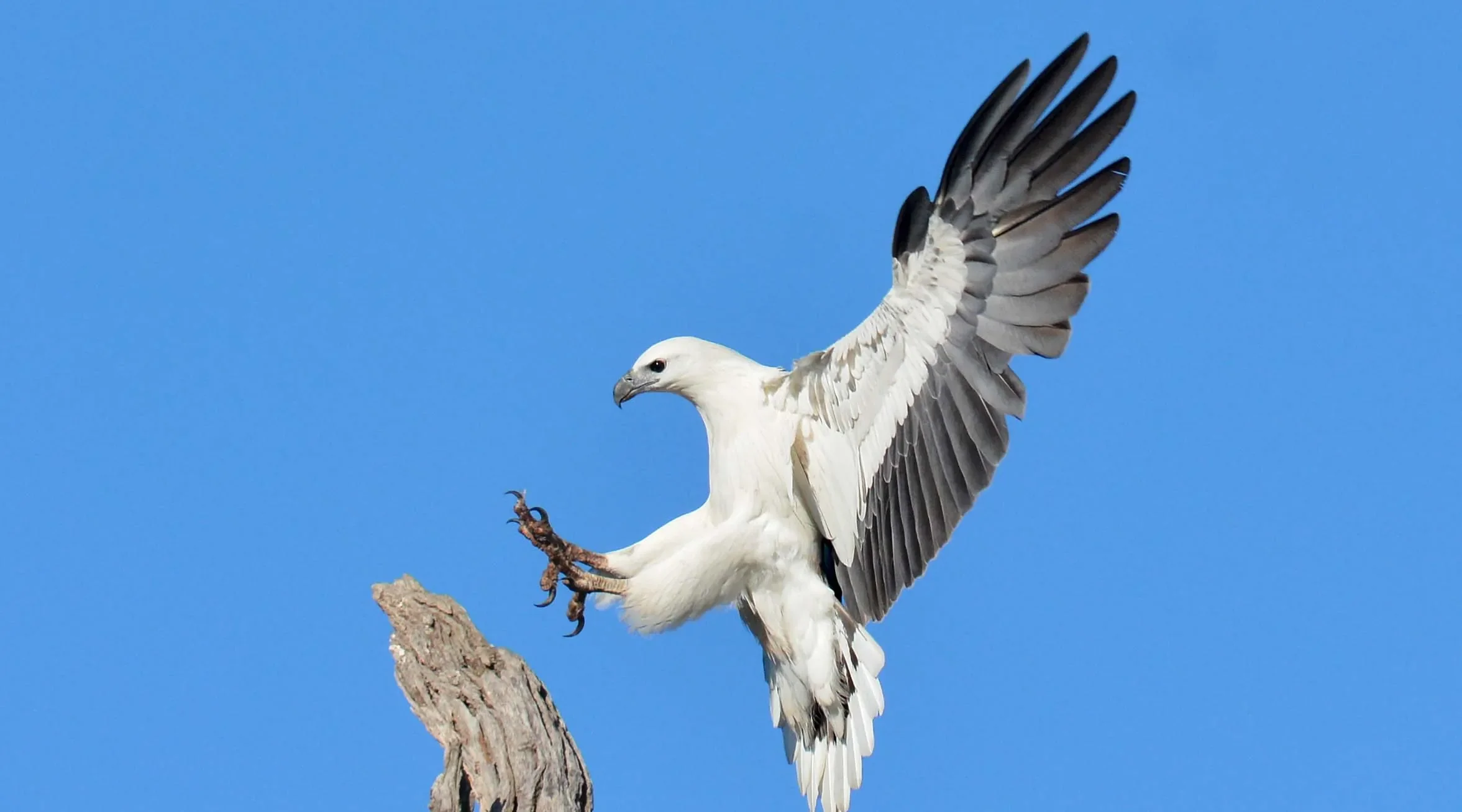
The Sky Hunters of Victoria: Messengers of Wind, Water, and Law
MLA Educational Series - Country History, Animals in the Sky and Story
Soaring above Victoria’s coasts, wetlands, and rivers, the White-bellied Sea Eagle (Haliaeetus leucogaster) and other great raptors — the Little Eagle (Hieraaetus morphnoides), Whistling Kite (Haliastur sphenurus), and Square-tailed Kite (Lophoictinia isura) — embody the spirit of the open sky. For Wadawurrung, Wurundjeri, Gunditjmara, Dja Dja Wurrung, Taungurung, Boon Wurrung, and other Kulin Nations, these eagles were not merely birds of prey — they were messengers, teachers, and protectors, carrying law and balance between earth, air, and water.
Where the Wedge-tailed Eagle (Bunjil) is the great lawgiver and creator ancestor, the Sea Eagle and her kin serve as custodians of wind and water, guiding the rhythms of the tide and the moral order of life. Their flight was a story written in the air, connecting Country’s skyways with its rivers, coasts, and sacred places.
The White-Bellied Sea Eagle: Guardian of Water and Wind
Graceful, white-breasted, and silver-winged, the White-bellied Sea Eagle is one of Australia’s largest raptors. Along the Barwon River, Lake Connewarre, Port Phillip Bay, and Western Port, it glides on coastal thermals, hunting fish, waterbirds, and carrion.
In Wadawurrung and Boon Wurrung Country, its presence marked both the power of the sea and the spirit of renewal. Elders describe the Sea Eagle as the “Watcher of the Waters”, whose shadow on the river signalled the beginning of fish migrations and seasonal abundance.
The eagle’s flight — rising with wind and falling with the tide — symbolised balance between the elements, reminding people of the deep connection between sky and sea. When the eagle cried, it was said that the spirits of the waters were speaking — a warning of coming storms or shifts in the wind (Clarke 2009; Gott 2019; Atkinson 2002).
Its nests, built high in eucalypts or cliff edges, were never disturbed. These places were seen as sacred thresholds, linking the world of air and ancestors with the flowing life below.
Meaning in Wadawurrung and Kulin Nations Country
Across the Kulin Nations, the Sea Eagle and its kin were part of the ancestral sky law — each bird representing a realm of Country:
Bunjil (Wedge-tailed Eagle) — the high creator, spirit of the upper world, law, and protection.
Ngata-ngata (Sea Eagle) — spirit of wind, water, and horizon, keeper of the meeting point between land and sea.
Warringa (Whistling Kite) — messenger of change and cleansing, associated with the voices of the dead carried by the wind.
Djirridji (Little Eagle) — hunter of truth, silent observer of movement below, representing focus, patience, and precision.
For Wadawurrung and Boon Wurrung people, the Sea Eagle’s wide-ranging flight was a reminder of responsibility to Country beyond one’s immediate clan boundaries — the idea that knowledge and care must travel far, just as the eagle crosses sky and tide.
When the Sea Eagle circled above the coast at Breamlea or the wetlands of Lake Connewarre, Elders read its flight like text — interpreting direction, height, and cry to understand tide, fish, and weather. This was part of Indigenous meteorology, a living science grounded in observation and spiritual respect (DEECA 2023; RBGV 2023).
The Little Eagle: Hunter of the Grasslands
Smaller than the great Bunjil or the Sea Eagle, the Little Eagle (Hieraaetus morphnoides) hunts silently over open country — the volcanic plains, Box–Ironbark forests, and river valleys of central and western Victoria.
Among the Dja Dja Wurrung and Wurundjeri, the Little Eagle symbolised precision and foresight. Elders said it “sees with the stillness of truth” — a teaching for young hunters and leaders about patience, awareness, and the ethics of taking life only when necessary.
The Little Eagle’s nesting in tall trees above grassy plains also made it a guardian of balance between forest and field. When its call echoed across the hills, it was seen as a sign that small animals were moving and the ecosystem was in harmony.
Modern ecology confirms that the Little Eagle’s diet — mice, reptiles, and small birds — helps control pest populations and maintain ecological stability. Yet this raptor is now threatened in Victoria, with habitat loss reducing its range (VNPA 2021).
Indigenous-led conservation programs in Dja Dja Wurrung Country now monitor eagle nests as part of biocultural mapping — blending science and story to restore the species’ presence as both ecological indicator and spiritual teacher.
The Whistling Kite: Voice of Transition
Known for its haunting, flute-like cry, the Whistling Kite (Haliastur sphenurus) was regarded as a messenger bird — a voice that connects the living and the dead, day and dusk.
Its arrival in the warmer months signalled change and renewal. In Wadawurrung Country, it was said to call to the spirits of ancestors riding the evening breeze. Among the Wurundjeri and Taungurung, its whistling was a sound of cleansing wind — a sign that smoke ceremony or cultural fire was ready to begin.
Ecologically, Whistling Kites are scavengers and recyclers, cleaning the land by consuming carrion and dead fish — a natural purification process that mirrors their symbolic role in culture. Their circling above wetlands, rivers, and estuaries ties them to spirit-water law, the balance between endings and beginnings.
Elders noted that after heavy rain or flood, the first returning Whistling Kite meant that “the land is breathing again” — a sacred observation linking the kite’s flight to water restoration cycles (Atkinson 2002; RBGV 2023).
The Square-Tailed Kite: Keeper of Forest Shadows
The Square-tailed Kite (Lophoictinia isura) is a rare and elusive hunter of Victoria’s woodlands and river forests. Feeding on small birds and insects among the canopy, it symbolised observation without intrusion — the ability to act only when necessary.
For Taungurung and Dja Dja Wurrung communities, this bird was a sign of spiritual balance in forest law. It moved silently and rarely — a lesson about humility and presence. Some Elders described its flight as “the still wind of healing”, representing the quiet movement of knowledge between generations.
Modern biologists now regard this kite as an indicator of healthy forest canopies, its presence reflecting mature trees and balanced ecosystems — precisely as Indigenous knowledge always understood (Clarke 2009; VNPA 2021).
Ecological and Spiritual Roles of Eagles
In traditional science, these raptors each held a unique ecological and moral function:
Air Cleaners: By consuming carrion and regulating prey, eagles prevented disease and maintained ecological order.
Seasonal Markers: Their breeding and migration aligned with seasonal shifts — Sea Eagles nesting before monsoon rains, Little Eagles breeding during grass seeding.
Moral Teachers: Their patience and strength embodied law. Watching eagles reminded people to live with awareness and discipline.
Messengers: Circling high above ceremony grounds, they were seen as bearers of prayer and spirit, carrying words to the ancestors.
In Wadawurrung Country, a sudden eagle’s shadow over a gathering was interpreted as ancestral approval or guidance, and its cry before travel was read as a warning to proceed carefully.
Colonisation and Decline
Colonisation disrupted both raptor populations and the knowledge systems that revered them.
Clearing of wetlands, poisoning of prey, and shooting of large eagles during the 19th century reduced their numbers dramatically.
The spiritual disconnection caused by mission life also eroded the stories that tied eagles to Country and ceremony.
Yet despite this, their presence persisted — Sea Eagles continued to nest along the Barwon River, and Little Eagles remained in the volcanic plains. Their survival mirrors the endurance of the cultures that honoured them (Gott 2019; Museums Victoria 2023).
Revival and Modern Connections
Today, Indigenous communities, scientists, and conservation groups are reviving eagle lore and habitat across Victoria.
Projects like the Barwon River Cultural Ecology Program and Budj Bim World Heritage restoration include eagle monitoring as part of Country healing.
Traditional Owners teach that watching raptors reconnects people to the “law of the sky” — an understanding that responsibility flows from above to below, from ancestor to land.
In Wadawurrung educational programs, young people learn to read eagle behaviour — not only as science, but as language of wind and water, continuing the ancestral dialogue that predates colonisation by tens of thousands of years.
Conclusion
The Sea Eagle and the other sky hunters of Victoria — Little Eagle, Whistling Kite, Square-tailed Kite — are keepers of balance between elements. They govern the realms of wind, water, and light, guiding the flow of energy across Country.
For the Indigenous peoples of Victoria, they remain living teachers: the Sea Eagle reminds us to respect the tides of life; the Little Eagle shows the power of patience; the Whistling Kite calls us to renewal; the Square-tailed Kite moves silently through transition.
Their presence is a covenant between sky and earth — a promise that Country still breathes, remembers, and speaks through its wings.
References
Atkinson, J 2002, Trauma Trails: Recreating Song Lines, Spinifex Press, Melbourne.
Clarke, PA 2009, Australian Aboriginal Ethnobotany: An Overview, CSIRO Publishing, Melbourne.
DEECA Victoria 2023, Raptors and Ecological Indicators in Victorian Skies, Department of Energy, Environment & Climate Action, Melbourne.
Gott, B 2019, The Yam Daisy: A History of Aboriginal Plant Use in Victoria, Aboriginal Studies Press, Canberra.
Museums Victoria 2023, Birds of Country: Traditional Ecological Knowledge Collections, Museums Victoria, Melbourne.
Royal Botanic Gardens Victoria (RBGV) 2023, Traditional Bird Knowledge and Cultural Indicators of Season, RBGV, Melbourne.
Victorian National Parks Association (VNPA) 2021, Native Raptors and Habitat Restoration in Victoria, VNPA, Melbourne.
Written, Researched and Directed by James Vegter (2025)
MLA — Magic Lands Alliance
Sharing the truth of Indigenous and colonial history through film, education, land, and community.
🌏 www.magiclandsalliance.org
Written, Researched and Directed by James Vegter (22 September 2025)
MLA
Sharing the truth of Indigenous and colonial history through film, education, land, and community.
www.magiclandsalliance.org
Copyright MLA – 2025
Magic Lands Alliance acknowledges the Traditional Owners, Custodians, and First Nations communities across Australia and internationally. We honour their enduring connection to the sky, land, waters, language, and culture. We pay respect to Elders past, present, and emerging, and to all First Peoples’ communities and language groups. This article draws only on publicly available information; many cultural practices remain the intellectual property of their respective communities.