

Bunurong/ Boonwurrung Place Names
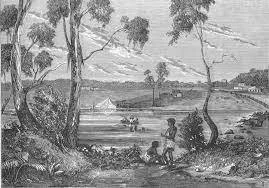
The People of the South: History, and the Lore of Sea Country
MLA Educational Series — Kulin Nation: Water, Language, and Living Law
Across the southern coasts of Victoria — from the cliffs of Cape Schanck to the tidal flats of Western Port and the sand plains of Inverloch — the names Bunurong and Boonwurrung carry the deep history of a people who have lived with the sea for tens of thousands of years.
The Bunurong/Boonwurrung are one of the five major language groups of the Kulin Nation, whose Country stretches across much of central and southern Victoria.
Their lands and waters encompass Nairm (Port Phillip Bay), Warn’Marrin (Western Port), the Mornington Peninsula, the Bass Coast, and parts of South Gippsland.
For these people, Country is not a possession but a living being — a relative made of biik (land), warran (sea), ngarrga (wind), and ngurrara (law).
Their name itself encodes a story of identity, geography, and cosmology: it tells of a people defined not by borders but by flow — the movement of water, language, and spirit across time.
The Meaning of Bunurong and Boonwurrung
While closely related and often used interchangeably today, Bunurong and Boonwurrung reflect regional and linguistic variations of the same ancestral group within the Kulin Nation.
Early linguistic studies (Blake 1991; Clark & Heydon 2002) suggest that the term “Boonwurrung” can be broken into two elements:
Boon / Bun — meaning no, a linguistic marker that distinguishes one Kulin language group from another; and
wurrung — meaning language or tongue.
Thus, Boonwurrung (or Bunurong) translates as “the people who say ‘boon’ for no”, or literally the people of this language.
This naming system was shared among Kulin groups — such as the Woiwurrung, Taungurung, Djadjawurrung, and Wathawurrung — and reflected mutual respect for language diversity as a core feature of identity.
Beyond linguistics, Bunurong/Boonwurrung also holds spiritual meaning.
It refers to the people of the southern waters — those who live where the freshwater meets the salt, where the rhythm of the tide teaches the law of balance and renewal.
Their self-understanding is thus not only of “people of a language” but people of the flow — custodians of the meeting point between land and sea.
Country and the Clans of the South
Before colonisation, the Bunurong/Boonwurrung people consisted of six major clans, each with their own lands, totems, and responsibilities:
Yallock-Bulluk — the People of the River, based near Cape Paterson, Inverloch, and the Tarwin River.
Mayune-Bulluk — coastal people of the Mornington Peninsula, including Dromana, Rosebud, and Arthurs Seat.
Ngaruk-Willam — around Mordialloc, Brighton, and the eastern shores of Nairm.
Yalukit-Willam — near St Kilda, Elwood, and Port Melbourne — the northern shoreline of the bay.
Burrenum-Bulluk — inland people around Langwarrin and Baxter.
Wooloowin-Bulluk — along Western Port and the Bass River (Clark 1990; Broome 2005).
Each clan belonged to one of two moieties — Bunjil (the Eaglehawk) and Waa (the Crow) — which governed marriage, ceremony, and law.
These moieties connected people to cosmic patterns, binding them to the stars, animals, and forces of the natural world.
Law and Living Philosophy
For the Bunurong/Boonwurrung, Law (Ngurrara) was not imposed — it was observed, sung, and lived.
The Law of the Sea taught that movement and exchange sustain life:
Freshwater from the hills flows into saltwater and returns as rain.
Stories travel with the tide and return with new meaning.
To take is to give; to speak is to listen.
This principle governed every aspect of life — fishing, fire management, trade, and ceremony.
Communities gathered at places like Kugerungmome (Powlett River), Warn’Marrin (Western Port), and Nairm (Port Phillip Bay) for seasonal harvests of eel, fish, shellfish, and plant foods (Zola & Gott 1992; Presland 1994).
Ceremonies known as ngargee reaffirmed the law of balance between elements.
In the dunes and wetlands of Sea Country, songs were sung to honour the spirits of water and wind — ensuring the continuity of life through respectful relationship.
Cultural Economy and Trade Networks
Bunurong/Boonwurrung Country was a centre of exchange within the Kulin world.
Goods such as greenstone from Mt William, ochres from Gippsland, reed spears, and shell ornaments were traded across hundreds of kilometres.
These exchanges were not merely economic but ceremonial — affirming kinship and reinforcing diplomatic law (Broome 2005).
As sea custodians, the Bunurong/Boonwurrung were renowned for their maritime skill.
They crafted bark canoes and reed rafts for fishing, and navigated the intricate currents of Western Port and Bass Strait.
Songlines connected their coast to the lands of the Gunai/Kurnai, Wathawurrung, and Palawa peoples of Tasmania — maintaining the memory of ancient travel routes across what was once the Bassian Land Bridge (Ryan 2012).
Colonial Contact and Transformation
European invasion arrived at Bunurong/Boonwurrung shores earlier than most of Victoria.
Explorers such as George Bass (1798), James Grant (1801), and Matthew Flinders (1802) charted Western Port and Port Phillip, marking the beginning of dispossession.
By the 1830s, pastoral expansion, violence, and disease had devastated local populations.
Leaders such as Derrimut of the Yalukit-Willam and Bunguyan of the Mayune-Bulluk became key figures in negotiating survival amid colonial intrusion (Clark 1995; Barwick 1998).
In 1835, when John Batman’s “treaty” was made with Kulin elders near Port Phillip, Bunurong/Boonwurrung leaders were among those present — though the agreement was later invalidated by the colonial government.
By the 1850s, survivors were confined to missions such as Mordialloc, Narre Warren, and later Coranderrk.
Yet despite profound disruption, the law of the sea and the stories of Country endured through memory, kinship, and oral tradition.
Language, Revival, and Continuity
The Bunurong/Boonwurrung language, part of the Kulin linguistic family, nearly disappeared after a century of suppression.
However, through the work of descendants, linguists, and elders, many words, songs, and stories have been revived.
Today, the Bunurong Land Council Aboriginal Corporation (BLCAC) leads extensive programs of language renewal, place-name restoration, and cultural education across the Mornington Peninsula, Western Port, and Bass Coast regions.
Projects such as the Bunurong Cultural Waterways Program, dual-naming initiatives, and on-Country learning reconnect the community and public with the living meaning of their ancestral words (BLCAC 2023).
Names like Tarwin, Kugerungmome, Yallock-Bulluk, and Warn’Marrin once again echo through local maps and schools — restoring a sense of identity rooted in relationship, not ownership.
Modern Recognition and the Law of Return
In the 21st century, Bunurong/Boonwurrung people are recognised Traditional Owners of their ancestral lands under Victorian law.
Through joint management agreements with Parks Victoria, DEECA, and local councils, they guide the care of marine parks, estuaries, and cultural heritage sites.
Key initiatives include:
• Cultural water assessments integrating traditional knowledge with hydrology;
• Marine and coastal restoration grounded in Indigenous ecological law;
• Education programs teaching children the connection between sea cycles and cultural time (DEECA 2023).
These efforts embody what elders describe as the Law of Return — the cycle through which stories, names, and responsibilities come home.
As Elder N’Arweet Carolyn Briggs has said:
“When we speak the language again, the land listens. It remembers who we are.”
Conclusion
The names Bunurong and Boonwurrung are more than linguistic identities — they are expressions of a worldview that unites language, law, and sea.
They remind us that Country is alive, that knowledge is movement, and that balance arises through respect and reciprocity.
From the cliffs of Cape Schanck to the tides of Western Port, the people of the southern waters continue to uphold the world’s oldest science — the physics of flow and the ethics of balance.
In every word, wave, and wind of Bunurong/Boonwurrung Country, the message endures: we belong to the sea, and the sea belongs to us.
References
Barwick, D. (1998) Rebellion at Coranderrk. Canberra: Aboriginal History Monograph.
Blake, B. (1991) Wathawurrung and the Colac Language of Southern Victoria. Canberra: Pacific Linguistics.
Broome, R. (2005) Aboriginal Victorians: A History Since 1800. Sydney: Allen & Unwin.
Bunurong Land Council Aboriginal Corporation (2023) Bunurong Sea Country and Cultural Water Plan. Melbourne: BLCAC.
Clark, I.D. (1990) Aboriginal Languages and Clans: An Historical Atlas of Western and Central Victoria, 1800–1900. Melbourne: Monash Publications in Geography.
Clark, I.D. & Heydon, T. (2002) Dictionary of Aboriginal Placenames of Victoria. Melbourne: Victorian Aboriginal Corporation for Languages.
Clark, I.D. (1995) Scars in the Landscape: A Register of Massacre Sites in Western Victoria 1803–1859. Canberra: Aboriginal Studies Press.
DEECA Victoria (2023) Victorian Cultural Waterways and Marine Country Strategy. Melbourne: Department of Energy, Environment and Climate Action.
Presland, G. (1994) Aboriginal Melbourne: The Lost Land of the Kulin People. Melbourne: Harriland Press.
Ryan, L. (2012) Tasmanian Aborigines: A History Since 1803. Sydney: Allen & Unwin.
Zola, N. & Gott, B. (1992) Koorie Plants, Koorie People: Traditional Aboriginal Food, Fibre and Healing Plants of Victoria. Melbourne: Koorie Heritage Trust.
Written, Researched and Directed by James Vegter (22 September 2025)
MLA
Sharing the truth of Indigenous and colonial history through film, education, land, and community.
www.magiclandsalliance.org
Copyright MLA – 2025
Magic Lands Alliance acknowledges the Traditional Owners, Custodians, and First Nations communities across Australia and internationally. We honour their enduring connection to the sky, land, waters, language, and culture. We pay respect to Elders past, present, and emerging, and to all First Peoples’ communities and language groups. This article draws only on publicly available information; many cultural practices remain the intellectual property of their respective communities.