

Bunurong/ Boonwurrung Place Names
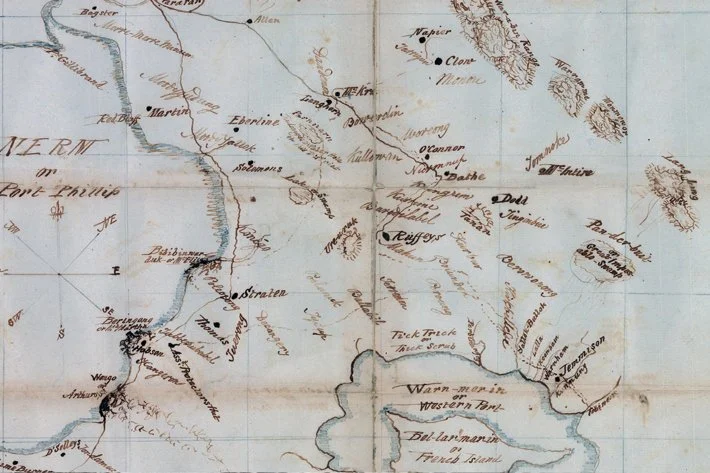
Bunurong/Boonwurrung Water Systems and Sea Country
MLA Educational Series — Water, Law, and Life on the Southern Coast
For the Bunurong/Boonwurrung peoples, water is not separate from land — it is living law. Across Nairm (Port Phillip Bay), Warn’Marrin (Western Port), and the Bass Coast, freshwater springs, tidal estuaries, and ocean currents have sustained life and spiritual order for tens of thousands of years. These interconnected systems — rivers flowing from volcanic plains through estuarine wetlands to the sea — are part of what the Bunurong/Boonwurrung call Biik Boorron, the living body of Country. The rhythm of tide, wind, and current expresses Ngurrara, the Law of balance and relationship that governs how people live with water, not upon it. Understanding these systems reveals one of the most sophisticated Indigenous hydrological and ecological traditions in southern Australia (Broome 2005; Bunurong Land Council Aboriginal Corporation 2023; DEECA 2023).
Sea Country: Law and Language
The Bunurong/Boonwurrung languages of the Kulin Nation hold a rich vocabulary for water — describing its forms, movements, and spirit (Blake 1991; Clark & Heydon 2002).
Key terms include:
Yaluk – river or creek
Ngargee Biik – ceremonial or sacred land associated with water
Nairm – bay, lagoon, or estuary
Warran – the sea
Marra – wind or weather, expressing mood and direction
Boorron – life force or spirit of the natural world
In Bunurong/Boonwurrung philosophy, Country breathes through its waterways. Springs, creeks, and estuaries are the veins of Biik (land), connecting mountains to saltwater. Each waterway carries responsibility — who may fish, when fires may be lit, and which ceremonies must accompany seasonal harvests. This network of water and law ensured that cultural and ecological systems remained in constant renewal.
The Flow of Country: From Freshwater to Sea
Springs and Headwaters
Freshwater springs flowed from limestone and basalt aquifers across the inland plains and coastal dunes of the Mornington Peninsula. These living waters were sacred — places of ceremony, healing, and women’s gatherings (Presland 1994). Springs at Mount Martha, Arthurs Seat, and Red Hill were used for generations during eel (kooyang) and murnong seasons (Broome 2005). Their purity was connected in story to the tears or footprints of ancestral beings such as Bunjil, the eagle-creator, or Lohan, the water serpent (Clark 1990). These sites symbolised renewal — where spirit entered the land as water.
Rivers and Creeks — The Yaluk Systems
From these headwaters, creeks such as Kananook Yaluk, Balcombe Creek, and Langwarrin Creek wound toward Nairm, forming wetlands rich in reeds and rushes.
Kananook means “place of reeds” or “sand creek” — an important site for eel fishing and the gathering of weaving materials.
Balcombe Creek, near Mount Martha, provided permanent pools for year-round camps (Clark 1990).
Through fire-stick management, rotational harvest, and protection of breeding sites, the Bunurong/Boonwurrung maintained ecological balance, ensuring healthy fish and plant populations (Gott & Zola 1992). Their environmental knowledge operated as a practical science rooted in observation and ceremony.
Estuaries and Tidal Inlets — The Mixing Waters
Where freshwater met saltwater, spiritual and ecological boundaries intertwined. In Bunurong/Boonwurrung cosmology, estuaries are threshold zones — where human and ancestral worlds meet in exchange. Warn’Marrin (Western Port), meaning “bay of many creeks,” demonstrates this principle. Its wide tidal range floods mangroves, mudflats, and saltmarshes teeming with fish, shellfish, and birds.
Traditional knowledge of tides and moon cycles guided fishing and shell collection, long before hydrology described estuarine energy flows (DEECA 2023). Stone and brush fish traps extended across shallow channels, directing fish during the ebb tide — a coastal engineering tradition also found at Budj Bim (Presland 1994; Clark & Heydon 2002). Further east, Tarwin-Murrum (Inverloch estuary) served as a ceremonial harvesting ground where cultural law forbade fishing during eel spawning — an ancient sustainability rule that mirrors modern conservation science (Bunurong Land Council Aboriginal Corporation 2023).
The Open Coast — Wamoon to Kilcunda
South along the Bass Strait, the Bunurong/Boonwurrung coasts meet some of Victoria’s most powerful seas. At Kilcunda — “place of the sea and wind” — dunes and grasslands were managed with gentle, cyclical burning to stabilise sand and encourage food plants. At Wamoon (Wilsons Promontory), granite headlands rise as ancestral markers — the southern boundary of the Kulin world and a site of ceremony and trade with the Gunai/Kurnai (Broome 2005). From the cliffs of Cape Paterson and Inverloch, families watched migrating whales, interpreting them as messengers of Bunjil’s ocean realm, returning each winter with the rains and renewal of life.
Water and Lore: Cultural Hydrology
Bunurong/Boonwurrung hydrology integrates what modern science calls catchment management and ecological balance.
Traditional water law recognised that:
Tidal mixing sustains nutrient cycles and estuarine productivity.
Controlled burning maintains reedbeds and wetland diversity.
Sacred protection of groundwater preserves aquifer purity.
Seasonal harvests must align with lunar and tidal rhythms.
Ceremonies at Ngargee Biik — sacred sites beside estuaries and creeks — reaffirmed these obligations to Country (Blake 1991; Broome 2005).
This Indigenous system of water governance predates Western hydrology by millennia yet parallels its core scientific principles of flow regulation, sediment control, and biodiversity maintenance (DEECA 2023).
Through oral law, story, and observation, the Bunurong/Boonwurrung built one of the oldest continuous frameworks of environmental physics on Earth.
Colonial Disruption and Environmental Change
The arrival of European settlers in the nineteenth century profoundly altered these water systems.
Rivers such as Kananook and Balcombe Creek were channelled and diverted for agriculture.
Wetlands were drained for grazing and settlement.
Overfishing, shell harvesting, and pollution destabilised the tidal balance of Nairm and Warn’Marrin.
By the 1870s, eel and bird populations were collapsing, and sand mining at Mordialloc and Mornington destroyed traditional camps and middens (Cannon 1981; Broome 2005).
Despite this devastation, Bunurong/Boonwurrung families continued to visit coastal camps seasonally, keeping language, ceremony, and fishing knowledge alive along the shoreline.
Revival and Sea Country Stewardship Today
Today, the Bunurong Land Council Aboriginal Corporation (BLCAC) and Boonwurrung Traditional Owners lead the revival of water and marine stewardship across southern Victoria.
Current programs include:
Cultural Water Mapping to identify ancestral waterways, springs, and eel routes.
Dual Naming Projects restoring Bunurong/Boonwurrung names to bays, rivers, and wetlands.
Partnerships with DEECA and Parks Victoria integrating Traditional Ecological Knowledge into marine park planning (BLCAC 2023; DEECA 2023).
Youth learning and community programs teaching tidal reading, shellfish management, and language on Country.
These initiatives demonstrate that Ngurrara — the Law of Balance — continues to guide water management, combining ancient wisdom with contemporary science.
Spiritual and Ecological Continuity
In Bunurong/Boonwurrung cosmology, water unites all realms — sky, land, and sea. Rain becomes river; river becomes tide; tide becomes mist returning to mountain. This eternal flow embodies the teachings of Bunjil, the Creator, and Waa, the messenger — forces that maintain order and reciprocity. To care for water is to care for spirit. As Elder N’Arweet Carolyn Briggs reminds, “The bay remembers; it breathes with us. When we speak its name, we bring it back to life.” Through language revival, wetland restoration, and truth-telling, the waters of Nairm, Warn’Marrin, and Tarwin-Murrum are once again recognised as living ancestors — teaching respect, patience, and renewal.
Conclusion
The water systems of the Bunurong/Boonwurrung — from mountain springs to ocean tides — represent one of the most complex and enduring relationships between people and environment in Australia. Their knowledge of flow, balance, and renewal encodes thousands of years of observation, law, and ceremony. Though colonisation fractured these systems, the work of Traditional Owners, scientists, and educators is restoring them — bringing the flow of life, language, and spirit back into alignment. To listen to Country through these waters is to hear the voice of Biik Boorron — the living body of land and sea that continues to sustain all life.
References
Barwick, D. (1998) Rebellion at Coranderrk. Canberra: Aboriginal History Monograph.
Blake, B. (1991) Wathawurrung and the Colac Language of Southern Victoria. Canberra: Pacific Linguistics.
Broome, R. (2005) Aboriginal Victorians: A History Since 1800. Sydney: Allen & Unwin.
Bunurong Land Council Aboriginal Corporation (2023) Caring for Sea Country: Bunurong Coastal Management Plan. Melbourne: BLCAC.
Cannon, M. (1981) Life in the Country: Australia in the Victorian Age, 1840–1890. Melbourne: Nelson.
Clark, I.D. (1990) Aboriginal Languages and Clans: An Historical Atlas of Western and Central Victoria, 1800–1900. Melbourne: Monash Publications in Geography.
Clark, I.D. & Heydon, T. (2002) Dictionary of Aboriginal Placenames of Victoria. Melbourne: Victorian Aboriginal Corporation for Languages.
DEECA Victoria (2023) Victorian Water and Cultural Heritage Policy. Melbourne: Department of Energy, Environment and Climate Action.
Gott, B. & Zola, N. (1992) Koorie Plants, Koorie People: Traditional Aboriginal Food, Fibre and Healing Plants of Victoria. Melbourne: Koorie Heritage Trust.
Presland, G. (1994) Aboriginal Melbourne: The Lost Land of the Kulin People. Melbourne: Harriland Press.
Written, Researched and Directed by James Vegter (22 September 2025)
MLA
Sharing the truth of Indigenous and colonial history through film, education, land, and community.
www.magiclandsalliance.org
Copyright MLA – 2025
Magic Lands Alliance acknowledges the Traditional Owners, Custodians, and First Nations communities across Australia and internationally. We honour their enduring connection to the sky, land, waters, language, and culture. We pay respect to Elders past, present, and emerging, and to all First Peoples’ communities and language groups. This article draws only on publicly available information; many cultural practices remain the intellectual property of their respective communities.