

Bunurong/ Boonwurrung Place Names
Water, Plains, and Song of the Bunurong/Boonwurrung
MLA Educational Series — Bunurong/Boonwurrung Country: Land, Water, and Living History
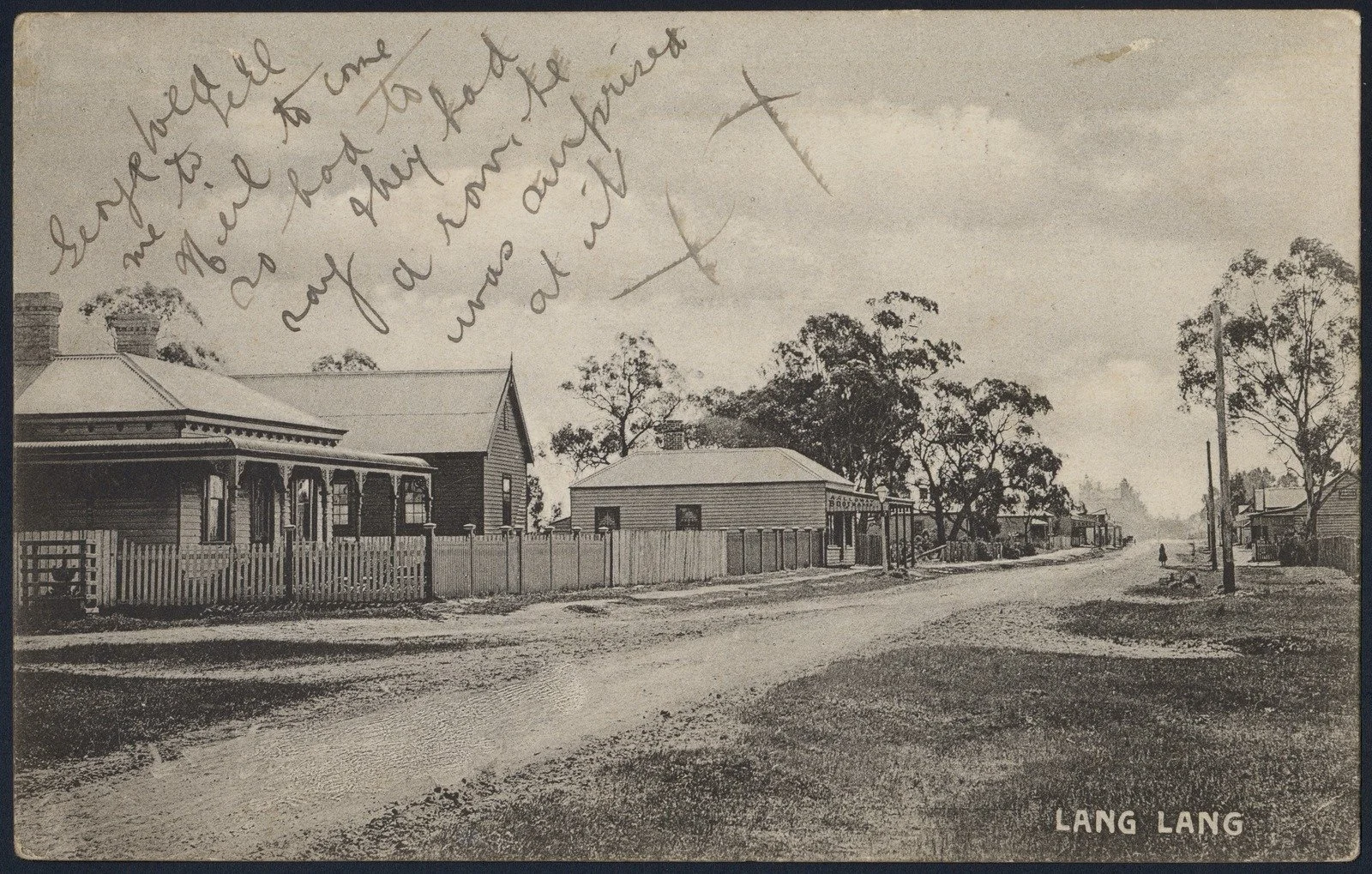
The town of Lang Lang, located in South Gippsland east of Western Port Bay, lies on Boonwurrung (Bunurong) Country of the Kulin Nation. Nestled near the mouth of the Lang Lang River and the coastal plains that once formed part of the Koo Wee Rup Swamp, this area was a vital landscape of movement, ceremony, and sustenance for countless generations. Its name, landscape, and waterways are deeply tied to the law of water, the language of place, and the stories of the Boonwurrung people.
Lang Lang today is a small farming community, but the Country beneath it holds a history of living systems — both cultural and ecological — shaped by ancient observation and later transformed by colonisation.
Meaning and Language of Lang Lang
The name Lang Lang is widely believed to derive from Boonwurrung language, with several possible interpretations that all reflect its connection to water and sound. Linguists such as Clark and Heydon (2002) suggest that “Lang Lang” may mean “the sound of water,” “echo,” or “deep waterhole” — a term describing either the flowing creek or the resonance of frogs and birds in the swampy plains.
Repetition of a word, a common feature in Kulin languages, often carries an intensifying meaning — “Lang Lang” therefore implies not just a place of water or sound, but a place of many waters or strong echoing voice. This aligns with Boonwurrung naming conventions where water, sound, and spirit were inseparable: to name a place was to acknowledge its living energy and its role within the law of Country (Blake, 1991; Clark & Heydon, 2002).
Country, Waterways, and Ecology
The Lang Lang River, known to the Boonwurrung as part of a larger system of waterways feeding into Western Port (Warn’m Marne), flows from the Strzelecki foothills through the rich alluvial plains of Koo Wee Rup before meeting the sea near Jam Jerrup. Before colonisation, this entire region was dominated by wetlands, swamps, and estuarine ecosystems — a mosaic of lagoons, creeks, and grasslands teeming with life.
For the Boonwurrung clans, particularly the Mayune Baluk and Ngaruk Willam, these wetlands were both pantries and temples — providing eel (kooyang), fish, shellfish, swan eggs, and plant foods such as typha (cumbungi) and lomandra, while also serving as sacred meeting grounds. The landscape embodied balance: freshwater from the hills met saltwater tides in an eternal exchange of renewal.
From an ecological and hydrological perspective, the Lang Lang plains formed part of a giant natural floodplain filtration system that stored and purified water through layers of peat and clay. Modern hydrologists recognise this region as one of Victoria’s most important groundwater recharge zones, supporting biodiversity, soil fertility, and flood control (DEECA, 2023). These environmental functions parallel traditional Boonwurrung teachings about the interconnected cycles of water, vegetation, and life.
Cultural Life and Seasonal Movement
For thousands of years, the Lang Lang wetlands marked an important node in Boonwurrung seasonal life. In summer and early autumn, families camped near the coast to fish and collect shellfish, moving inland in winter to hunt and harvest root plants. The Lang Lang River was a major route for canoe travel, linking inland communities to coastal estuaries.
Ceremonies were held along the riverbanks, particularly during eel migrations, when clans gathered to celebrate abundance and renew their spiritual connection to Bunjil the Eagle — the creator being and law-giver of the Kulin Nations (Broome, 2005). Songs, dances, and stories recounted the creation of the waterways and the responsibilities of caring for them. In this way, Lang Lang was both a geographical and moral centre, reminding people that the sound of water carried the voice of Country itself.
Colonisation and Transformation
The arrival of European settlers in the 1830s and 1840s brought devastating change to the Lang Lang region. The vast Koo Wee Rup Swamp, which once covered over 60,000 hectares, was viewed by colonial surveyors as an obstacle to agriculture. Drainage works began in the 1860s and accelerated through the 1880s, with canals and levees permanently altering the region’s hydrology (DEECA, 2023).
As the swamp was drained, its deep peat soils dried and shrank, leading to ground subsidence and loss of wetland species. The Lang Lang River, once a meandering ecosystem with multiple flood channels, became a straightened, sediment-laden drain. Boonwurrung families were forcibly displaced from their lands, and their cultural sites — including camps, middens, and scar trees — were destroyed or buried under farmland.
Early colonial records describe the Lang Lang district as “black soil country,” abundant yet treacherous during floods. Ironically, it was the same water system that sustained the Boonwurrung for millennia that settlers struggled to control for less than two centuries. The physics of flow — once balanced naturally through wetlands — was replaced by artificial drainage that continues to require maintenance today.
Ecological and Cultural Renewal
Despite historical transformation, Lang Lang and its surrounding wetlands remain ecologically and culturally significant. The Bunurong Land Council Aboriginal Corporation (BLCAC) and Melbourne Water now work collaboratively to restore riparian vegetation, reintroduce native sedges and grasses, and protect remnant wetlands along the river. Projects integrate Boonwurrung ecological knowledge — such as observing eel and bird movements as indicators of seasonal flow — with contemporary environmental monitoring (BLCAC, 2023).
Modern ecological science recognises that restoring wetlands like those at Lang Lang increases carbon sequestration, improves biodiversity resilience, and reduces the effects of sea-level rise in the Western Port Ramsar wetlands. Cultural tours and education programs now connect community members and schools with Boonwurrung custodians who share language, traditional place names, and stories of the law of water.
The re-emergence of Indigenous naming and language in local interpretation reflects a broader process of truth-telling and reconciliation, affirming that Lang Lang is not merely a rural town but a living story in the wider system of Boonwurrung Country.
Conclusion
Lang Lang — the “place of many waters” — stands as a testament to the enduring relationship between the Boonwurrung people and their waterways. Its name carries echoes of the past: the rippling sound of the creek, the chorus of wetland life, and the voices of ancestors who sang to the rhythm of water and earth.
Though colonisation transformed its landscape, Lang Lang continues to reveal the deep ecological intelligence of Boonwurrung culture. Through ongoing restoration and recognition, this place once again teaches the law of balance — that every sound, every flow, and every story is part of the living system of Country.
References
Blake, B. (1991) Wathawurrung and the Colac Language of Southern Victoria. Canberra: Pacific Linguistics.
Broome, R. (2005) Aboriginal Victorians: A History Since 1800. Sydney: Allen & Unwin.
Clark, I.D. & Heydon, T. (2002) Dictionary of Aboriginal Placenames of Victoria. Melbourne: Victorian Aboriginal Corporation for Languages.
Department of Energy, Environment and Climate Action (DEECA) Victoria (2023) Wetland Restoration Guidance for Victoria. Melbourne: State Government of Victoria.
Bunurong Land Council Aboriginal Corporation (2023) Cultural Waterways and Coastal Care Projects. Melbourne: BLCAC.
Presland, G. (1994) Aboriginal Melbourne: The Lost Land of the Kulin People. Melbourne: Harriland Press.
Zola, N. & Gott, B. (1992) Koorie Plants, Koorie People: Traditional Aboriginal Food, Fibre and Healing Plants of Victoria. Melbourne: Koorie Heritage Trust.
Written, Researched and Directed by James Vegter (22 September 2025)
MLA
Sharing the truth of Indigenous and colonial history through film, education, land, and community.
www.magiclandsalliance.org
Copyright MLA – 2025
Magic Lands Alliance acknowledges the Traditional Owners, Custodians, and First Nations communities across Australia and internationally. We honour their enduring connection to the sky, land, waters, language, and culture. We pay respect to Elders past, present, and emerging, and to all First Peoples’ communities and language groups. This article draws only on publicly available information; many cultural practices remain the intellectual property of their respective communities.