

Bunurong/ Boonwurrung Place Names
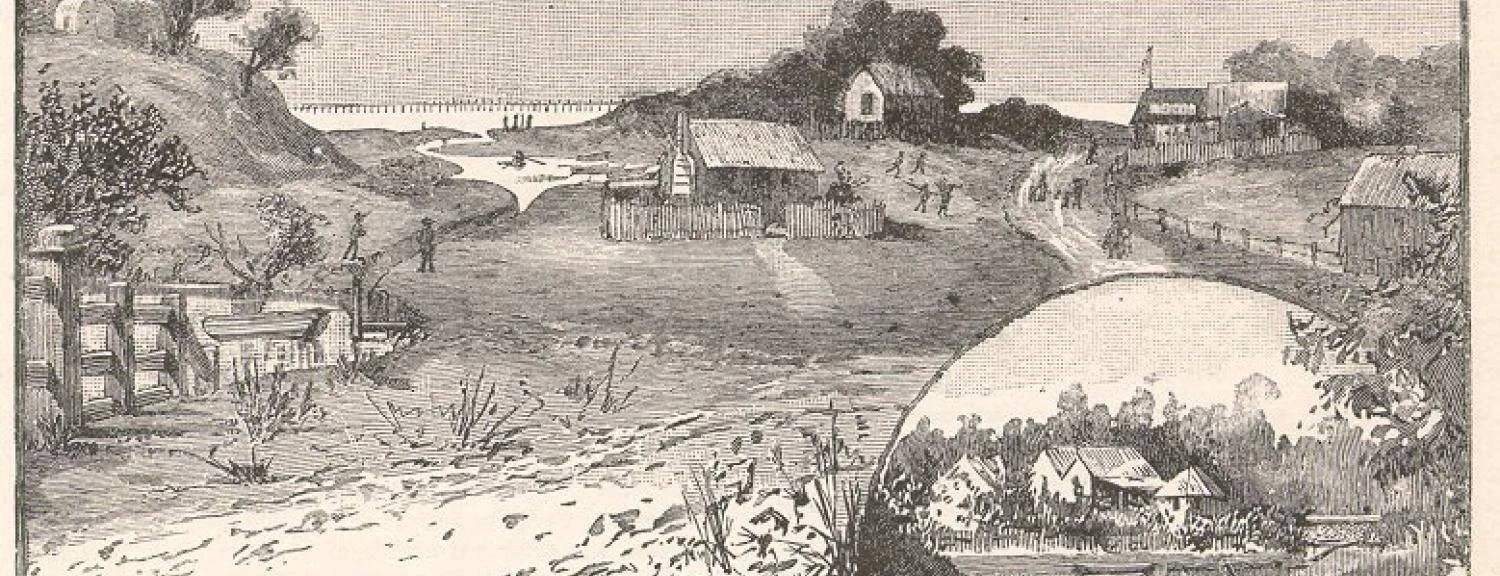
The Creek of Flowing Water and Memory in Boonwurrung Country
MLA Educational Series — Boonwurrung Country: Water, Story, and Ecological Law
Mordialloc, known traditionally as Mordy Yallock, lies within the ancestral lands of the Boonwurrung (Bunurong) people of the Kulin Nation, whose Country extends from the lower Yarra and Mornington Peninsula to Wilsons Promontory. The creek and its surrounding wetlands once formed one of the richest ecological and cultural corridors in south-eastern Victoria. For the Boonwurrung, Mordy Yallock was more than a waterway — it was a living being, embodying the spiritual, ecological, and social laws that sustained life on Country for tens of thousands of years (Broome, 2005; Clark & Heydon, 2002).
Meaning and Language: Mordy Yallock
The name Mordialloc is derived from the Boonwurrung words “Moordy Yallock” or “Mordy Yallock,” meaning “little creek,” “muddy water,” or “flowing water.” The suffix “yallock” is common in Kulin languages, denoting a creek or river, as seen in place names such as Dandenong Yallock and Kororoit Yallock (Clark & Heydon, 2002). The prefix “Moordy” refers to the nature of the water — describing the movement, colour, or condition of flow. These place names are not simply labels but part of a linguistic mapping of ecological identity, reflecting how Boonwurrung culture embedded knowledge of landscape into language. Speaking the name of a waterway invoked its spirit, story, and law.
Country, Water Systems, and Law
Before colonisation, the Mordy Yallock system formed a major hydrological and cultural artery within Boonwurrung Country. It rose in the sandbelt plains east of Melbourne, collecting water from numerous springs and seasonal creeks near Heatherton, Moorabbin (Mooranin), and Keysborough, before meandering through a chain of reedbeds, paperbark swamps, and lagoons into Nerm (Port Phillip Bay) near present-day Mordialloc. The creek was part of an interconnected wetland system that included Carrum Swamp, Edithvale–Seaford Wetlands, and the Dandenong floodplain, forming one of the largest freshwater-lagoon complexes in Victoria (DEECA, 2023).
For the Boonwurrung, Mordy Yallock was a vital part of the law of water, which governed movement, renewal, and respect for natural cycles. Families from the Yalluk Bulluk and Ngaruk Willam clans lived along its banks, following the seasonal rhythms of waterbirds, fish, and plants. Waterways such as Mordy Yallock were not boundaries but pathways — linking inland camps to coastal foraging grounds, trade routes, and sacred places (Presland, 1994).
Cultural Life and the Ecology of Flow
Mordy Yallock’s wetlands were places of abundance and ceremony. Boonwurrung people harvested eels (kooyang), fish, and freshwater mussels using woven reed nets, while reeds, lomandra, and cumbungi provided material for rope, baskets, and mats (Zola & Gott, 1992). The wetlands also supported yam daisy (murnong) fields, kangaroos, emus, and black swans (kunuwarra). Each of these species held ecological and spiritual significance, woven into a system of kinship and law that ensured sustainable harvesting and renewal.
Ceremonial life along Mordy Yallock reinforced these relationships. Water-based ceremonies and tanderrum gatherings were held along its banks, where Boonwurrung clans met to exchange goods such as ochre, greenstone tools, and possum-skin cloaks. These gatherings also carried diplomatic importance, maintaining peace and shared responsibility for Country between the coastal Boonwurrung and inland Kulin neighbours. In the Boonwurrung worldview, the creek’s constant flow represented both life’s continuity and the reciprocal exchange between people and environment (Broome, 2005).
From an ecological and hydrological science perspective, the Boonwurrung understanding of water mirrors modern principles of catchment ecology and flow dynamics. The wetlands served as natural hydrological sponges, absorbing floodwaters, filtering sediments, and recharging aquifers. Seasonal inundation created breeding habitats for fish, frogs, and birds, while evaporation cycles helped regulate temperature and soil health (DEECA, 2023). These traditional practices align closely with modern integrated water management systems, which seek to restore the same natural processes once maintained by Indigenous custodianship.
Colonisation and Transformation
European colonisation in the 1830s brought catastrophic change. Settlers viewed wetlands as wastelands and sought to drain, graze, and occupy the land. By the 1850s, much of Carrum Swamp and the Mordy Yallock floodplain had been converted to farmland. Channels were dug to accelerate drainage, severing the natural hydrological connectivity that had supported biodiversity and soil fertility for millennia (DEECA, 2023).
In 1839, the Mordialloc Aboriginal Reserve was established under the supervision of the Protectorate of Aborigines. It became home to displaced Boonwurrung families whose access to ancestral lands had been restricted by pastoral expansion (Broome, 2005). Despite limited resources, people maintained cultural practices along the creek, fishing and gathering reeds as they had done for generations. However, the Reserve was closed in 1859 and its lands sold, symbolising the loss of both Country and the means of cultural survival.
By the late nineteenth century, the transformation of Mordy Yallock was complete. Its swamps were drained, its flow channelled into concrete drains, and its name absorbed into the expanding suburbs of Melbourne. Yet beneath the urban surface, the ancient water-law still flowed — sometimes literally, when floods reminded settlers that the land continued to remember its own systems.
Cultural Science and Restoration Today
In recent decades, growing awareness of both wetland ecology and Indigenous cultural knowledge has led to renewed focus on the restoration of the Mordy Yallock system. The Bunurong Land Council Aboriginal Corporation (BLCAC), in partnership with Melbourne Water and the Department of Energy, Environment and Climate Action (DEECA), is actively engaged in cultural mapping, revegetation, and ecological monitoring across the catchment.
These projects incorporate both traditional ecological knowledge and modern hydrological science — reintroducing native sedges, restoring riparian vegetation, and creating fish passages to allow eels to migrate upstream once again. Educational programs led by Boonwurrung custodians bring schools and community groups to the creek to learn about water’s cultural meaning, the physics of flow, and the relationship between water quality, vegetation, and biodiversity. Through these initiatives, the ancient philosophy of caring for water as a living relative is being re-integrated into modern environmental management (DEECA, 2023; BLCAC, 2023).
Cultural Continuity and Meaning
The re-emergence of the name Mordy Yallock in education, signage, and community programs represents a powerful act of truth-telling and cultural recognition. It reconnects the modern city with the original Boonwurrung landscape and its hydrological law. For Boonwurrung Elders, the creek remains a living entity — a flowing memory that links past and present, ancestor and descendant. Its waters, once described by settlers as “muddy,” are seen by custodians as “alive,” carrying nutrients, stories, and energy from the hills to the sea.
Even in urban form, Mordialloc continues to perform the role of a cultural and ecological corridor, supporting migratory birds, remnant wetlands, and native vegetation. Restoration work at Edithvale–Seaford Wetlands, now listed under the Ramsar Convention for their international ecological significance, demonstrates how collaboration between traditional custodians and scientists can restore not only ecological function but also cultural connection (DEECA, 2023).
Conclusion
Mordialloc / Mordy Yallock stands as both a geographical feature and a moral teacher within Boonwurrung Country. Its name encodes knowledge of movement, water, and balance; its history reveals both abundance and dispossession; and its present renewal offers a vision of reconciliation through ecological and cultural restoration.
In re-learning the story of Mordy Yallock, we rediscover an enduring law — that the health of water is inseparable from the health of people and Country. When the creek flows freely, the stories of the Boonwurrung flow with it.
References
Blake, B. (1991) Wathawurrung and the Colac Language of Southern Victoria. Canberra: Pacific Linguistics.
Broome, R. (2005) Aboriginal Victorians: A History Since 1800. Sydney: Allen & Unwin.
Clark, I.D. & Heydon, T. (2002) Dictionary of Aboriginal Placenames of Victoria. Melbourne: Victorian Aboriginal Corporation for Languages.
Department of Energy, Environment and Climate Action (DEECA) Victoria (2023) Wetland Restoration Guidance for Victoria. Melbourne: State Government of Victoria.
Bunurong Land Council Aboriginal Corporation (2023) Cultural Waterways and Coastal Care Programs. Melbourne: BLCAC.
Presland, G. (1994) Aboriginal Melbourne: The Lost Land of the Kulin People. Melbourne: Harriland Press.
Zola, N. & Gott, B. (1992) Koorie Plants, Koorie People: Traditional Aboriginal Food, Fibre and Healing Plants of Victoria. Melbourne: Koorie Heritage Trust.
Written, Researched and Directed by James Vegter (22 September 2025)
MLA
Sharing the truth of Indigenous and colonial history through film, education, land, and community.
www.magiclandsalliance.org
Copyright MLA – 2025
Magic Lands Alliance acknowledges the Traditional Owners, Custodians, and First Nations communities across Australia and internationally. We honour their enduring connection to the sky, land, waters, language, and culture. We pay respect to Elders past, present, and emerging, and to all First Peoples’ communities and language groups. This article draws only on publicly available information; many cultural practices remain the intellectual property of their respective communities.