
Bunurong/ Boonwurrung Place Names
The Tail of the Land and the Lore of the Southern Stars
MLA Educational Series — Bunurong/Boonwurrung Country: Ocean, Sky, and the Living Boundary of the World
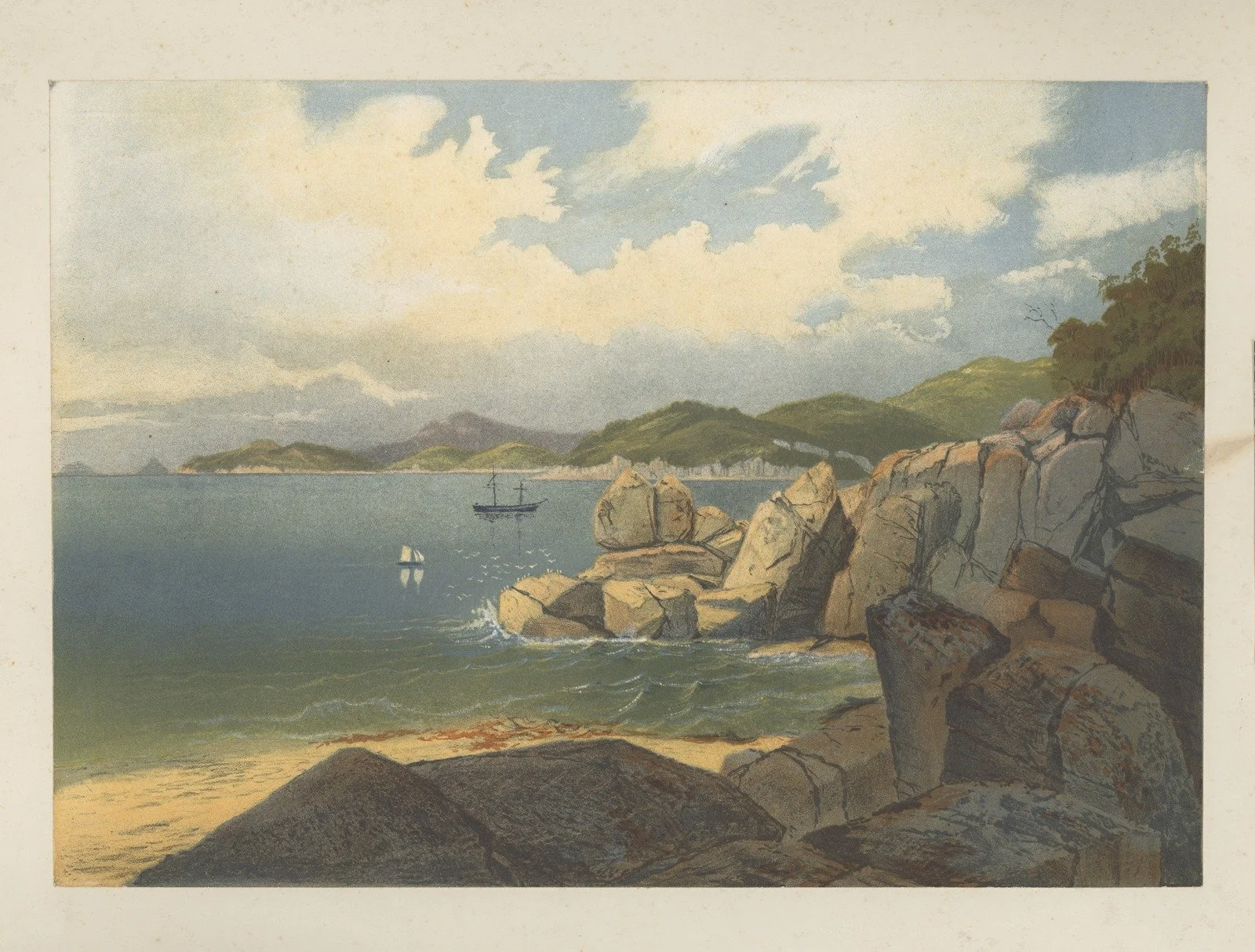
At the farthest tip of mainland Victoria, where granite peaks rise from the sea and winds carry stories older than memory, stands Wamoon, known today as Wilsons Promontory. To the Bunurong/Boonwurrung people, Wamoon is not merely a peninsula — it is the tail of the great ancestral being, the body of Country stretching north through mountains, rivers, and plains.
It marks the meeting of earth, sea, and sky, where spiritual and physical laws — or lore — converge into one unbroken system. For tens of thousands of years, Wamoon has been a place of ceremony, navigation, and renewal — a point where the lore of the stars guided travellers across both land and sea (Broome 2005; Bunurong Land Council 2023). Even now, its cliffs and inlets, winds and tides, echo that ancient rhythm — the movement of Country breathing through time.
The Meaning and Setting of Wamoon
The name Wamoon derives from Bunurong/Boonwurrung language, meaning “tail” or “end of the land”, reflecting both geography and spiritual structure (Clark & Heydon 2002). The Promontory’s granite ridges, shaped over 350 million years, extend southward into Bass Strait, forming the southernmost point of the Australian mainland. For the Bunurong/Boonwurrung, Wamoon was the final place of balance — a site where the lore of land and the lore of ocean met beneath the watch of the stars. It was seen as the tail of Bunjil’s creation, curving out to face the deep, marking the limit between known and spirit worlds. In ceremony, Wamoon represented both completion and renewal — the end of one songline and the beginning of another. Modern geologists describe the area as part of the Devonian granite batholith system, its rocks among the oldest exposed formations in southern Victoria (VandenBerg 1999). For Traditional Owners, these same stones are the bones of Country, recording the creative energy of ancestral forces.
The Lore of the Land and Sea
In Bunurong/Boonwurrung lore, Wamoon is where Bunjil (the creator eagle) and Waa (the crow) met to divide their domains — Bunjil ruling the air and sky, Waa governing the winds and tides. The meeting of their powers created the shifting weather patterns that define the Promontory: strong southwesterly winds, mist, and fast-moving clouds. Each of these natural elements was understood as living lore — a visible expression of the invisible laws governing balance, movement, and renewal. Elders taught that to know Wamoon is to understand the meeting of opposites:
“The wind that breaks also clears. The wave that crashes also feeds. All force returns to stillness.”
Such teachings mirror modern environmental principles — the understanding that disturbance drives regeneration and that equilibrium arises through motion.
Ecology and the Living Boundary
Wamoon’s ecosystems are among the most diverse in Victoria, encompassing rainforest gullies, heathlands, coastal dunes, and marine habitats. Species such as koalas, wombats, swans, and short-finned eels (kooyang) once moved freely between river valleys and coastal lagoons, guided by Bunurong/Boonwurrung seasonal lore. The surrounding waters of Tidal River, Oberon Bay, and Sealers Cove sustained rich fisheries and shellfish beds. Traditional harvest followed moon cycles and tidal calendars, ensuring no area was overused. Ceremonies at each season’s change renewed the moral compact between people and Country — an ecological contract expressed through lore rather than written law (Zola & Gott 1992; DEECA 2023). Modern ecology confirms that this practice maintained resilience and biodiversity through adaptive management, reflecting an empirical understanding of environmental feedback long before Western science described it.
Songlines and Celestial Lore
Wamoon’s granite peaks — including Mount Oberon (Warrawee) and Mount Wilson — served as celestial markers for navigation across land and sea. At night, Bunurong/Boonwurrung travellers read the stars to chart seasonal movement and the timing of ceremonies. The Emu in the Sky, visible in the Milky Way, was an especially significant constellation representing fertility, time, and the cycles of water (Hamacher 2012). Elders told that Bunjil placed the stars to mirror the rivers of earth, ensuring that what flowed above guided what flowed below. In this sense, astronomy and hydrology were one — the sky reflecting the law of water and the earth echoing the pattern of the stars. From the heights of Wamoon, one could see both — a vantage point where science and story, physics and philosophy, align.
Cultural Connections and Shared Lore
Wamoon also served as a meeting place between Nations — particularly between the Bunurong/Boonwurrung and Gunai/Kurnai peoples. Trade routes converged here from the east and west, carrying goods such as greenstone axes, ochres, shell ornaments, and song knowledge (Broome 2005; Clark 1990). Ceremonies reaffirmed kinship and reinforced the lore of peace and exchange that maintained balance between groups. The Promontory was also a site of spiritual initiation: young men were taken to high places to learn observation, endurance, and respect for the vastness of Country. In this way, Wamoon’s cliffs were classrooms — their echoing winds carrying both practical and moral instruction.
Colonial Encounter and Transformation
European explorers first recorded Wamoon in 1798, when George Bass charted the southern coast. By the 1830s, sealers, whalers, and pastoralists began encroaching on nearby islands and shores. For the Bunurong/Boonwurrung, this invasion brought profound disruption — sacred places desecrated, species depleted, and movement across Country restricted (Cannon 1981). The establishment of Wilsons Promontory National Park in 1898, while preserving the landscape, excluded Traditional Owners from their ancestral lands. Yet the names and songs endured, carried through descendants and preserved in oral tradition and later revival projects (BLCAC 2023). Today, efforts are underway to restore both the ecological and spiritual integrity of this coastal sanctuary, returning voice and meaning to a place long silenced by colonial misnaming.
Modern Custodianship and Cultural Renewal
Now jointly managed by Parks Victoria, DEECA, and the Bunurong Land Council Aboriginal Corporation (BLCAC), Wamoon is recognised as both a cultural landscape and ecological stronghold.
Current programs include:
• Cultural burning in heathland and forest areas to restore biodiversity;
• Reintroduction of traditional place names such as Wamoon, Warrawee, and Tidal River (Ngarrun);
• Interpretive trails sharing Bunurong/Boonwurrung star lore and creation stories;
• Marine monitoring integrating Indigenous and Western science;
• Ceremonial reoccupations reconnecting families to sacred sites (BLCAC 2023; Parks Victoria 2023).
Through these initiatives, the lore of Wamoon continues to shape how the Promontory is cared for — not as wilderness, but as a living relative.
The Physics and Lore of Balance
From a scientific viewpoint, Wamoon demonstrates the principle of dynamic equilibrium — the constant exchange of energy between land, ocean, and atmosphere. Wind erosion, wave motion, and geological uplift act together to maintain a coastline in perpetual renewal. In Bunurong/Boonwurrung philosophy, this same process is known as the Lore of Balance: that every element — water, rock, fire, air — moves in harmony when treated with respect. Disturbance without gratitude breaks this cycle; care and ceremony restore it. Both worldviews describe a self-regulating system — what one might call the physics of spirit — in which motion is not chaos, but continuity.
Conclusion
Wamoon (Wilsons Promontory) stands as both a geological monument and a spiritual teacher — the tail of the land, pointing toward the horizon of time. It embodies the union of law and lore, science and ceremony, earth and sky. For the Bunurong/Boonwurrung, it remains a place where every wave speaks of creation, every wind recites an old teaching, and every star above mirrors the rivers below. Through renewed custodianship, Wamoon once again lives by its ancient truth:
“The land has a body, the sky has a story, and we walk between them as the breath that keeps them one.”
References
Barwick, D. (1998) Rebellion at Coranderrk. Canberra: Aboriginal History Monograph.
Blake, B. (1991) Wathawurrung and the Colac Language of Southern Victoria. Canberra: Pacific Linguistics.
Broome, R. (2005) Aboriginal Victorians: A History Since 1800. Sydney: Allen & Unwin.
Bunurong Land Council Aboriginal Corporation (2023) Wamoon Cultural and Ecological Restoration Plan. Melbourne: BLCAC.
Cannon, M. (1981) Life in the Country: Australia in the Victorian Age 1840–1890. Melbourne: Nelson.
Clark, I.D. (1990) Aboriginal Languages and Clans: An Historical Atlas of Western and Central Victoria. Melbourne: Monash Publications in Geography.
Clark, I.D. & Heydon, T. (2002) Dictionary of Aboriginal Placenames of Victoria. Melbourne: Victorian Aboriginal Corporation for Languages.
DEECA Victoria (2023) Wilsons Promontory Landscape Conservation Strategy. Melbourne: Department of Energy, Environment and Climate Action.
Hamacher, D. (2012) Celestial Lore and Indigenous Astronomy of Southeastern Australia. Sydney: Macquarie University Press.
Parks Victoria (2023) Wilsons Promontory Management Plan. Melbourne: State Government of Victoria.
VandenBerg, A.H.M. (1999) Geology of Victoria. Geological Society of Australia, Special Publication 10.
Zola, N. & Gott, B. (1992) Koorie Plants, Koorie People: Traditional Aboriginal Food, Fibre and Healing Plants of Victoria. Melbourne: Koorie Heritage Trust.
Written, Researched and Directed by James Vegter (22 September 2025)
MLA
Sharing the truth of Indigenous and colonial history through film, education, land, and community.
www.magiclandsalliance.org
Copyright MLA – 2025
Magic Lands Alliance acknowledges the Traditional Owners, Custodians, and First Nations communities across Australia and internationally. We honour their enduring connection to the sky, land, waters, language, and culture. We pay respect to Elders past, present, and emerging, and to all First Peoples’ communities and language groups. This article draws only on publicly available information; many cultural practices remain the intellectual property of their respective communities.