

Bunurong/ Boonwurrung Place Names
Sea Country, Story, and the Science of Place
MLA Educational Series — Bunurong / Boonwurrung Country: Coastal Ecology, History, and Sovereignty
The island known today as Phillip Island, and to the Boonwurrung (Bunurong) people as Millowl, sits at the mouth of Western Port (often recorded as Warn Marin)—a meeting place of saltwater, wind, and sky that has sustained life and law for tens of thousands of years (Broome, 2005; BLCAC, 2023). For the Boonwurrung, Millowl is more than a landform; it is a living ancestor within a network of spiritual, cultural, and ecological relationships linking the Mornington Peninsula, Bass Coast, and broader Boonwurrung Sea Country (Clark & Heydon, 2002; BLCAC, 2023). Millowl’s cliffs, dunes, and wetlands form one of the most continuously occupied coastal landscapes in Victoria—its story weaving deep-time geology, Indigenous cultural law, and the colonial transformations that followed British settlement (Presland, 1994; VandenBerg, 1999). Today, the island stands as a place of healing and revival where cultural knowledge, environmental science, and restoration meet (DEECA, 2023; BLCAC, 2023).
The name and meaning of Millowl
Millowl is recorded in Boonwurrung language materials as the traditional name for the island. Several glosses appear in historical–linguistic sources; a commonly cited interpretation evokes an “eye/overlooking place,” reflecting both the island’s vantage over surrounding waters and its role as a lookout across the strait (Clark & Heydon, 2002). Within Boonwurrung cosmology, Millowl sits within the law of Bunjil (wedge-tailed eagle) and Waa (ancestral corvid), creator beings who shape obligations to sea and land. The cliffs of Cape Woolamai, the wetlands of Rhyll, and the tidal channels of Newhaven are understood as features formed and regulated by these ancestral forces—binding physical landscape to spiritual story (Presland, 1994; BLCAC, 2023).
Geology and deep time
Geologically, Millowl preserves volcanic basalts, sandstones, and marine limestones dating back tens of millions of years, recording phases of eruption, marine deposition, and uplift (VandenBerg, 1999). These substrates underpin rich soils, mobile dune systems, and extensive wetlands that make the island a biodiversity hotspot (DEECA, 2023). Boonwurrung oral histories also retain memory of post-glacial sea-level rise that flooded lowlands and reshaped shorelines—accounts that align with modern reconstructions of Holocene coastal change (Presland, 1994; VandenBerg, 1999). Two ways of knowing meet here: scientific chronologies and ancestral narratives both attest that Millowl is an ancient island of change and continuity.
Life and law before colonisation
Before British invasion, Millowl was a central node of Boonwurrung Sea Country, embedded in a seasonal economy guided by tides, migrations, and ceremony (Broome, 2005; BLCAC, 2023).
Food and harvesting. Shellfish, abalone, crabs, and reef fish were gathered from tidal platforms; seabirds and eggs—especially muttonbirds/short-tailed shearwaters—were harvested under law; eels and blackfish moved through Rhyll–Silverleaves swamps and were taken in woven traps during migrations (Zola & Gott, 1992; Presland, 1994).
Ceremony and movement. Millowl supported camps and ceremonial gatherings for Boonwurrung and neighbouring Kulin clans during key seasonal events. Elders taught law, kinship, and navigation using stars and tides as calendars—systematic observation that modern science would describe as environmental monitoring (Presland, 1994; Broome, 2005).
Ecology and the physics of Sea Country
Millowl sits where Western Port’s estuarine tides interact with Bass Strait’s oceanic currents, creating a dynamic zone defined by tidal energy, temperature gradients, and sediment transport (DEECA, 2023). Western hydrology describes salinity stratification, tidal prisms, and estuary–coast exchange; Boonwurrung knowledge frames the same processes as the breath of Country, a living cycle that must remain in balance (BLCAC, 2023). Both knowledge systems converge on the same principle: energy flow and equilibrium underpin ecological health.
Colonial contact and transformation
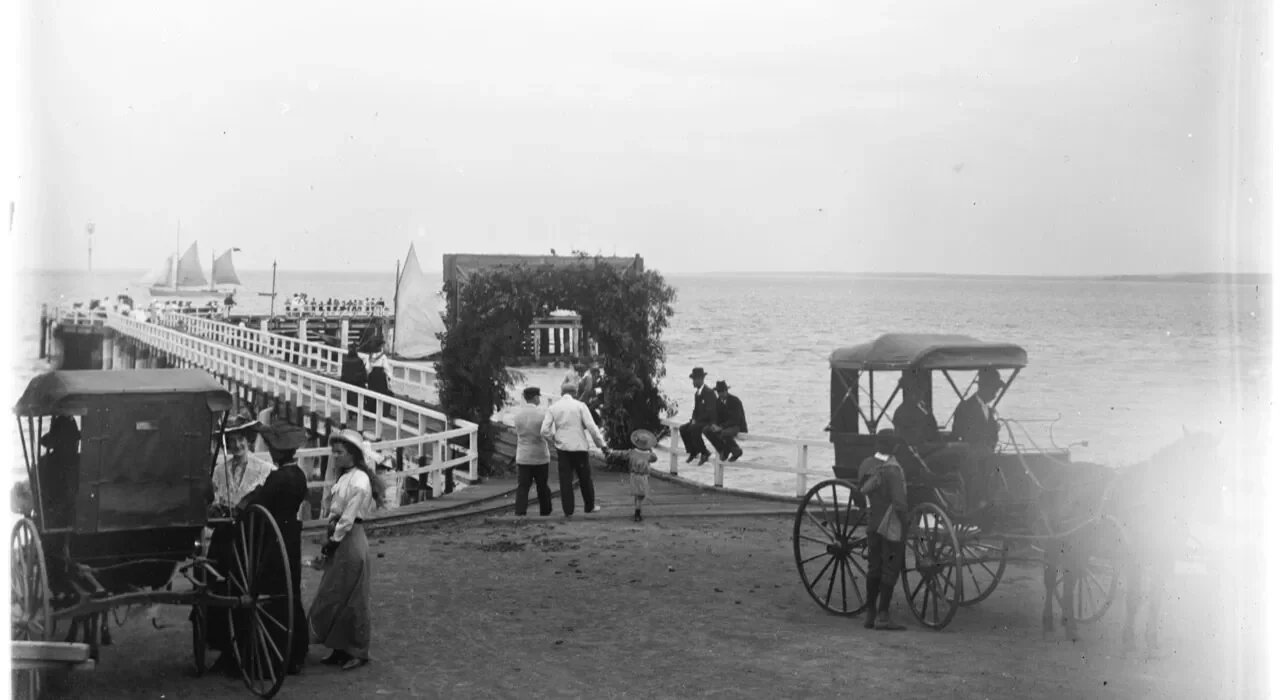
European mariners charted the area in the early 1800s; in 1801, James Grant applied the name “Phillip Island” to honour Governor Arthur Phillip (Cannon, 1981). Renaming prefaced extraction: sealing and whaling rapidly depleted marine populations; grazing eroded dunes and damaged wetlands; and violence and dispossession forced Boonwurrung families from Country, with survivors later confined to places such as Mordialloc and Coranderrk (Barwick, 1998; Broome, 2005). Movements of figures like Truganini through Bass Strait and Western Port in the 1840s link Millowl to wider histories of survival and resistance among southern nations (Broome, 2005).
Environmental and cultural decline
By the late 19th century, clearing and drainage had destroyed wetlands; muttonbird rookeries declined under overharvest; and mainland land-use intensified sediment and nutrient loads, degrading seagrass and mangrove habitats (DEECA, 2023). For the Boonwurrung, ecological collapse was also a spiritual wound—breaches in Bunjil’s law and the ancient equilibrium between people, sea, and sky (BLCAC, 2023).
Restoration and cultural renewal
In recent decades, Bunurong Land Council Aboriginal Corporation (BLCAC) has worked with Parks Victoria and Phillip Island Nature Parks to restore Millowl’s ecological and cultural integrity:
Revegetation and dune stabilisation to protect Little Penguin habitat and native flora (DEECA, 2023).
Protection and mapping of cultural heritage, including shell middens at Cape Woolamai, Rhyll Inlet, and the Cowes foreshore (BLCAC, 2023; Presland, 1994).
Cultural water assessments and dual naming, reinstating Millowl in education, tourism, and signage (BLCAC, 2023).
The globally noted recovery of Little Penguins exemplifies ecological success; Boonwurrung leadership reminds us the deeper objective is healing Country through truth-telling and law (BLCAC, 2023; DEECA, 2023).
Cultural physics and the law of tides
In scientific terms, lunar gravitation drives the tides; in Boonwurrung law, Bunjil’s order governs the balance between people and place. Both frameworks teach that when balance is kept, energy flows and systems thrive; when disrupted, collapse follows (Zola & Gott, 1992; BLCAC, 2023). On Millowl, physics and philosophy meet in practice: observe, respect, and restore.
Millowl today: living Sea Country
Recognised within the UNESCO Western Port Biosphere Reserve, Millowl is globally significant for ecology and locally vital as living Boonwurrung Country (DEECA, 2023). Elders lead Welcome to Country and smoking ceremonies, while language, stories, and ecological practices return to daily stewardship (BLCAC, 2023). Collaboration between Traditional Owners, scientists, and conservationists now positions Millowl as a model of biocultural restoration.
Conclusion
Millowl’s story is endurance in motion. From volcanic origins to the tidal present, the island holds entwined histories of ecology, spirit, and survival. For the Boonwurrung, Millowl remains a sacred island where Waa watches the shore, Bunjil guards the sky, and the tides remember the law of balance. Through cultural renewal and scientific collaboration, Millowl teaches that Country is not a possession but a relationship—one that requires observation, humility, and care (Broome, 2005; BLCAC, 2023).
References
Barwick, D. (1998) Rebellion at Coranderrk. Canberra: Aboriginal History Monograph.
Blake, B. (1991) Wathawurrung and the Colac Language of Southern Victoria. Canberra: Pacific Linguistics.
Broome, R. (2005) Aboriginal Victorians: A History Since 1800. Sydney: Allen & Unwin.
Bunurong Land Council Aboriginal Corporation (2023) Millowl Sea Country and Cultural Water Report. Melbourne: BLCAC.
Cannon, M. (1981) Life in the Country: Australia in the Victorian Age, 1840–1890. Melbourne: Nelson.
Clark, I.D. & Heydon, T. (2002) Dictionary of Aboriginal Placenames of Victoria. Melbourne: VACL.
Department of Energy, Environment and Climate Action (DEECA) Victoria (2023) Western Port and Coastal Ecosystems Management Plan. Melbourne: State of Victoria.
Presland, G. (1994) Aboriginal Melbourne: The Lost Land of the Kulin People. Melbourne: Harriland Press.
VandenBerg, A.H.M. (1999) Geology of Victoria. Geological Society of Australia, Special Publication 10.
Zola, N. & Gott, B. (1992) Koorie Plants, Koorie People: Traditional Aboriginal Food, Fibre and Healing Plants of Victoria. Melbourne: Koorie Heritage Trust.
Written, Researched and Directed by James Vegter (22 September 2025)
MLA
Sharing the truth of Indigenous and colonial history through film, education, land, and community.
www.magiclandsalliance.org
Copyright MLA – 2025
Magic Lands Alliance acknowledges the Traditional Owners, Custodians, and First Nations communities across Australia and internationally. We honour their enduring connection to the sky, land, waters, language, and culture. We pay respect to Elders past, present, and emerging, and to all First Peoples’ communities and language groups. This article draws only on publicly available information; many cultural practices remain the intellectual property of their respective communities.