

Bunurong/ Boonwurrung Place Names
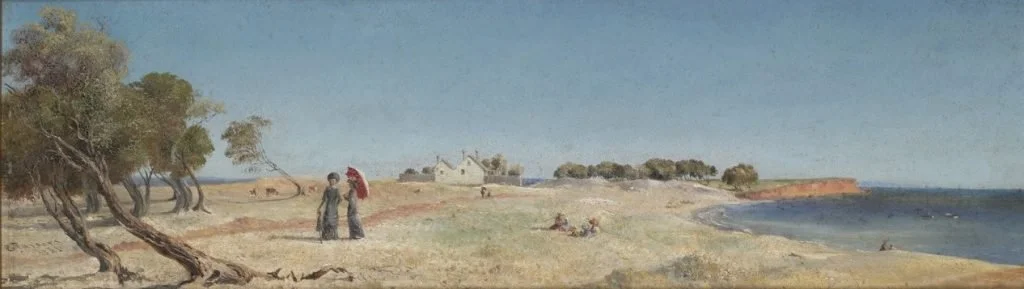
The River of Reeds and the Memory of the Bay
MLA Educational Series — Bunurong/Boonwurrung Country: Waterways, Wetlands and the Law of Flow
Between the rolling dunes of St Kilda and the basalt plains that stretch inland from Nairm (Port Phillip Bay) flows a quiet, meandering waterway once known as Karrum Karrum — the place now called Elwood.
Long before drainage canals and city streets, this area was a living mosaic of wetlands, reed beds, and tidal creeks, supporting birds, fish, and people in equal abundance.
For the Bunurong/Boonwurrung people of the Kulin Nation, Karrum Karrum was part of a continuous system of water and law that linked the inland plains to the sea.
It was a place where Biik (Country) breathed — where the movement of water expressed the balance between spirit and science, culture and ecology (Broome 2005; Clark & Heydon 2002).
The Meaning of Karrum Karrum
The name Karrum Karrum (sometimes rendered Karrum Karrum Yaluk) is recorded in the Bunurong/Boonwurrung language as meaning “river of reeds” or “the place of rushes” (Blake 1991; Clark & Heydon 2002).
It referred to the freshwater streams and lagoons that once stretched from modern-day Elsternwick through Elwood Canal to the bay.
The repetition of the word Karrum reflects emphasis in Bunurong/Boonwurrung speech — a way of expressing abundance and movement. Thus Karrum Karrum can also be read as “the river that speaks twice,” describing the sound of reeds rustling in the wind or the flow of water in both directions with the tide.
For the Bunurong/Boonwurrung, this place was alive with voices — of frogs, birds, and wind — each representing a part of the living law of water. The reeds were more than plants: they were indicators of seasonal health and essential materials for weaving, shelter, and ceremony (Zola & Gott 1992).
Geology and Hydrology of the Wetlands
Elwood sits on low-lying Quaternary sands and Holocene clays that once formed a broad swamp complex at the mouth of Elster Creek.
As sea levels rose around 6,000 years ago, the lower Yarra and its tributaries flooded, creating tidal lagoons and freshwater soaks fringed with reeds (VandenBerg 1999).
These environments became among the richest ecological zones around Nairm, sustaining black swans, herons, and the seasonal migration of short-finned eels (kooyang).
For the Bunurong/Boonwurrung, this hydrological system represented the Law of Flow — the understanding that all movement of water must be respected because it connects life from mountain to sea.
Springs inland were regarded as the eyes of Country; estuaries such as Karrum Karrum were its mouth, where stories and sustenance emerged and returned.
Cultural Life and Seasonal Movement
Karrum Karrum was a vital camping and harvesting site for Bunurong/Boonwurrung families.
Freshwater pools provided drinking water, while the wetlands offered eels, ducks, and edible plants.
Families built temporary shelters from tea-tree and reed, and harvested cumbungi and common reed (Phragmites) for weaving mats and ropes.
The nearby dunes also supplied ochre and shells for trade and ornamentation (Presland 1994).
Seasonally, people moved between Euro-Yroke (St Kilda), Karrum Karrum (Elwood), and inland freshwater systems following the availability of resources.
Eel migration was central to this rhythm: when eels began their journey to the Coral Sea, ceremonies were held to honour their spirit of return, reinforcing the moral law that everything taken from Country must one day give back (Zola & Gott 1992).
Colonial Drainage and Transformation
European occupation of the Elwood area began in the 1840s.
Early settlers saw the wetlands not as life-giving ecosystems but as obstacles to urban development.
By the 1880s, drainage projects and canal works had diverted Elster Creek into a straightened channel, and the natural lagoons were filled or converted to pasture (Cannon 1981).
The name Karrum Karrum disappeared from official maps, replaced by Elwood Swamp, then Elwood Canal.
For the Bunurong/Boonwurrung, this loss was profound.
The destruction of wetlands severed the living link between freshwater and saltwater that had sustained both ecology and culture.
Yet oral traditions kept the stories alive. Elders continued to speak of the river that flowed both ways — an image that survives today in the movement of tides under Elwood Bridge.
Ecology and the Physics of Flow
Modern hydrological studies show that the Elwood–Elsternwick catchment still reflects its ancestral patterns.
Despite canalisation, the system maintains a tidal exchange with Port Phillip Bay, creating brackish conditions that support mangroves, seagrasses, and migratory birds (DEECA 2023).
During heavy rainfall, the canal acts as a natural flood buffer — echoing the Bunurong/Boonwurrung understanding that wetlands are not wastelands but lungs of the land, absorbing and releasing water in balance.
From a scientific viewpoint, the flow of Karrum Karrum can be described through energy transfer and sediment cycling.
From an Indigenous perspective, the same process represents Ngurrara — the living breath of Country that sustains all beings.
Both views affirm the same law: life depends on movement, and balance arises from exchange, not control.
Cultural Renewal and Modern Restoration
In recent decades, Karrum Karrum has been recognised as a site of cultural and ecological importance.
The Bunurong Land Council Aboriginal Corporation (BLCAC), in partnership with City of Port Phillip, Parks Victoria, and DEECA, now incorporates Indigenous knowledge into wetland rehabilitation and storm-water management (BLCAC 2023).
Community planting programs re-establish native reeds and salt-tolerant grasses, stabilising banks and restoring bird habitat.
Educational signage along Elwood Canal now references the traditional name and explains its meaning, ensuring residents and visitors understand the deeper story beneath the cityscape.
Through these collaborations, Karrum Karrum once again functions as both ecological system and teacher — reminding all who walk its paths that water carries law, memory, and renewal.
Conclusion
Karrum Karrum — now Elwood — is more than a suburb on Melbourne’s coast.
It is a remnant of a once-vast wetland network that sustained people, plants, and animals for millennia.
Its name, meaning the river of reeds, encapsulates the rhythm of movement and adaptation that defines both nature and culture.
Though altered by colonisation, the spirit of the place endures in its flowing water, in the reeds that still whisper with the wind, and in the community’s growing recognition of its living heritage.
By listening again to the voice of Karrum Karrum, we honour both science and story — and restore the balance that has always kept this Country alive.
References
Barwick, D. (1998) Rebellion at Coranderrk. Canberra: Aboriginal History Monograph.
Blake, B. (1991) Wathawurrung and the Colac Language of Southern Victoria. Canberra: Pacific Linguistics.
Broome, R. (2005) Aboriginal Victorians: A History Since 1800. Sydney: Allen & Unwin.
Bunurong Land Council Aboriginal Corporation (2023) Caring for Sea Country: Bunurong Coastal Management Plan. Melbourne: BLCAC.
Cannon, M. (1981) Life in the Country: Australia in the Victorian Age, 1840–1890. Melbourne: Nelson.
Clark, I.D. (1990) Aboriginal Languages and Clans: An Historical Atlas of Western and Central Victoria, 1800–1900. Melbourne: Monash Publications in Geography.
Clark, I.D. & Heydon, T. (2002) Dictionary of Aboriginal Placenames of Victoria. Melbourne: Victorian Aboriginal Corporation for Languages.
DEECA Victoria (2023) Urban Water and Cultural Heritage Policy: Elwood–Elsternwick Catchment. Melbourne: Department of Energy, Environment and Climate Action.
Presland, G. (1994) Aboriginal Melbourne: The Lost Land of the Kulin People. Melbourne: Harriland Press.
VandenBerg, A.H.M. (1999) Geology of Victoria. Geological Society of Australia, Special Publication 10.
Zola, N. & Gott, B. (1992) Koorie Plants, Koorie People: Traditional Aboriginal Food, Fibre and Healing Plants of Victoria. Melbourne: Koorie Heritage Trust.
Written, Researched and Directed by James Vegter (22 September 2025)
MLA
Sharing the truth of Indigenous and colonial history through film, education, land, and community.
www.magiclandsalliance.org
Copyright MLA – 2025
Magic Lands Alliance acknowledges the Traditional Owners, Custodians, and First Nations communities across Australia and internationally. We honour their enduring connection to the sky, land, waters, language, and culture. We pay respect to Elders past, present, and emerging, and to all First Peoples’ communities and language groups. This article draws only on publicly available information; many cultural practices remain the intellectual property of their respective communities.